Archives

A Soul Reborn

One of the oldest buildings on campus has been transformed into the centerpiece of student support.

A lot can happen in 100 years, and Truman’s Kirk Building is a prime example. In its heyday, the structure was the heart of the University. In 1925 – just two years after it opened – Kirk was one of only a handful of buildings on campus, along with Pickler Memorial Library, Science Hall and Ophelia Parrish. Its auditorium was the epicenter of the school, serving as the site of countless events, assemblies and athletic contests.

“The Student Success Center will not only be convenient for students because services are located together, but more importantly, it signals that there are many dimensions of support that contribute to their success at Truman.”

—Ashleigh Harding
director of student success

Higher education surged in the second half of the 20th century, thanks in part to the G.I. Bill, followed by an influx of Baby Boomers. Naturally, the campus blossomed as well, with new construction necessary to support the growing infrastructure demands. While Kirk Building remained near the geographic center of the rapidly expanding campus, its relevance recessed with each passing decade. Pershing Building came along in the 1950s, taking with it intercollegiate athletic contests. The addition of an auditorium to Baldwin Hall in 1959 lured away many of the special events and musical performances, and when the Student Union Building opened in 1966, the social center of campus migrated slightly to the west. Each necessary step of progress unintentionally resulted in Kirk losing a little bit of its identity. It became a house, but not a home, providing a space for departments or programs in need, only to be forgotten when a more logical locale presented itself.

“You can often figure out when someone attended Truman based on what they remember the Kirk Building housing,” said Zac Burden, assistant director of residence life and self-avowed campus history nerd. “Do they remember getting their ID card picture taken there? Do they remember the nursing program being in the building? Did they film Channel 36 news broadcasts there? Did they sign up for housing there? Their experiences in the Kirk Building ‘carbon date’ when they attended. So many things have been there over the years.”

In the past three decades or so, visitors to campus could be forgiven if they wondered aloud while strolling through the quad, “when is that old building coming down?” For its part, Kirk has not gone gentle into that good night, and now its best days may be yet to come.

Truman has a legacy of preserving the past while planning for the future.The concept of old and new coming together can be seen in nearly every campus building, most notably structures such as Pickler Memorial Library and Ophelia Parrish, as well as Violette, Magruder and Baldwin halls. Much like the retooled Greenwood Interprofessional Autism Center, the Kirk Building project goes beyond brick-and-mortar changes. There is a special purpose behind the renovation. In this instance, it’s a statement about what the University values the most: the students.
What’s in the name?

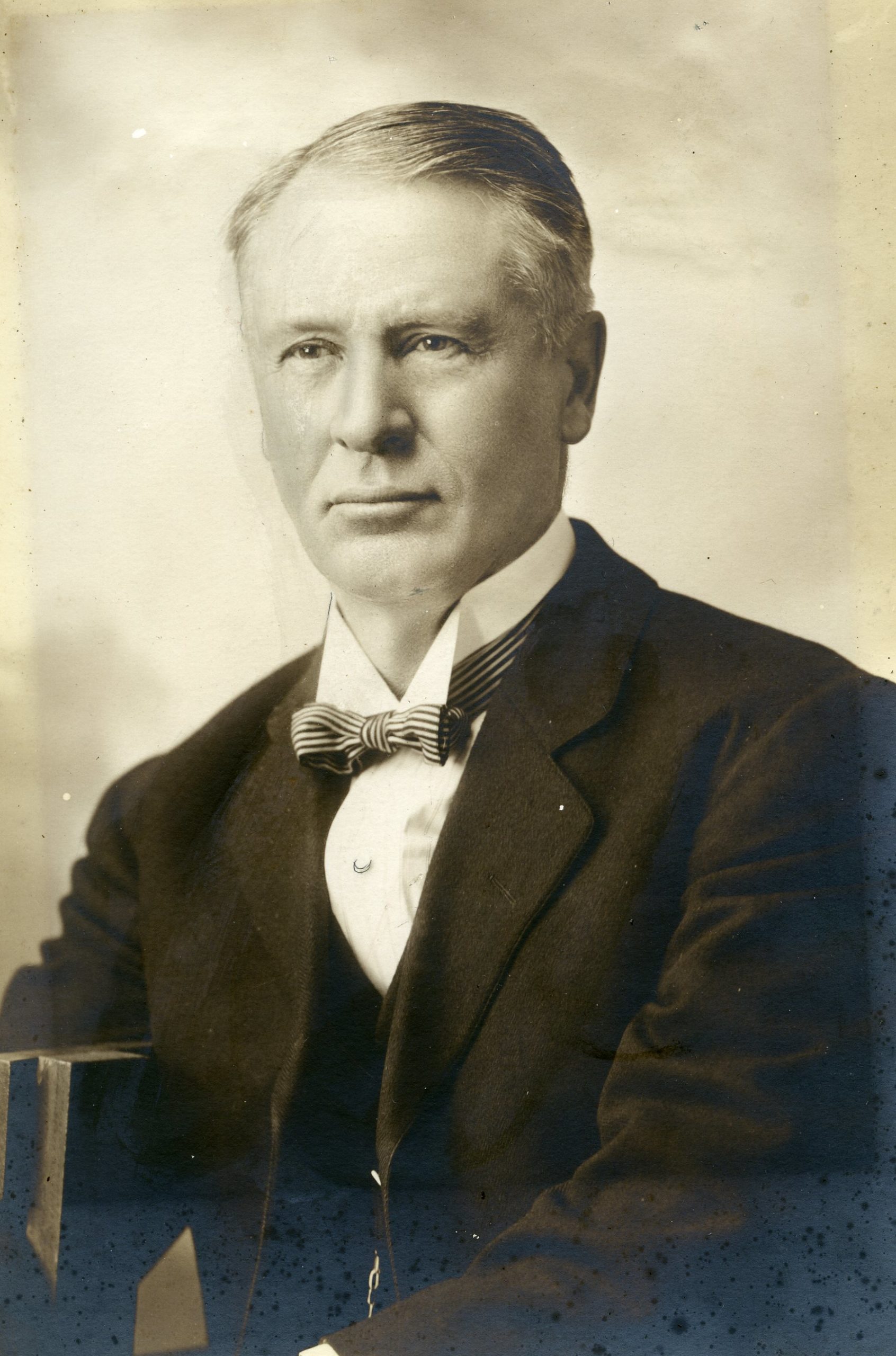
John Robert Kirk was the president of the University for 26 years. An alumnus, he was valedictorian of his class in 1878. After graduation, he was a professional educator and later an attorney before he became the school’s fifth president in 1899. During his tenure, Kirk expanded programs and led the movement to change the school’s status from a normal school to a full-fledged teachers’ college. He also became one of the country’s leaders in teacher education and an innovator and expert in rural education. In addition to the Kirk Building, the iconic Kirk Memorial also bears his name. Other campus tributes include the Kirk Academy

“Throughout our history, the core tenet of the University has been a laser focus on preparing our students for success, from the moment they set foot on campus through launching them to achieve their goals and dreams,” said University President Susan L. Thomas. “Preserving a University landmark is very exciting; however, the truly amazing aspect of the Kirk Building renovation is what it will do for our students and the community.”

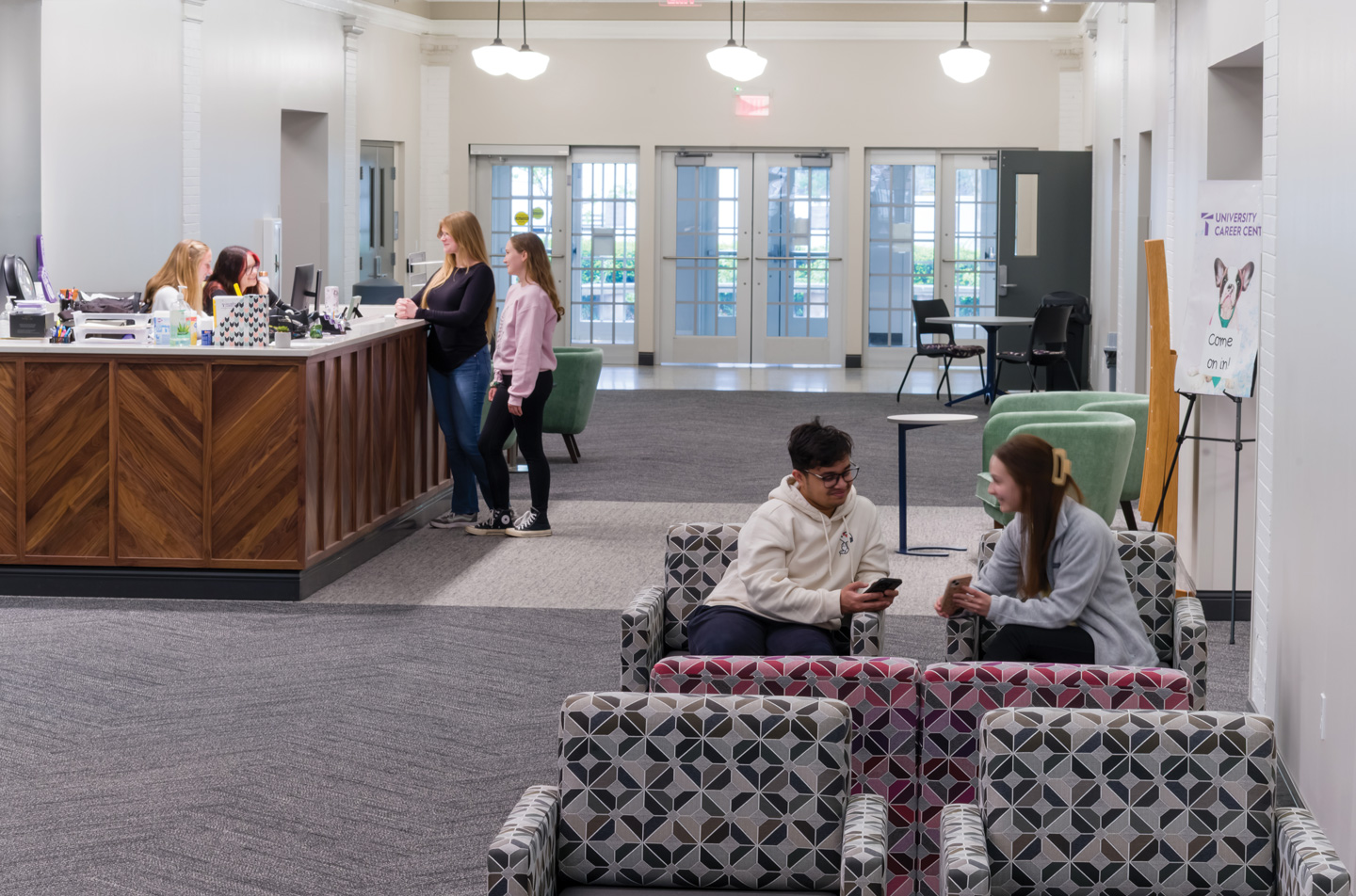
Kirk Building is again a hub of campus, now as the home to the new Student Success Center. Truman strategically placed all the most important student resources in one conveniently located building. The Student Success Center is comprised of: the Career Center; Tutoring Services; the Student Health Center; University Counseling Services; Student Access and Disability Services; the Center for Academic Excellence; the Communication Lab; and the Writing Center. Beyond simply housing services in proximity, the Student Success Center offers a collaborative service model, with offices working in coordination to meet a student’s need from entry to exit.
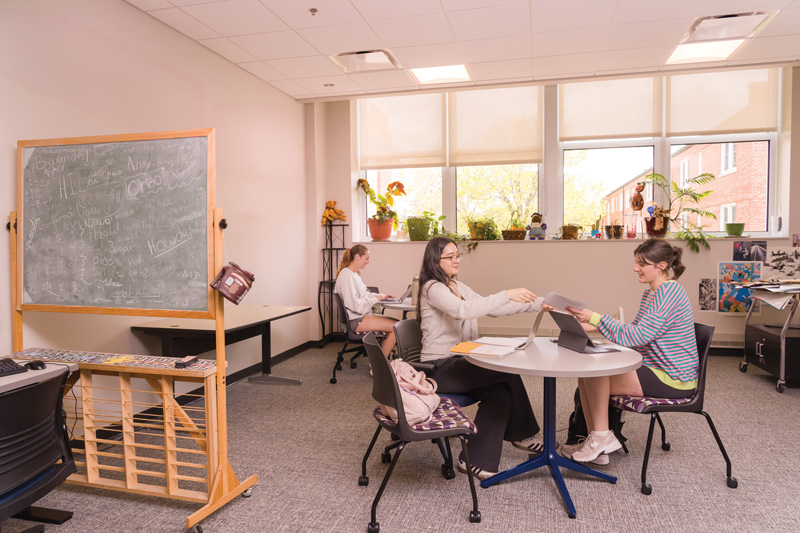
“By these student support services working in conjunction with one another, we will be able to recognize and address student needs from a collaborative approach,” said Ashleigh Harding, director of student success. “The Student Success Center will not only be convenient for students because services are located together, but more importantly, it signals that there are many dimensions of support that contribute to their success at Truman.”

In addition to housing the Student Success Center, the Kirk Building now features dedicated space to provide resources to the community, including workforce development outreach, rural telehealth counseling, and academic outreach workshops. The Sustained Knowledge of Integrated Lifelong Learning Skills (SKILLS) Center builds upon the services of the departments in the Student Success Center, making key components available to the local community.

“When undertaking this project, we very deliberately combined an internal focus on supporting students’ success with an external focus on supporting community members’ success,” Thomas said. “Truman and Kirksville are intertwined. Anything that benefits one also brings prosperity for the other. We have a vested interest in our northeast Missouri home, and we strive to be a positive resource in any way we can.”

While area K-12 students have access to tutoring and advising, adult learners might seek skills to assist with career advancement through non-credit workshops on topics such as digital literacy, computer applications and personal development. Truman students will have the opportunity to be trained to lead and support these community learning opportunities.
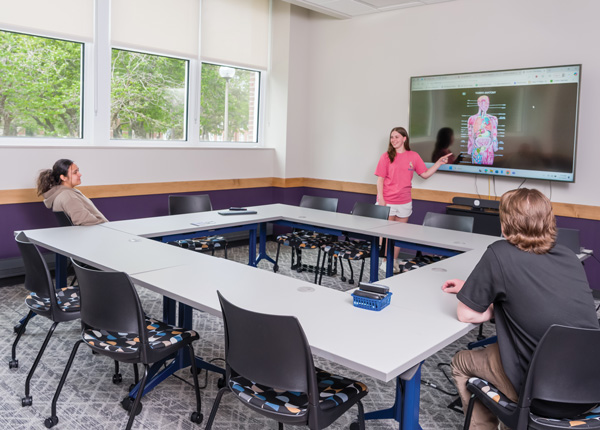
The SKILLS Center will look to collaborate with relevant community partners including: the city of Kirksville, Adair County and other municipalities and counties in the northeast Missouri region; Kirksville Regional Economic Development, Inc., and other economically focused entities; the Missouri Division of Employment Security; and regional health care and social service providers.

Considering its scope and scale, the Kirk Building project came together surprisingly fast. First proposed in 2022, a near-complete interior demolition started in fall 2023. A majority of the work was finished within a year, including a massive transformation to the building’s iconic auditorium. While half of the area was repurposed to create a third floor and new office space, the other side is now a 250-person forum. In a nod to its history, some of the building’s original architectural elements were recreated in the remodeled space, and portions of the gym floor were reused as aesthetic accents. The back wall of the newly created forum includes a photo mural of images from Kirk’s storied past.

Much of the funding for the $21 million project came from the state of Missouri at the recommendation of Gov. Mike Parson through the American Rescue Plan Act. Former U.S. Senator Roy Blunt also recommended a $6 million congressionally directed spending grant. In recognition of his support, the SKILLS Center is named in honor of Blunt and his wife Abby.


For a building long cherished in the hearts of students, it’s fitting students will again be at the heart of its new mission. Not so many years from now, alumni will remember Kirk Building as the place where a caring academic advisor helped them map out their path to graduation, or how the Career Center played a role in finding that first “real” job. A local student may think of Kirk Building as their introduction to campus, and how guidance from a tutor made them realize Truman was the right school when it came time for their college decision. Members of the community might recall the workshop they signed up for in retirement and how it opened the door for a second career later in life.

Now renovated and revitalized, Kirk Building has come full circle. It’s ready to reclaim its place as the soul of campus, and the possibilities are endless.

Kirk Building Offices

Center for Academic Excellence

The CAE offers service and support to help students navigate their student journey from orientation to their first year at Truman and beyond. Services include one-on-one academic advising, help with registration, academic planning, transferring credits, and exploring potential majors and minors.

Student Health Center and University Counseling Services

Since 2021, the Student Health Center and University Counseling Services have been operated through a partnership with Complete Family Medicine. As a subsidiary of Hannibal Regional, a not-for-profit health system, these offices have been able to provide additional resources to students, including expanded hours, increased access to a physician and access to off-site providers when needed.

Career Center

From choosing a major to securing an internship or job, the Career Center offers a multitude of services, including career coaching, mock interviews, resume critiques and professional development experiences. It also sponsors the Career and Grad School Week events offered each semester.

Tutoring Services

The Center for Academic Excellence runs a Tutoring Center staffed by Academic Peer Tutors. All tutoring services are free and available for most classes. Students can drop-in or schedule appointments to ask questions, review material and discuss problems with a team of knowledgeable peer tutors.

The Writing Center

The Writing Center serves students, faculty and staff in their efforts to communicate more effectively through writing. With the help of dedicated, competent writing consultants, students can receive assistance during any stage of the writing process, from brainstorming through adding the final touches.

The Communication Lab

Students needing assistance with any type of oral presentation can utilize this service, sponsored by the Communication and Theatre Arts Department. Beyond entry-level speech classes, students may receive help with any presentation. Lab assistants are trained to aid students at any part of the speechwriting process, from narrowing a topic to practicing the speech.

Student Access and Disability Services

This campus resource provides support services to students with disabilities to achieve their academic goals while ensuring compliance with federal and state laws.

Planetarium Tech Upgraded

The Del and Norma Robison Planetarium recently installed two new Norxe P60 projectors, increasing its resolution to 4K and drastically improving the brightness.

Along with the new projectors, the planetarium added an autoalignment and auto blending system that maintains projector alignment. This provides a clearer image across the entire dome and significantly reduces regular maintenance hours. The projectors were previously aligned annually, which took many hours each time.

The planetarium has an annual attendance of roughly 5,000. During the school year, the planetarium hosts free 30-minute shows at 6 p.m. Wednesdays, Thursdays and Fridays, as well as an hour show for $5 on Saturdays. It is also open to reserve for group events, guest speakers, classes, field trips and other special events.

For the most up-to-date schedule of events, visit planetarium.truman.edu.

Kirksville and Truman Partner to Host State Special Olympics

Special Olympics Swimming

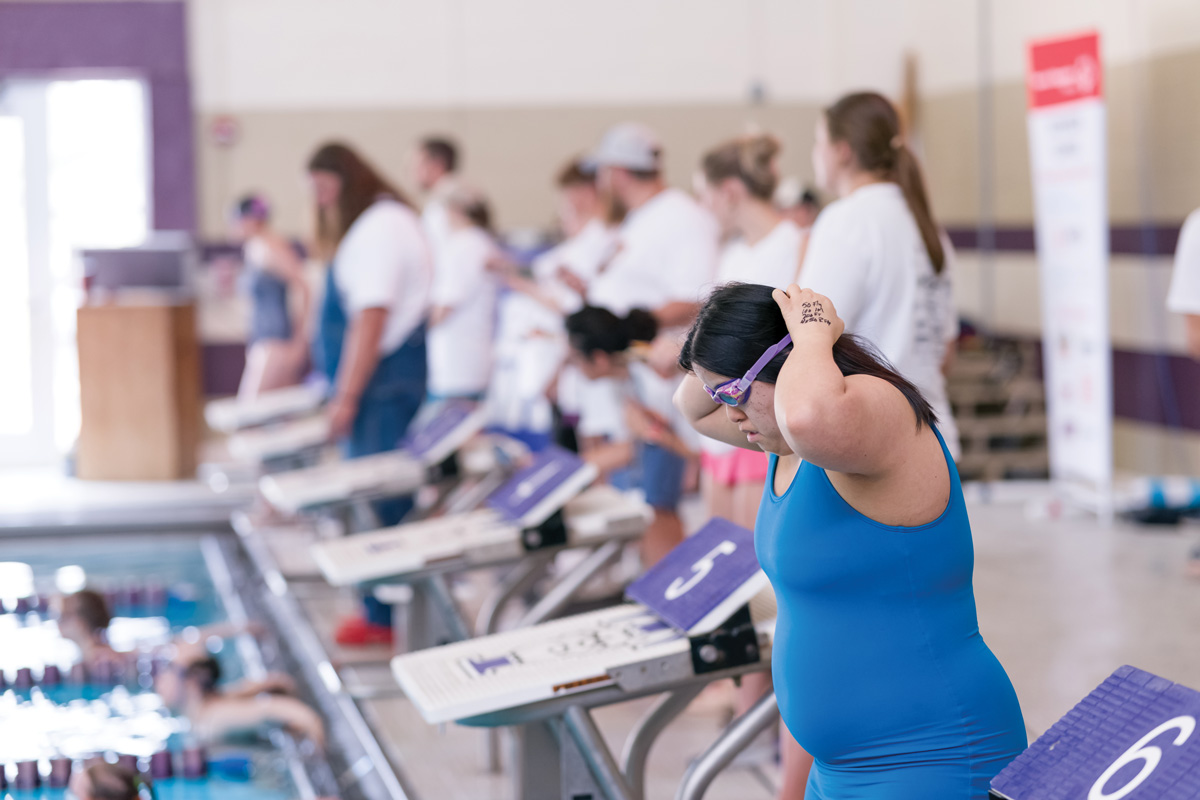
The Truman campus recently served as the site of the 2025 Special Olympics Missouri State Summer Games.

Between athletes, coaches, family members and spectators, more than 1,000 people came to Kirksville, May 30-June 1, for a weekend full of athletics, fun and community support. This was the first time Kirksville hosted the event. Truman facilities were used for all four athletic contests, including powerlifting, swimming, track and field, and volleyball. Athletes also stayed on campus in University residence halls.

“We were thrilled and honored to host the State Summer Games along with our wonderful Kirksville partners,” said University President Sue Thomas. “It was an amazing and inspiring community effort.”

In addition to the athletic competitions, the State Summer Games included the traditional Opening Ceremony featuring the Parade of Athletes and the lighting of the torch. Health screenings through Special Olympics Missouri’s Healthy Athletes program were also provided on site.

Special Olympics Missouri is a year-round program of sports training and athletic competition for children and adults with intellectual disabilities. Thousands of athletes participate in 13 Olympic-type sports throughout the state. Special Olympics Missouri provides people with intellectual disabilities continuing opportunities to develop physical fitness, demonstrate courage and experience joy as they participate in the sharing of gifts and friendship with their fellow athletes, their family and friends, and communities across Missouri.

Remembering President Jack Magruder

In a lifetime spent dedicated to education, Willis J. “Jack” Magruder wore many hats.

He was a student, faculty member, administrator, president, devoted alumnus and to some – thanks to an affiliation that lasted more than 70 years – the unofficial embodiment of Truman State University. Magruder passed away Nov. 17, 2024.

Born Aug. 7, 1935 in rural Lentner, Missouri, Magruder and his family moved to Kirksville in 1943. He graduated from the University with bachelor’s degrees in chemistry and mathematics in 1957.

An education was not the only thing Magruder picked up during his time as an undergraduate. He often recounted how he met Sue Brimer on campus in 1954 while standing in line to register for classes. They married 10 weeks later, forming a special union that lasted nearly 67 years until her passing in 2021.

While he was completing his degrees, Magruder taught a math class at Hurdland School, as well as chemistry and physics at Kirksville High School. A born academic, he would go on to earn a master’s degree in chemistry and science education from the University of Northern Iowa, followed by his doctorate in chemistry and science education from the University of Northern Colorado. Magruder completed additional graduate work at Louisiana State University, and he was a graduate of Harvard University’s Institute of Educational Management.

In 1964, Magruder returned home to begin what would be one of the most honored service careers the University would ever know. He started as an assistant professor of chemistry, spending 22 years on the faculty before becoming head of the Division of Science in 1986. As gifted as he was in the classroom, Magruder was equally suited to administration. By 1989, he was named acting dean of instruction and was later appointed vice president for academic affairs.

Many only knew him as President Jack Magruder, a title he first assumed in 1994 when he became the 13th person to lead the University. With the name change to Truman State University in 1996, his guidance was integral in finishing the more than decade-long transformation into Missouri’s only statewide public liberal arts and sciences institution. Truman’s run of No. 1 rankings began on his watch and continues uninterrupted to this day. In celebration of a career that already included 35 years of service, Science Hall was renamed Magruder Hall in his honor in 1999. He would formally serve Truman for another four years before retiring as President Emeritus and Professor Emeritus of Chemistry in 2003. While his stewardship of Truman may have ended, his time as an educational giant in the community was far from complete.

Some may say there are no second acts in life, but that certainly was not the case for Magruder. A true public servant, he accepted the role of president at A.T. Still University in February 2008. Magruder’s leadership was indispensable in establishing the Missouri School of Dentistry and Oral Health in Kirksville. He retired from ATSU in 2012 with the title President Emeritus.

Magruder’s leadership knew no bounds, and his tutelage was sought by many organizations. He served in countless capacities on state boards and commissions. A son of the Show-Me State through and through, in November 2009, he was inducted into the Academy of Squires, an honorary association that recognizes citizens of Missouri who have contributed exceptional service to their communities and to the state.

On his journey to becoming one of the most influential figures in Missouri, Magruder never strayed from his humble roots. A fixture on campus, in the community and around the state, he greeted everyone with a smile and a handshake. His presence alone made campus feel like home to many, to say nothing of his hard work, dedication and passion for education. Truman, ATSU and Kirksville are all better places thanks to Jack Magruder, and they will never quite be the same without him.

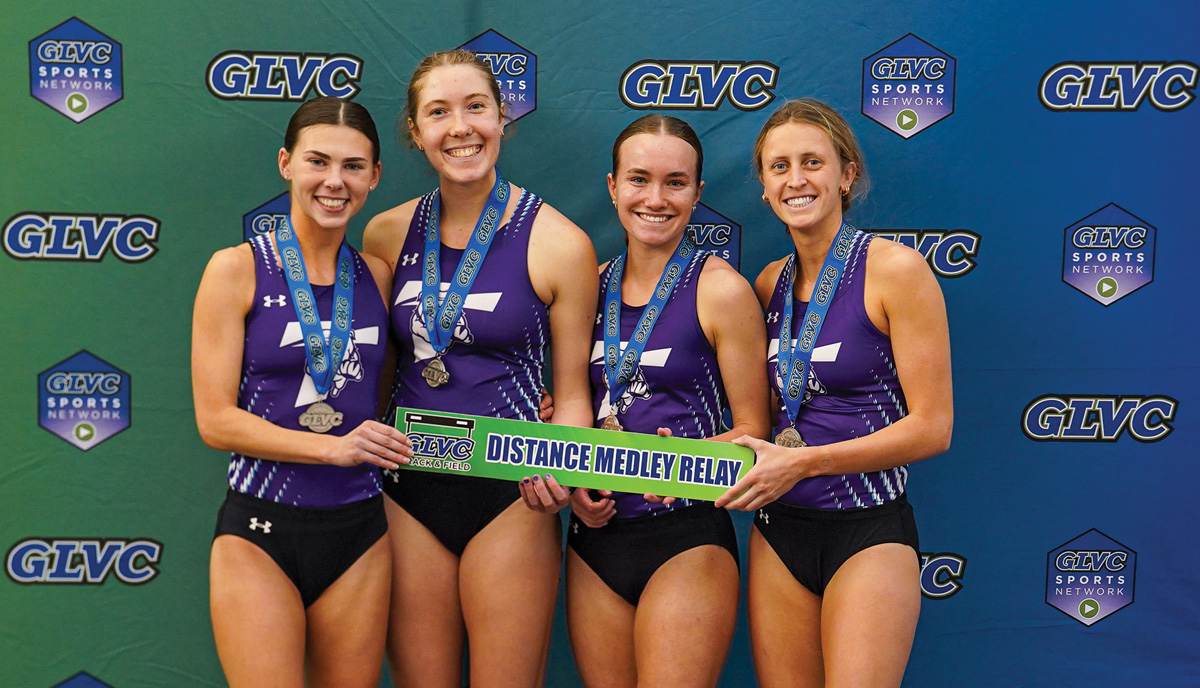
Track Athletes Set New School Records During Indoor/Outdoor Season

Left to right: Addie Mathis, Raina Baker, Phoebe Canatsey and Lexy Henrikson

Seniors Addie Mathis and Lexy Henrikson pushed each other to record-breaking performances this season.

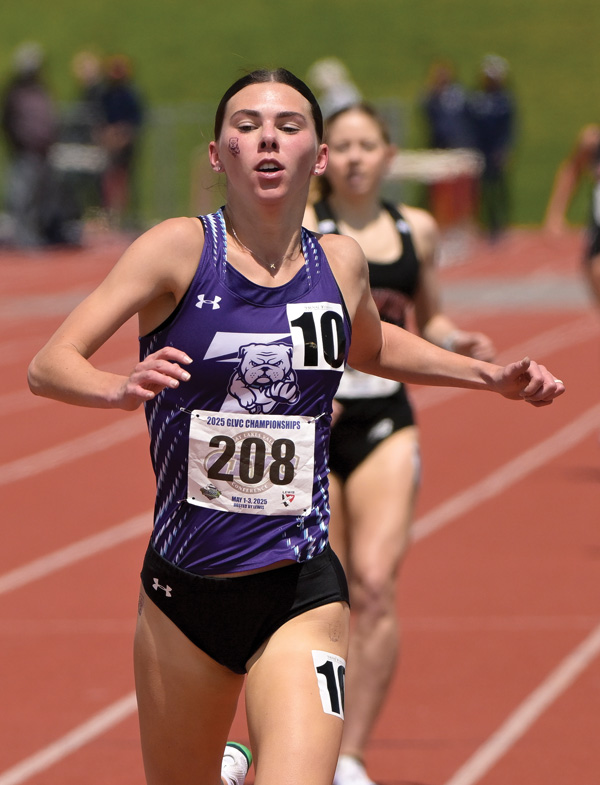
Addie Mathis

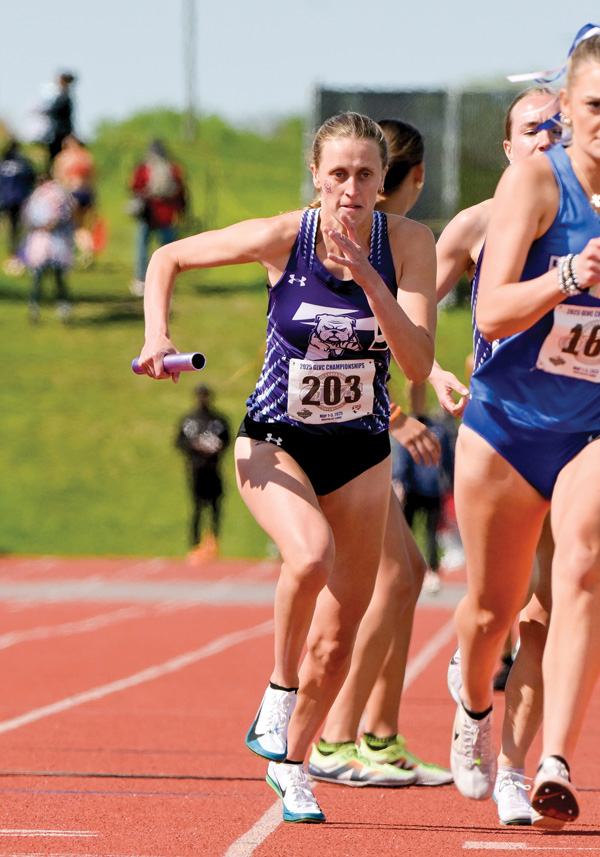
The duo each broke records during the indoor season with Mathis claiming the 800-meter run in a time of 2:10.40, while Henrikson nabbed the mile run record time at 4:54.57. At the GLVC Indoor Track & Field Championships, those two, along with Phoebe Canatsey and Raina Baker, achieved the time for the record in the distance medley relay at 11:36.69.

Lexy Henrikson

Mathis was the GLVC indoor champion in the mile run and the GLVC outdoor champion in the 1,500-meter run.

Moving to the outdoor season, Mathis pushed past Henrikson to grab the record in the 1,500-meter run at 4:28.52 and on the next day out in California, put her name on the outdoor 800-meter run with a time of 2:10.69.

Thrower Hayden Long matched one of the longest-standing records on the men’s outdoor track and field board this spring. Long threw the javelin 62.10 meters during a meet at the University of Central Missouri in April. That throw tied Mark Sissom’s 1977 record.

Autism Center Becomes a Reality

After years of planning, the Greenwood Interprofessional Autism Center will provide services for the community and give students hands-on experiences in a growing field.

This summer, the long-awaited Greenwood Interprofessional Autism Center should be fully operational, providing in-depth, interdisciplinary assessment and intervention for children with autism or suspected autism, as well as other neurodevelopmental disorders.

Since 2015, Truman has worked to convert the former elementary school into a resource for the community that also trains interested students for careers in the autism sector. With the help of the Missouri Legislature, federal funding secured by U.S. Sen. Roy Blunt and a grant from the Sunderland Foundation of Kansas City, a total of nearly $9.4 million was generated to bring the center to fruition. Adair County SB40 also contributed to salary for the center’s director.

“The community effort to bring this project to reality has been truly inspiring,” said University President Sue Thomas. “It is very exciting that Greenwood will now provide a much-needed service in the region, and Truman is proud to be the driving force behind this impactful project.”

A majority of the funding for the Greenwood Center came by way of the Missouri Legislature where the project received bipartisan support through three gubernatorial administrations and a number of local officials, most recently Sen. Cindy O’Laughlin and Reps. Danny Busick and Greg Sharp.

During the planning phase, many of the steps required to establish the center were conducted remotely. As the launch phase approached, Dr. Maryellen Jensen was selected as the new director to oversee the activity taking place on site. She previously served as a special education teacher at the Early Childhood Learning Center in the Kirksville R-III School District where she was the lead teacher in an early intensive behavior intervention classroom for four years. She continued to work with students as an in-district autism consultant and eventually as a Board Certified Behavior Analyst for the next six years at the school district. Before coming to Truman, she worked as a BCBA serving adults with autism and behavioral challenges in their homes and the community. She also worked for the State of Missouri as a BCBA contracted to rural school districts in need of behavioral analytic services.

“The Greenwood Interprofessional Autism Center is a dream come truevfor Kirksville and northeast Missouri,” Jensen said. “I know I speak for the entire Greenwood team in the belief that everyone deserves excellent service and opportunities to help them reach their full potential. We are excited to be a part of Truman and to serve the individuals in our community.”

As the center gets established, the academic components of its mission will soon be integrated and offer an outlet for students to enhance their skills. Licensed professionals will supervise Truman students enrolled in health-related academic programs including applied behavior analysis, communication disorders, counseling, education, exercise science, health science, nursing and psychology.

Services will also be available for Truman students who are on the autism spectrum.

More information about the center, including updates, available services and online inquires for potential clients and their family members, can be found online at greenwood.truman.edu.

Academic Reorganization Provides Future Opportunity

By realigning academic departments, Truman is poised to build new programs that draw from the knowledge and skills of faculty members.

Starting this fall, Truman will operate under its biggest academic reorganization in nearly 20 years, with three distinct schools comprised of 18 departments. Since the 1980s, the University has operated with some version of schools or divisions overseeing subsets of majors. This new iteration is a reorganization based on current enrollment and staffing needs, while also creating new disciplinary bridges across existing majors and programs.

“Academic reorganization is a critical and organic part of sustaining a university’s academic drive,” said Eric Freedman, executive vice president for academic affairs and provost. “At Truman, we have pursued this work from a position of strength that honors our commitment to the liberal arts and sciences, as well as a broad range of professional fields. And we have pursued this work by drawing on the skills and expertise of our faculty while aligning with the needs and interests of our students and the world beyond our walls.”

While a forward-looking curriculum is an intended byproduct of the reorganization, it is important to note all existing programs will remain intact, no majors will be eliminated, no requirements will be changed and no personnel will be dismissed. Some programs may be shifted into different departments and possibly physically relocated on campus. Depending on the circumstances related to particular departments, the position of chair may change. Nothing related to the reorganization affects current students’ ability to graduate on their established timelines and with their desired degrees.

“Our students need to be able to construct a vision of the world and their place in it, and we believe creating stronger disciplinary bridges within newly aligned academic units will allow us to realize this honorable goal,” Freedman said. “The exciting aspect of this reorganization is creating new affinities within and across clusters of academic fields that better reflect the type of knowledge sharing and interdisciplinary collaboration that are so critical to answering big questions.”

All of Truman’s 72 degree offerings – including undergraduate majors and graduate programs – can be found under the School of Arts and Humanities, the School of Science and Mathematics, or the School of Business and Professional Studies. Each school has its own dean and associate dean.

More information about the academic reorganization, including an FAQ section, can be found at reorganization.truman.edu. Details on specific degrees can be found at catalog.truman.edu.


Truman schools and academic departments starting July 1, 2024

School of Arts and Humanities

Art and Design

Communication and Theatre Arts

English

Languages and Linguistics

Music

Social Sciences and Human Inquiry

School of Science and Mathematics

Agricultural and Biological Sciences

Computer and Data Sciences

Health Science

Mathematics

Physical Sciences

School of Business and Professional Studies

Business and Economics

Communication Disorders

Education

Exercise Science

Military Science

Nursing

Psychology and Counseling

Faculty Net Truman Nearly $1 Million in NSF Grants

Faculty pursuits of National Science Foundation grants have enabled Truman to secure access to two key pieces of cutting-edge technology.

In the past academic year, Truman faculty members helped secure nearly $1 million in National Science Foundation grants. One award has allowed the University to purchase a fluorescent confocal microscope. The other is providing Truman access to a supercomputer.

Through the NSF’s Major Research Instrumentation program, a cohort of five faculty members received $300,000 for the fluorescent confocal microscope, which will open research avenues and provide more hands-on opportunities for students. This unique tool can remove out-of-focus light from regions of a sample and can detect light emitted from a protein or molecule. Many techniques in cell biology use fluorescent probes to visualize where specific proteins or processes are happening in a cell. Taken together, this microscope gives users crisp, clear and detailed images of cell structure and function, which can help better understand animal development and even human disease.

A fluorescent confocal microscope is not something typically found at most undergraduate institutions. When interviewing for faculty positions in 2015, access to equipment like this was a high priority for Stephanie Maiden, associate professor of biology.

“It was one of the questions I asked – ‘does your department have a fluorescent confocal microscope?’ – and the answer in all cases except Truman was no,” Maiden said. “Other colleagues I know at undergraduate-focused institutions either do not have one or use one at a nearby R01 school.”

Truman previously had an older version of a fluorescent confocal microscope, which was also made available through the Major Research Instrumentation program, but the technology aged and it was too costly to fix or replace its components. Also, it was more difficult to use, so it was not readily available to students. This new model is more amenable to undergraduate use, which should lead to more course-based research projects, as well as expanded opportunities in faculty members’ independent research labs.

Maiden was one of five co-principal investigators who collaborated to secure funding. Brett Berke, associate professor of biology; Joyce Patrick, associate professor of biology; Hajee Mendis, assistant professor of biology; and Daniela Ostrowski, a former faculty member now with A.T. Still University, all played a role in securing the grant. All are pursuing research that benefits immediately by having a fluorescent confocal microscope. Additionally, the new equipment creates expanded research opportunities, as well as potential collaborative projects with ATSU.

Colin DeGraf, assistant professor of physics, was the co-principal investigator for a nearly $700,000 NSF grant that will provide Truman access to a high-performance computer (HPC), commonly referred to as a “supercomputer.” Truman is one of four primarily undergraduate schools – along with Missouri Western State University, Webster University and Southeast Missouri State University – collaborating to develop the HPC. Although the majority of NSF funding tends to go to research universities, schools like those in the consortium have been estimated to produce approximately 40% of STEM bachelor’s degrees.

Beyond career readiness, supercomputer access will expand potential research opportunities for Truman students and faculty members alike. That was a key factor in DeGraf’s involvement with the consortium. His current research examines how galaxies collide, which can involve looking at data from 15 to 20 million galaxies.

“On a very personal level, my research is computational. All of the research that I work on are using what are called cosmological simulations,” he said. “It’s a simulation that attempts to model as much of the universe as possible. Running those really requires a national- or international-level supercomputer.”

To solve the type of computationally intensive problems involved with research such as DeGraf’s requires a machine that can do a lot of calculations in a short amount of time. Central processing units have gotten faster over the years, but there are still limits in areas such as how many transistors can fit on a chip, or how to handle the heat they produce or transmission delays. Similarly, the number of cores a computer has will increase its speed. Modern home computers can have multiple cores, but it still is not enough to process the amount of data in some research. An HPC counters this speed problem by utilizing nodes, which are multiple servers networked together. Each node works almost like its own computer, but they can also work together to tackle bigger and more difficult problems. A single program can be run across multiple nodes resulting in more power and the ability to perform larger, more computationally expensive jobs. The current plan for the HPC in this project calls for 20 nodes, with each node having 128 computing cores and 512 GB of RAM.

Having access to this kind of computing power will allow for more cutting-edge research at Truman and can enable projects which would otherwise not be feasible. While his own research will benefit immediately, DeGraf foresees students getting the most out of this project. The NSF grant includes funding to send students to a summer workshop to learn more about high-performance computing so they can then act as student leaders on campus to help others make the most of the supercomputer. This will also provide them with additional hands-on experience with HPC use, administration and construction.

Students and researchers who benefit from the HPC could come from almost any scientific discipline. In their NSF application, DeGraf and his fellow investigators included cases ranging from astrophysical simulations, computational chemistry, data science, cybersecurity and genetics.   

Truman and its partner schools on the HPC project will operate as the Computational Infusion for Missouri Undergraduate Science and Education (CIMUSE) consortium. Initially, that group will consist of only the four institutions listed in the grant, but eventually more will be invited to participate. All primarily undergraduate institutions across Missouri will be eligible to join, and the CIMUSE consortium will look to expand in order to maximize the use of the HPC and the impact it has on both faculty researchers and undergraduate students.

“The goal of this project is to bring more supercomputer access to students across Missouri,” DeGraf said. “It will be used for faculty research, but also we want the best for all of our students, and the more experience we can give them, the better suited they will be.”

The HPC itself will be physically housed at the University of Missouri’s HPC center, but it will be accessible from anywhere in the world. Tentative plans are for Truman faculty and students to have HPC access as soon as the coming academic year.


Five Questions with Dave Rector

With 50 years of service to his credit, Dave Rector has seen a lot of change at the University. As the vice president for administration, finance and planning, he’s also had a hand in many of those changes. His financial stewardship is one of the key reasons Truman is poised for success at a time when the forecast for higher education isn’t always sunny. Don’t expect Rector to take any credit, though. He prefers to avoid the spotlight, and cites the solid foundation put in place decades ago, along with the ability to adapt to and create new programs, as reasons for the University’s sustained success.

Rector (’73, ’76) has a Bachelor of Science degree in history and a Master of Arts degree in social science. He also earned an MBA from the University of Oklahoma. Given those areas of interest, most people are surprised to learn about the activity that led him to campus and, ultimately, his wife.

As a native of Macon, Missouri, a town steeped in railroad history, it’s no surprise Rector has a love of all things train related, from books and maps to his occasional method of travel. When he is not investing his time with that longstanding hobby, Rector can be found working in the yard or spending time with his three grandsons.

How have you seen the University evolve during your time as an employee?

There have been significant changes in the institution ranging from the academic program mix, the organizational structure and the physical environment of the campus. In recent years I have been more involved with campus construction, and it is amazing the changes that have occurred, including acquisition of property adjacent to campus and the renovation and expansion of numerous buildings. Today’s campus has structures designed to support the mission. This was not the case 30-40 years ago when many programs were in temporary locations, including former private properties.

As you look to the future, what should alumni, students and friends be excited about for Truman?

I think Truman will continue to evolve and adapt to changes in demand for academic programs. Many of our new programs – data science for example – would not have been considered within our mission a few years ago.

What is something you wish everyone understood about Truman?

The University has a very solid financial base and should successfully adapt to the changes facing higher education over the next few years.

What is the nicest thing someone has said to you?

I’m not sure it’s a compliment, but I’m often told by others on campus that they wouldn’t want my job.

What would people be surprised to learn about you?

My wife Carol and I both attended college here on full tuition music scholarships. We met in marching band.

More to be Done

A standout athlete at the University, Ellie Weltha is taking her talents to a new school.

As a sanctioning body, no one has ever accused the NCAA of being warm and fuzzy, but when the organization decided to extend eligibility for student-athletes who played during the COVID era, it made all the difference in the world to Ellie Weltha.

“That was the biggest reason for staying another year and getting my master’s,” she said.

For Weltha, the bonus season was not about putting off adulthood. It provided a way to achieve her dream of being a teacher. After transferring into Truman at the start of her sophomore year, Weltha didn’t think she would have enough time to earn a Master of Arts in Education before her scholarship was exhausted. The extended eligibility allowed her to earn two degrees from Truman and have a job offer in hand by the time she graduated in May.

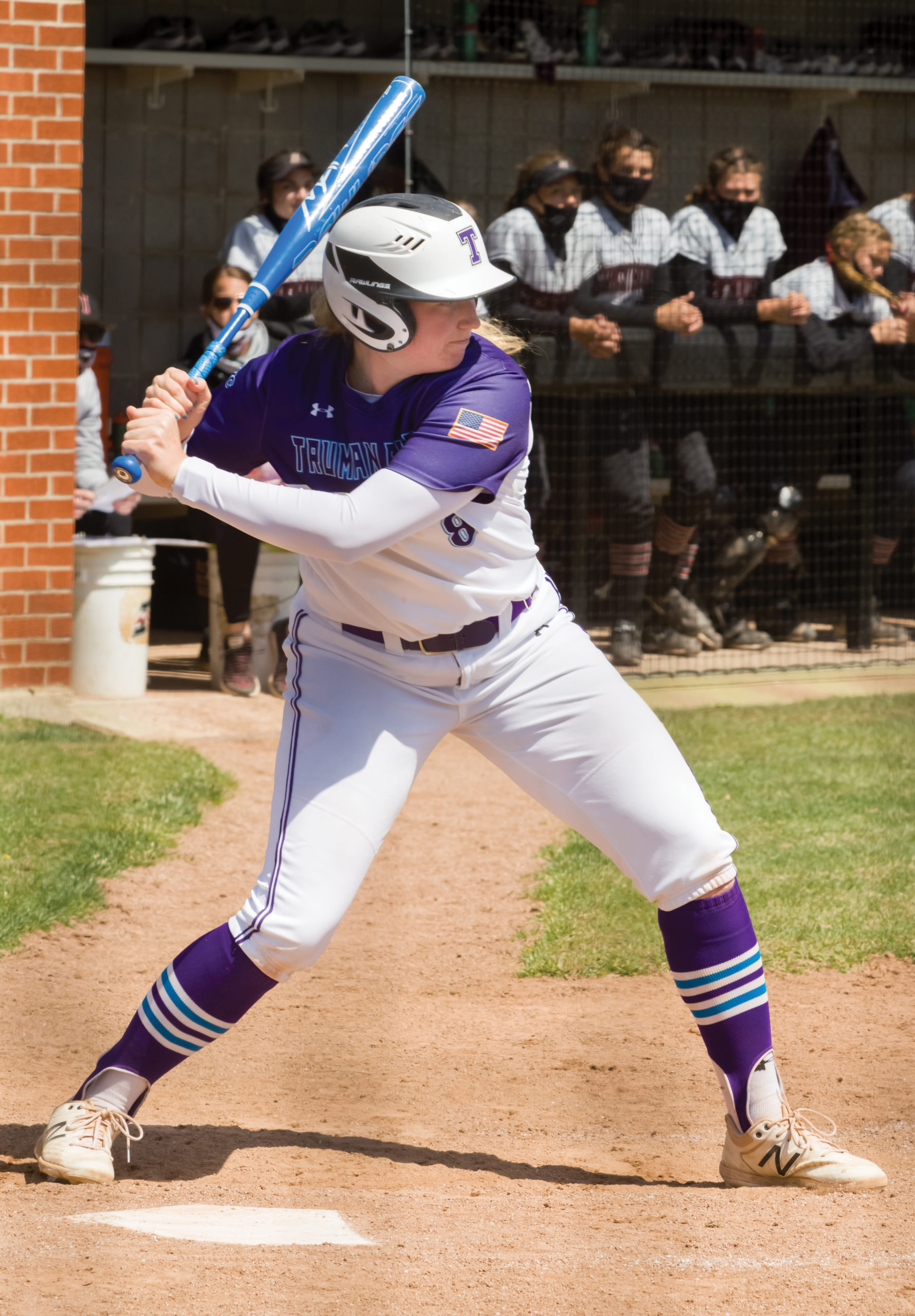
Weltha started her college career playing Division I softball, but after one season she felt the urge to compete in multiple sports like she did in high school. When exploring transfer options, she was hoping to go somewhere closer to her home in Bloomington, Illinois. Truman’s charm, and the opportunity it presented, convinced her it was the right fit.

“I wanted to play more than one sport, and Truman was one of the few schools that was going to allow me to do that,” she said. “I wasn’t originally going to visit Truman, and as soon as I visited, I loved it.”

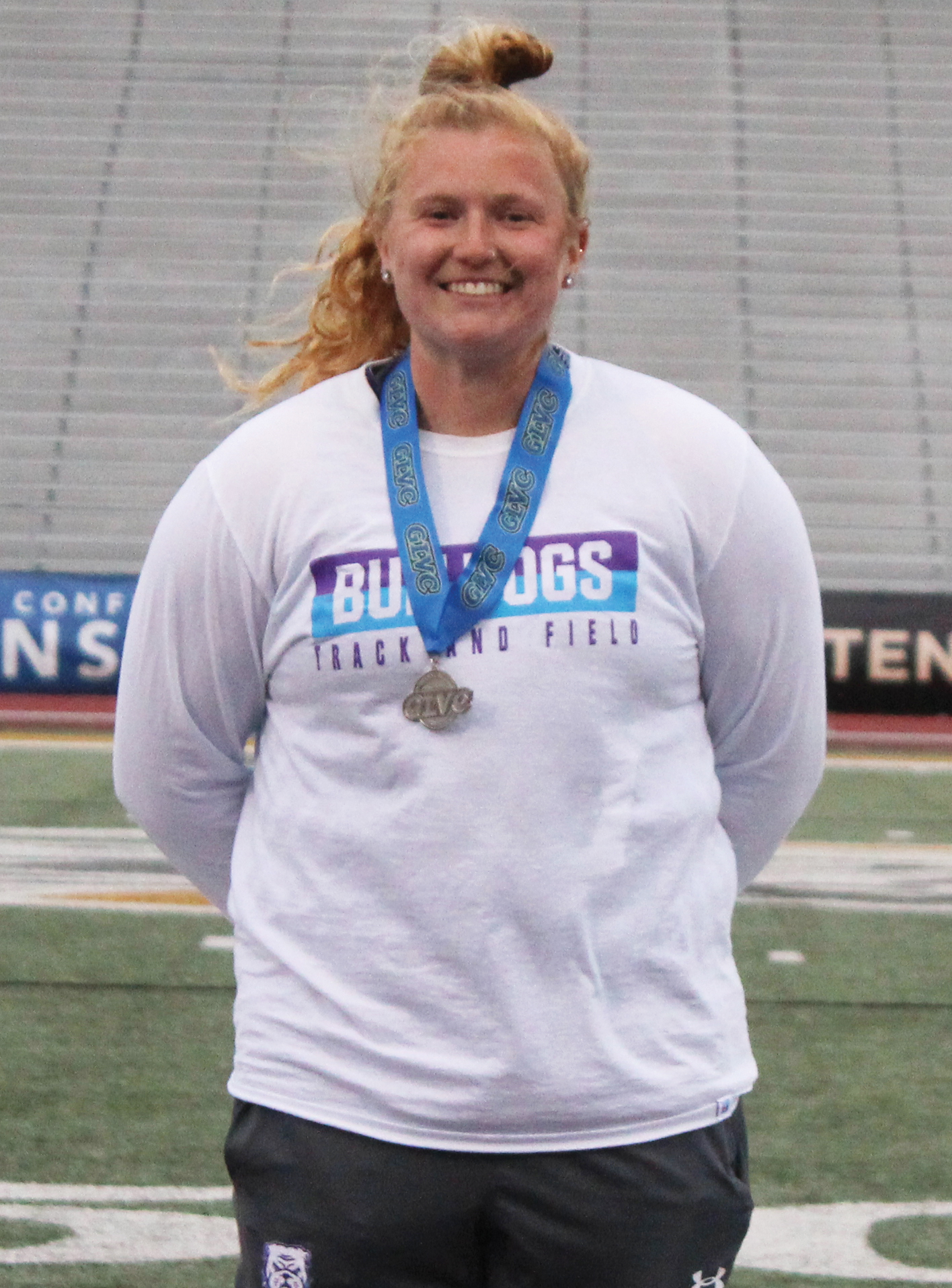
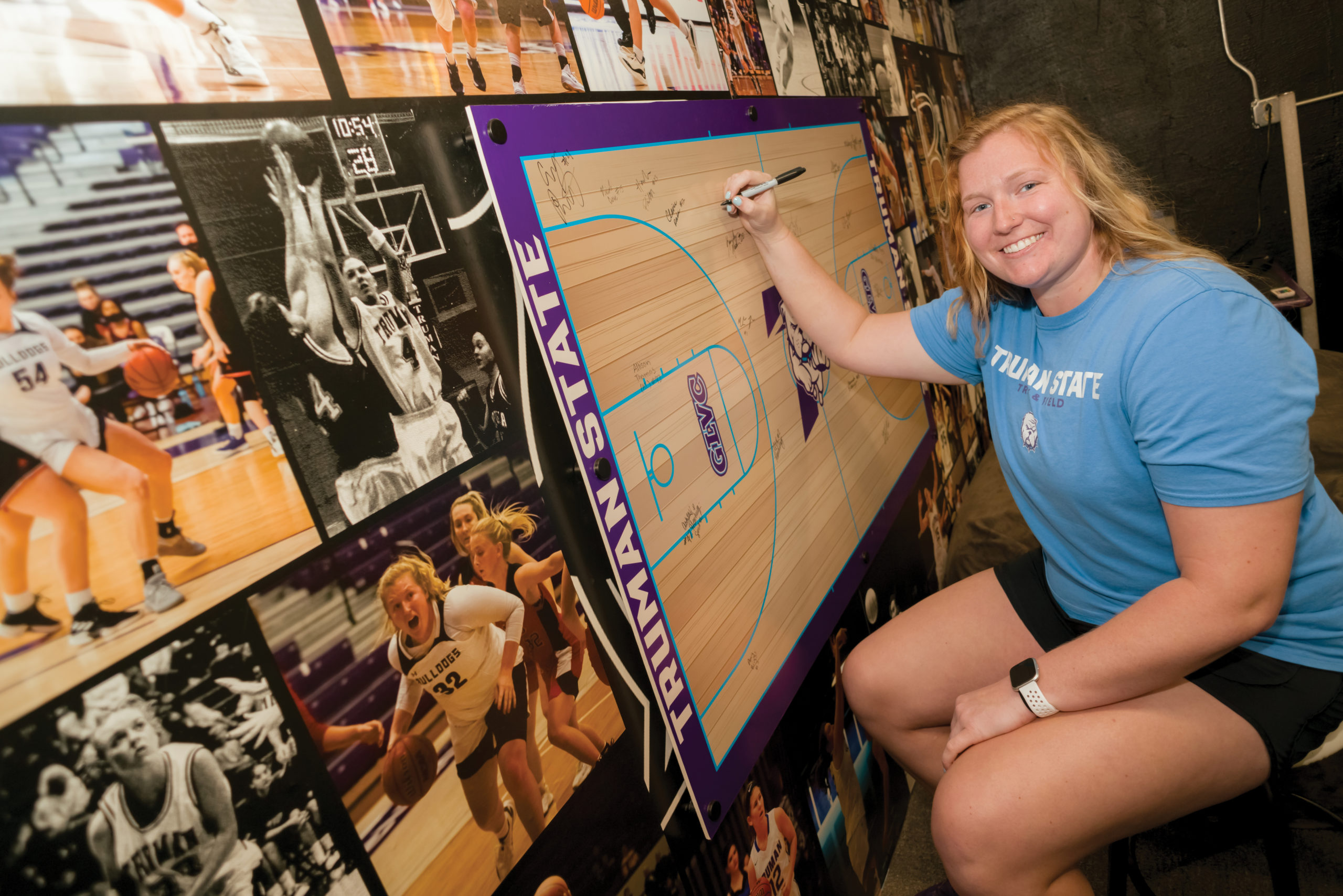
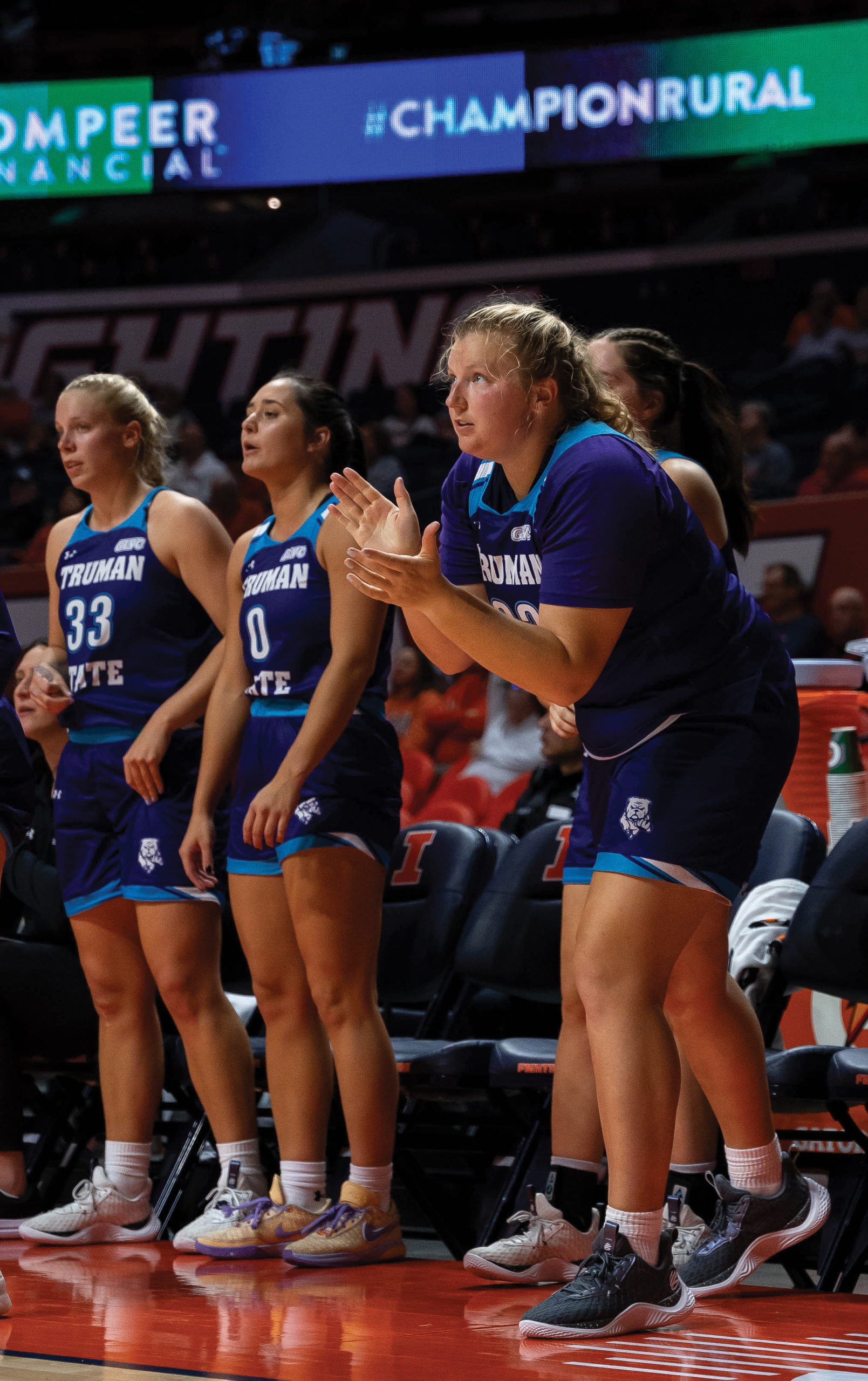
History will remember Weltha as one of the University’s most accomplished student-athletes. While she played in more than 50 softball games, she truly shined on the hardwood, earning all-conference honors four times, including three-straight appearances on the first team. She holds the record for games played at 127, and she finished her career at fourth all-time in scoring and second in rebounds. Weltha also walked on to the track and field team because “it looked pretty fun.” That turned into an All-America season and a ninth-place finish in the shot put at the national meet. For all those accolades, Weltha is quick to credit her teammates and coaches.

“I’ve been able to play with really good players and surround myself with people who make it a lot easier to do those things,” she said. “I’ve been focused on having fun with everything and enjoying everything while I can. Maybe in a couple of months or years I’ll be able to reflect on what I’ve accomplished.”

In addition to being humble, Weltha is a self-described easy-going person. Her ability to go with the flow should come in handy with her next endeavor as an elementary school teacher. She started working at the Kirksville Primary School last summer and did her MAE internship with a first-grade class during the fall. That experience worked out for everyone, and Weltha was hired to teach full time at Kirksville Primary starting with the 2024-25 school year.

“It was just a good environment. People are fun there, people are smiling, and it was very welcoming,” she said. “Kirksville is very homey. It’s been good to me. It will be good to get on my feet for the first couple of years and then see where life takes me after that.”

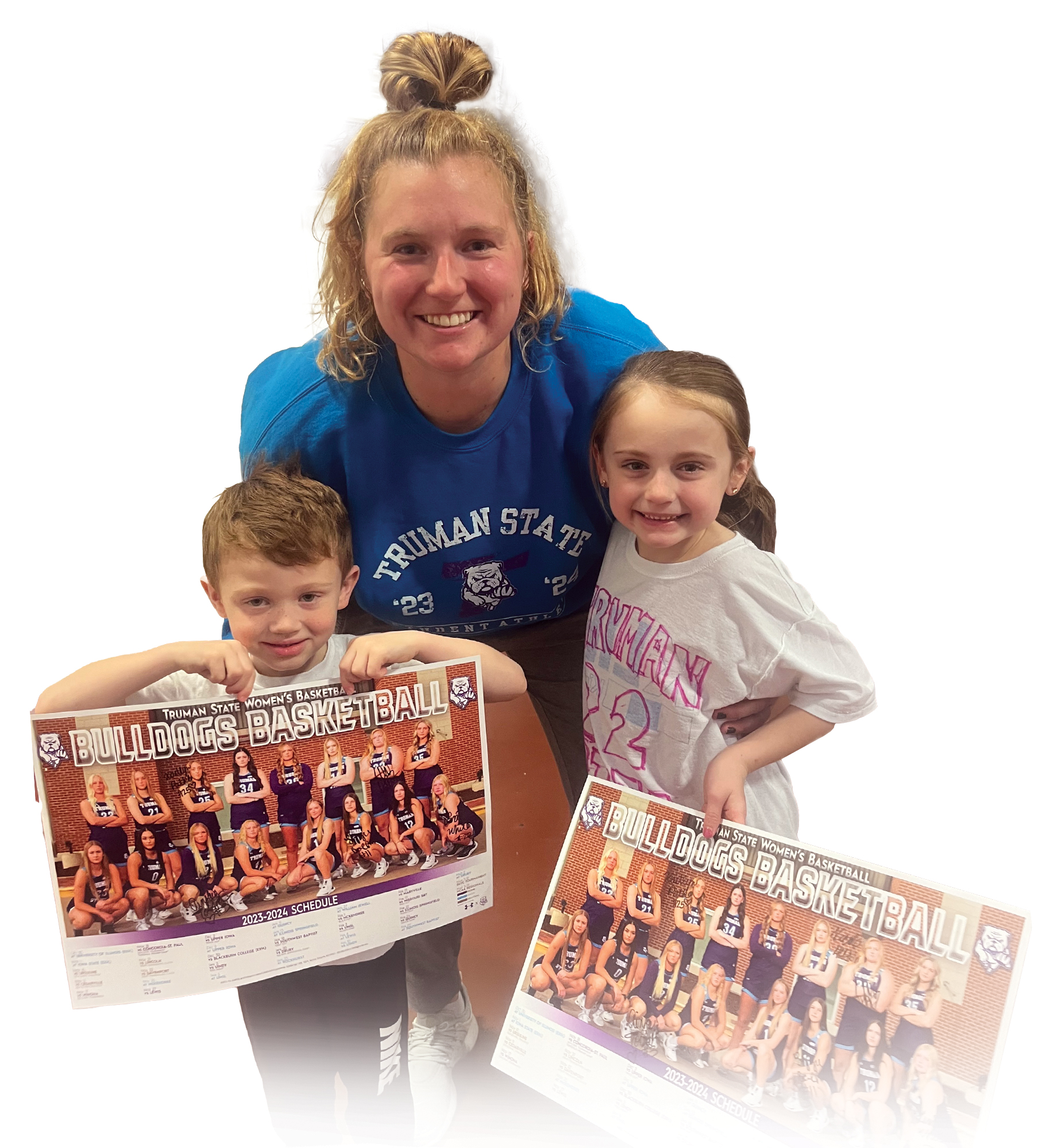
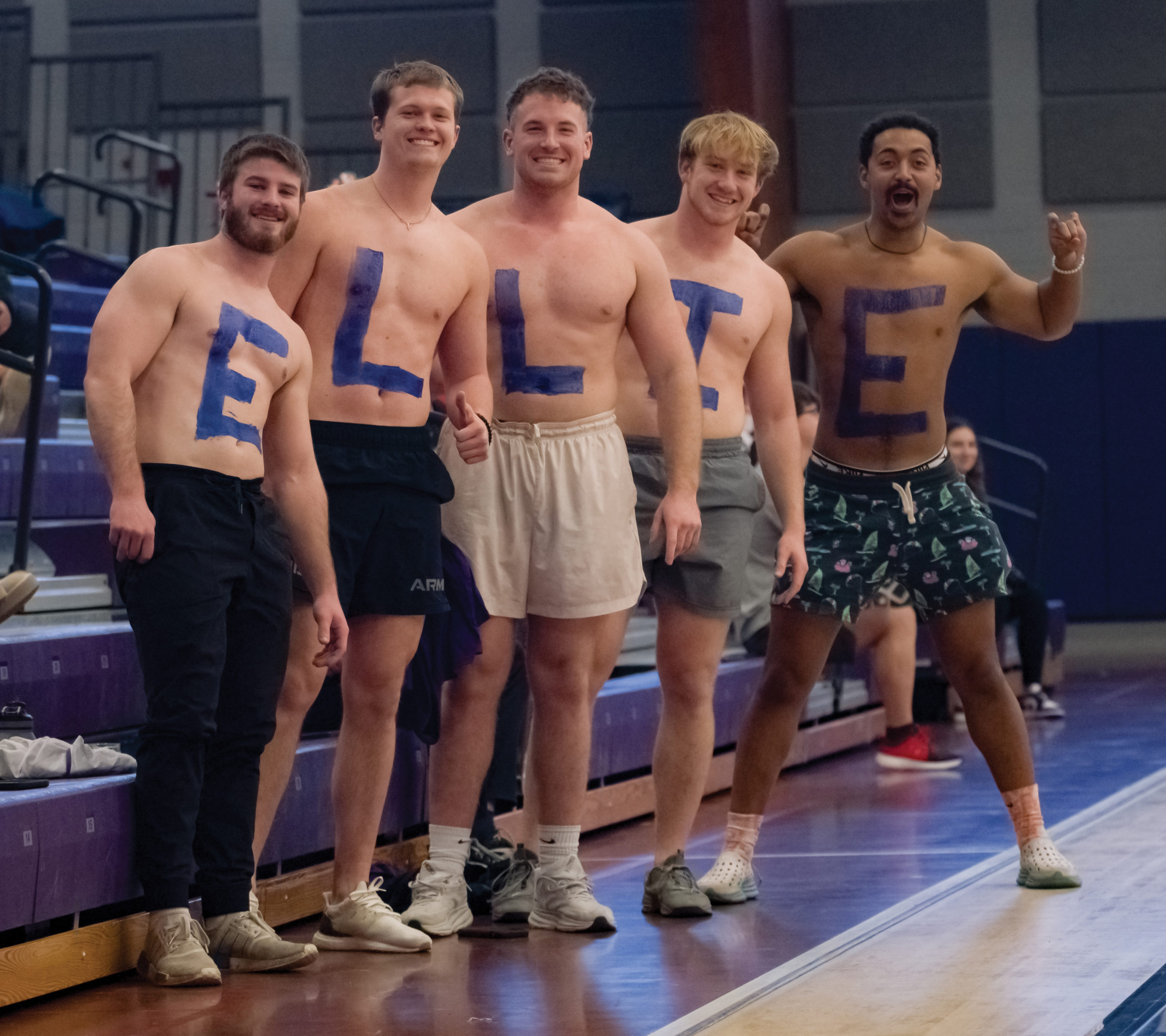
Jack Weltha (center) and friends cheer on Ellie at a home basketball game.

Staying in town also affords Weltha the opportunity to see her brother Jack play his final seasons for the Bulldog football team. The siblings have been
each other’s biggest supporters during their time on campus, and Ellie thinks one of her proudest moments on the court may have helped convince Jack to attend the University. His recruiting visit coincided with Truman hosting the No. 1 team in the nation, and Ellie’s late free throws secured an upset victory that sent Pershing Arena into a frenzy.

“I definitely persuaded him a lot that night,” she said. “It was good for him to be there that night.”

Her brother is far from the only person who was excited to follow Weltha’s success. During the past season, the team hosted a primary school night, and kids from her class came to cheer on their teacher. Even after completing the internship, her mentor teacher kept the class up to date with Weltha’s accomplishments.

“They were super supportive the whole year,” she said. “They don’t really understand what’s going on with college basketball, but they couldn’t care less. They’re just there to see me do well, and it’s been pretty awesome.”

Although her playing days may be over, Weltha is not finished with basketball. She will serve as an assistant coach for the Kirksville High School girls’ team in the coming season.

“I’ve met some of my best friends through sports. I have lifelong mentors in my life because of the great coaches I’ve had. They’ve impacted me and made me a significantly better person and athlete. I want to be able to do that for kids and athletes,” she said. “I don’t really want to leave the sports world. It’s enjoyable, and most of the time uplifting, and I would love to be around that for a while.”