
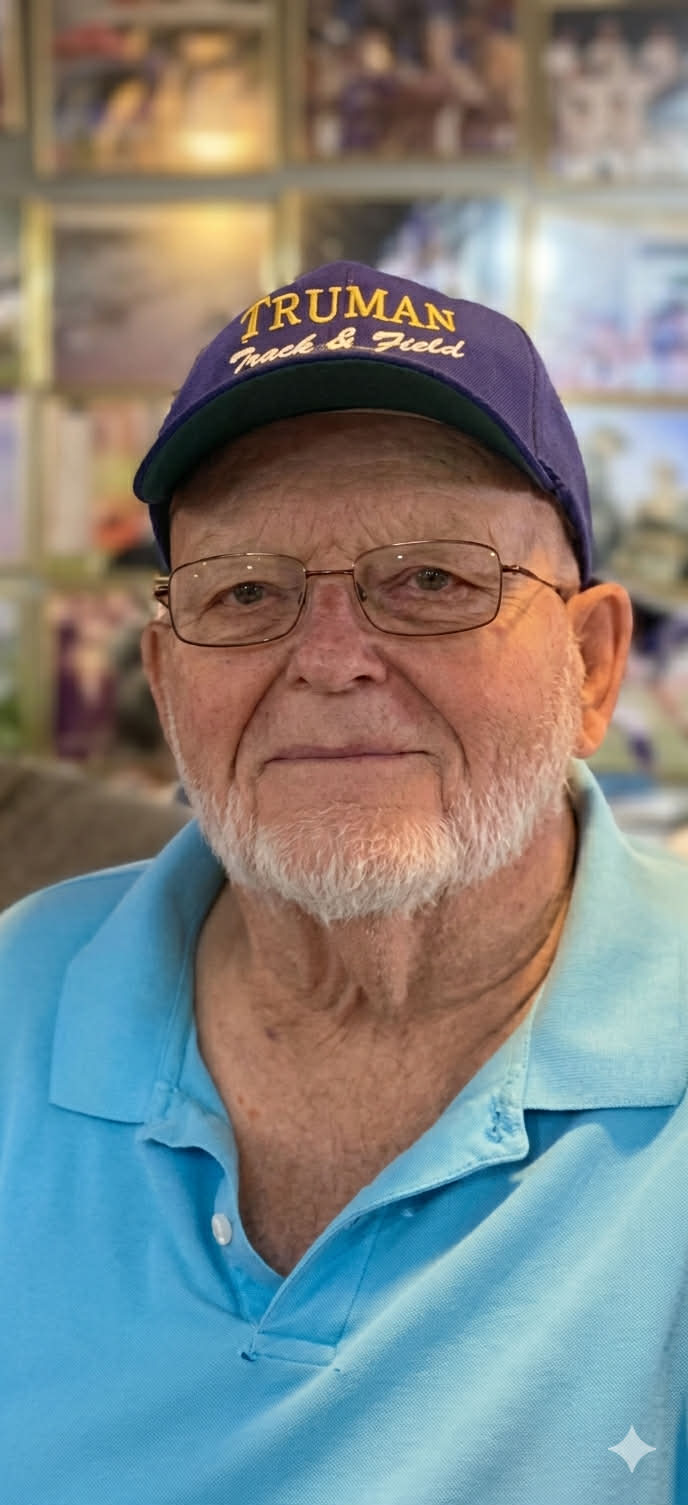
John Cochrane
Some coaches are remembered for wins. Others are remembered for records. John Cochrane will be remembered for something larger.
For more than three decades, Cochrane shaped Truman track and field and cross country programs through a rare combination of competitive excellence, personal sacrifice and unwavering belief in student-athletes. His passing in March marked the loss of one of the most influential figures in Bulldog Athletics history, but his impact remains woven into the fabric of the program he helped build.
From 1980 until his retirement in 2013, Cochrane led Truman’s women’s track and field and cross country programs, later taking over the men’s teams as well.
Under Cochrane’s leadership, Truman athletes won multiple NCAA national titles and earned dozens of All-America honors across track and field, cross country and relay competition. His teams captured seven conference championships, including a remarkable sweep of indoor track, outdoor track and cross country in 2000. He was recognized repeatedly by peers and governing bodies for coaching excellence and service to the sport.
What made Cochrane special was the way he built opportunity where resources were limited and belief where obstacles existed. He invested in facilities, helped modernize training spaces, directed meets, recruited tirelessly and often purchased equipment himself when athletes needed it. If something could help the program move forward, he found a way to make it happen. He was known for personalized workouts posted daily on brightly colored paper, for driving beside runners during training sessions, and for staying connected with former athletes long after graduation. Coaching, for Cochrane, did not end when eligibility expired.
That is why his legacy extends far beyond championships. Generations of Truman student-athletes remember him not simply as a coach, but as a mentor who demanded effort, cared deeply and helped shape the direction of their lives. He built teams, but more importantly, he built people.
In 2013, Cochrane was inducted into the Truman Athletics Hall of Fame. It was a fitting honor for a career that transformed an entire program. Yet the truest measure of his legacy is not found in banners or trophies. It lives in the athletes who still carry his lessons, the coaches who learned from his example and the program standards he helped establish. Cochrane’s time on the sideline has ended. His influence has not.
