
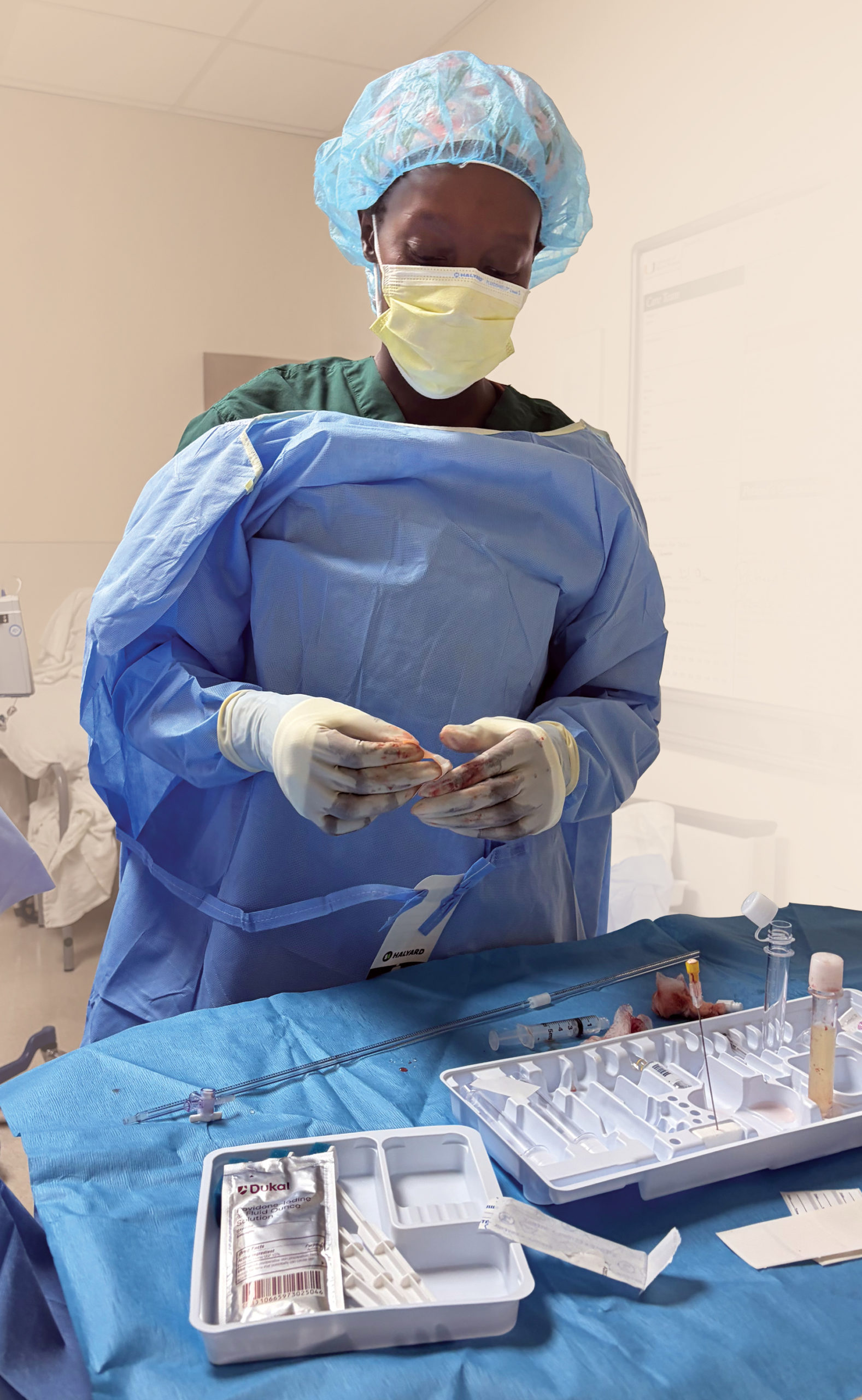
 The only path Megan Sharpe follows is her own. Her calculated approach to planning her career now has her carving out a spot in one of the most in-demand specialities in the medical field.
AT FIRST GLANCE, it would be easy to categorize Megan Sharpe (’13) as a free spirit. She picked Truman after making a surprise stop on campus en route to visiting another school. She played professional volleyball in two European countries after graduation. She was a non-traditional medical school student who picked a notoriously difficult specialty, in part because she loves a challenge.
“I’ve had a few different lifetimes,” said Sharpe, who is still only 34 years old.
To simply portray Sharpe as karmically blessed discounts her tireless work ethic and ability to strategically assess multiple scenarios. Medical school is the prime example. Before she ever set foot on campus, Sharpe knew she wanted to do something in health care and medicine. In addition to majoring in biology, she was a standout athlete in both volleyball and basketball.
“After being so busy in college, going right to medical school was not the thing I wanted to do,” she said. “I wanted to work and make sure that medicine was going to be the actual thing I wanted to do.”
Sharpe took a little time for herself, first as a professional volleyball player in Italy and Slovenia. After exploring that option, she returned to the St. Louis area and made use of her degree working in microbiology and biopharmaceutical labs. She also earned a master’s degree in biology from Washington University. Those experiences made a career in medicine come into focus.
“Getting to help people is one of the most noble things you could strive to do in life,” she said. “I like to be challenged, and I’ve never wanted to be bored in my life, or not busy. Medicine gave me that perfect balance of being able to do the things I wanted to do, and then also do the things I already seem to be pretty good at doing.”
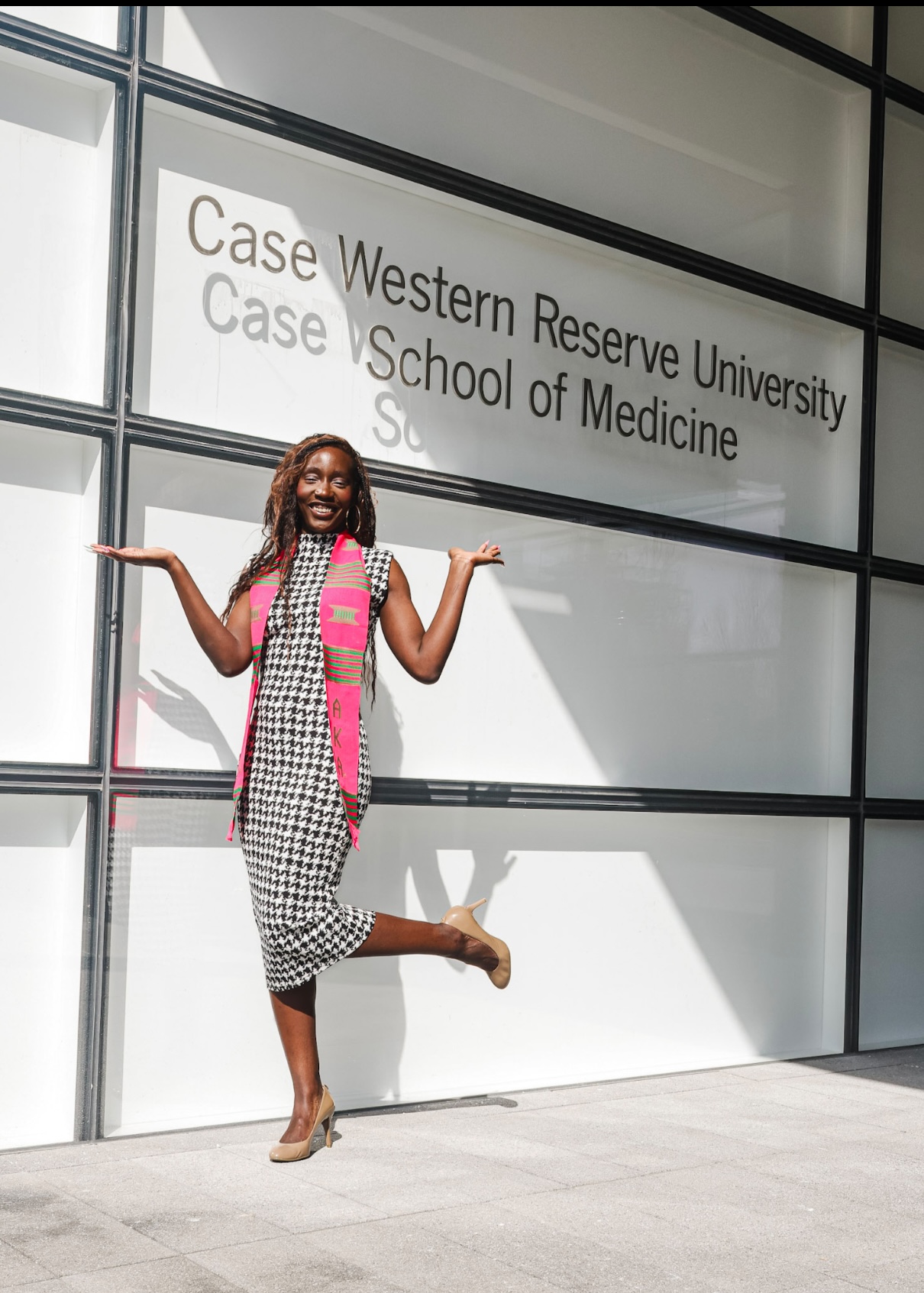 During medical school at Case Western Reserve University in Ohio, Sharpe continued to trust her strategic instincts, knowing she would be picking a specialty that would shape her career and life. After deciding on neurosurgery, she remained in Ohio conducting research for a year.
“I kind of chose neurosurgery late, so I needed to make sure it’s what I wanted to do. It helps to have a research year to make connections,” she said. “I came in knowing I wanted to do probably something surgical, working with my hands, and probably something a little fast paced.”
Now a surgical resident at the University of Miami’s Miller School of Medicine, Sharpe has no regrets about coming to the profession later than her peers. She credits her work experience and research efforts for establishing a proper foundation on which to build her career.
“I’m glad I did it the way I did,” she said. “If I had done it right after college, I just would have not been as mature, would have not handled things as well, and maybe not known as well who I was and what I wanted to do.”
That mindset will help Sharpe greatly as she continues her residency. It is estimated one in three people are affected by neurological conditions, and there is a projected shortage up to 20% of active neurologists in the next decade. While the job can take a toll, Sharpe finds solace in victories such as removing brain tumors, conducting spinal surgeries, combating peripheral nerve cancers and helping patients regain the use of limbs once so damaged they could not move.
“Sometimes you can get lost in the day-to-day and forget the bigger picture of why you’re doing this,” she said. “The patients are obviously a big, big part of that. It’s certainly motivating to see a patient do well, come back and see us and be in a better position than they were.”
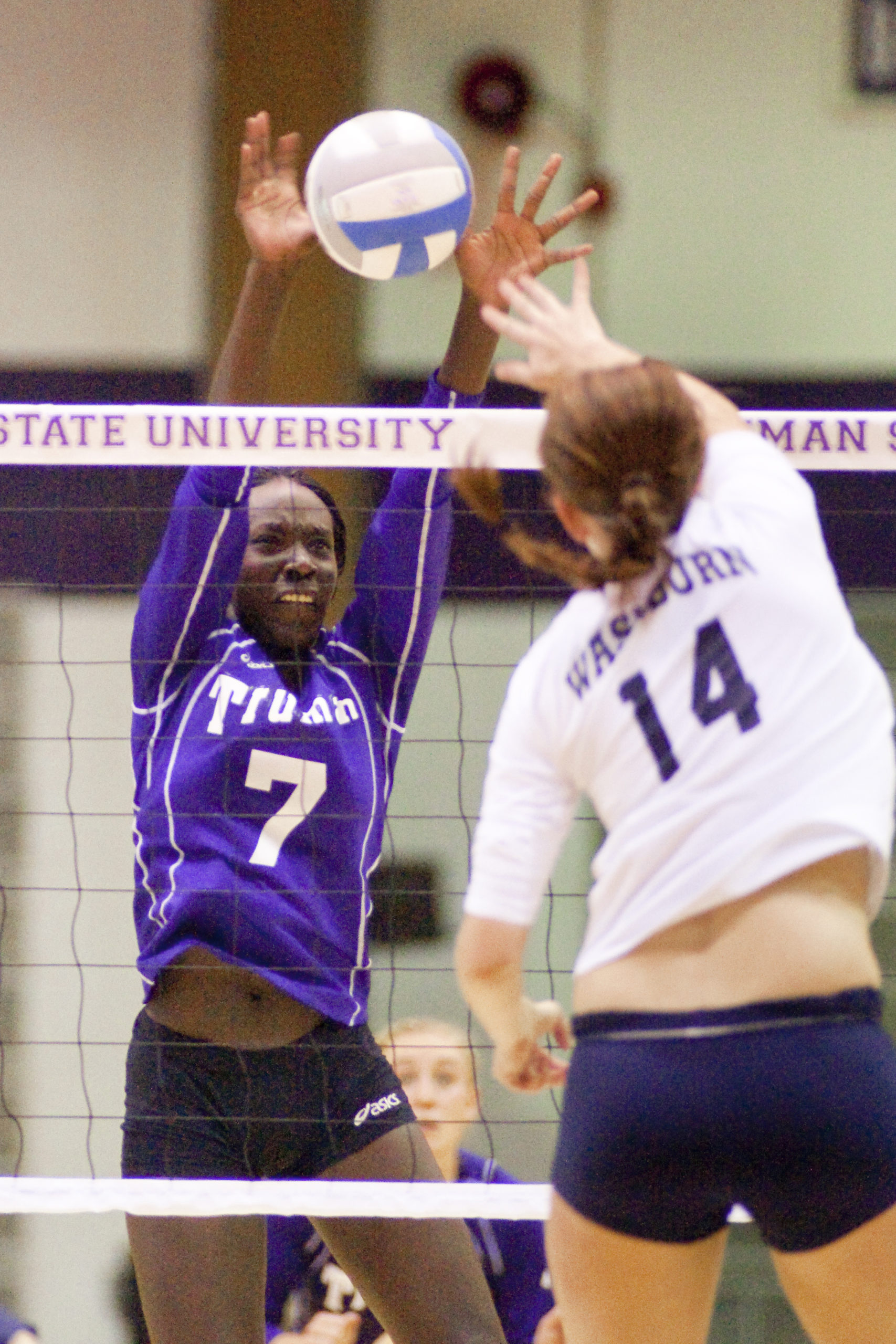 Sharpe also credits her athletic career with shaping her post-collegiate plans. During her time on campus, she became Truman’s first four-time American Volleyball Coaches Association All-American. When she graduated, she was ranked in the program’s top 10 in hitting percentage, total blocks and kills. On the hardwood, she played in 82 games for teams that made three-straight trips to the MIAA tournament. Beyond wins and losses, or any personal accolades, her experiences as a student-athlete helped her become the person she is today.
“Being able to go through those processes and to develop the mental and physical toughness, I think has helped me get this far,” she said. “It’s an important part of my journey.”
It should not be overlooked that Sharpe’s Truman career almost didn’t happen. Her first trip to campus was unplanned and came via some unsolicited motherly guidance.
“My mom didn’t really tell me where we were going. She was like, ‘this coach has been asking about you, and the school’s really good. Let’s stop here,’” Sharpe said. “Then I got there and met everyone, and saw the school and what it was about, and it really won me over. It seemed perfect for me.”
Like so many other endeavors in her life, Sharpe kept an open mind and let the facts of the situation speak for themselves. It worked out then, and at every other milestone in her life. When her seven-year residency is complete, she will have still more decisions to make, from possible fellowships to potentially going into private practice, not to mention where she might call home. Whatever she does, Sharpe will have examined every angle in depth, and she will undoubtedly be successful.
