
 Truman graduates pursue careers they find deeply meaningful. Their successes prove the value of a liberal arts and sciences education and show why it is the best bet for the future.
CENTURIES FROM NOW, historians may one day categorize this period as the era of data. From business analytics to sports statistics to what social media algorithms know will keep eyeballs on screens while fingers continually scroll for hours, almost everything can be measured. Still, some things remain difficult to quantify. How can a person’s passion for a cause be gauged, or the intangible qualities they contribute to society be measured?
Education can be particularly difficult to assess. How does one measure the effects of an education when it is put into practice with purpose? The teacher who shapes thousands of young minds during a decades-long career. The doctor who gives patients more moments with loved ones following their life-saving efforts. In recent years, the Truman Review has shared the stories of alumni who have provided services to children in underprivileged regions, advocated for victims of violent crime and contributed to research combating diseases affecting millions. When it comes to Truman alumni, these stories are the norm, not the exception.
“From implementing focused workforce solutions close to home to supporting humanitarian outreach around the globe, our alumni are force multipliers who make the world a better place,” said University President Sue Thomas. “Truman graduates have an outsized impact.”
IT SHOULD COME AS NO SURPRISE Truman graduates have a fondness for altruism. The underlying philosophy of normal schools, which the University was at the time of its founding in 1867, was education is inherently good. A better educated populace leads to a stronger community. Knowledge is the high tide that lifts all boats. Although Truman State University might be different in many ways from North Missouri Normal School and Commercial College, the noble elements of its founding have remained throughout its existence and are stronger now than ever. Literally from its inception, the University was devoted to producing graduates who are dedicated to service beyond self – who go out into the world with the goal of contributing to the common good.
The Truman of today is built on the foundation of that service-based model. The thousands of teachers the University counts among its alumni are regularly recognized as the best in their schools, districts and states, and the effect they have on their students is immeasurable. Collectively, this group will never be among the wealthiest alumni, at least not in dollars and cents. Education is calling, and those who heed it know the true reward.
 “When I first decided to become a music educator, I was motivated by the idea of giving students the gifts that music had given me up to that point in my life,” said Brad Balog (’98, ’00, ’01), director of bands at Lafayette High School. “Since then, it has become so much more for me. The relationships that I have forged with students and their families, the opportunity to do something that really makes a difference and matters in the lives of so many, the chance to support future educators across the state are all just parts of why being an educator is so fulfilling. Despite all of the demands and current challenges in education, in the end we have the chance to positively affect so many young people every day.”
Administrators in school districts throughout the state understand the impact Truman graduates can have, and it’s why they are highly sought after for open positions. By adopting the Master of Arts in Education model more than 30 years ago, the University added to its legacy of producing quality teachers. The MAE model was originally imagined by President Walter Ryle as far back as the 1930s, and it is an example of Truman being visionary in the preparation of its graduates. They enter the workforce with a deep understanding of their subject matter and their students, and their advanced skills lead to increased pay during their careers, making them more likely to stay in the field.
AS TRUMAN EVOLVED FROM ITS NORMAL SCHOOL ORIGINS, so did the number of ways its alumni can and do make a difference in the world. Many start their post-graduate careers in service to others, including through the military, governmental work or other public service.
All totaled, 247 alumni have served as Peace Corps volunteers since 1961. After graduating, Damian Chavez (’14) taught English in Armenia. He credits the relationships he forged during that time for making the experience particularly rewarding, like when students he coached participated and found success in a debate tournament while competing in their non-native language.
“Peace Corps volunteers serve for two-plus years. During that time, you experience the full range of human interaction and emotion. There are ups, downs and plenty of sideways. Most things are more challenging than we’re used to, but there’s also a lot that is fun and satisfying,” Chavez said.
Long before the Peace Corps was established, Bulldogs were serving the greater good in foreign lands, primarily though the armed forces. It can be difficult to properly access military service among alumni. With the exception of students utilizing the GI Bill to help with their education, most military affiliation comes after graduation and is only known to the University if it is self-reported. It can safely be assumed alumni as far back as the school’s early days have military ties, most notable among them being 1880 graduate Gen. John J. Pershing, who would go on to serve as Commander of the American Expeditionary Forces in World War I. Many made the ultimate sacrifice, including Jedh Barker, the University’s only Medal of Honor recipient who posthumously received the award for his acts of heroism during the Vietnam War.
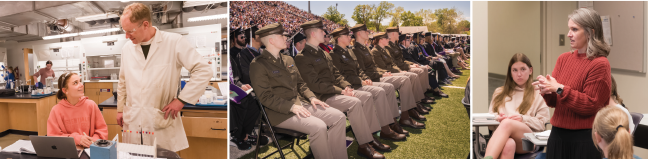
Since the 1969-70 school year, more than 800 students have been commissioned through the University’s participation in the ROTC program. In 2023, the program was ranked No. 12 in the nation by the U.S. Army Cadet Command. When it was inexplicably slated for inactivation last year, stakeholders including President Thomas, members of the Board of Governors and regiment alumni, along with legislators and friends on the state and federal levels, rallied in support. At the beginning of the academic year, the decision was reversed and the ROTC program will continue operations at Truman for the foreseeable future.
“Truman has developed quality leaders for over half a century. These officers have become career military leaders, politicians, corporate heads, authors, educators and national figures at the highest levels across our great country. Truman’s Army ROTC will continue forging quality graduates who will become tomorrow’s leaders,” said Billy Burse (’73), retired Army colonel and past president of Truman’s ROTC alumni regiment.
WHEN IT CAME TO RETAINING THE ROTC PROGRAM, it no doubt helped that Truman alumni have been joining the ranks of government and public service for years. From school boards to Senate seats and countless posts in between, University graduates across the political spectrum find ways to contribute to their communities through the public sector. It is a natural progression since a liberal arts and sciences background provides an array of knowledge, and Truman prides itself on teaching students how to think rather than what to think. This enables them to synthesize information and make the best possible decision for their constituents.
One University experience which contributes widely to careers in public service is the Missouri Government Internship Program. Since the early 1970s, Truman students interested in public service careers have had the opportunity to spend a semester in Jefferson City working as full-time staff assistants with a legislator or state public official. Many former interns have gone on to serve as legislative directors, chiefs of staff, judicial clerks, policy analysts, lobbyists and public officials as a direct result of what they learned and the connections they made as interns.
“The Missouri Government Internship was a great springboard for law school because it gave me a thorough understanding of the legislative process. Its value wasn’t limited to law school, either. Because the internship was full time, it was a perfect transition to the professional world, and it accelerated my development. I still keep in touch with folks I met during the internship,” said Bradley Craigmyle, who completed the internship in 2014 and is now the deputy assistant attorney general, Environment
and Natural Resources Division, with the U.S. Department of Justice.
 ANOTHER WAY TRUMAN GRADUATES MAKE TANGIBLE DIFFERENCES is through their work in health and wellness related industries. In the most recent academic year, approximately 45% of Truman students pursued degrees traditionally associated with the health care field, including biology, nursing, health science, exercise science, counseling, psychology and communication disorders.
“Graduates of the Truman nursing program are in high demand as evidenced by a 100% employment rate upon graduation,” said Cindy Waller, chair and associate professor of nursing. “Through a wide variety of liberal arts and sciences courses, nursing courses and clinical experiences offered to Truman nursing students, our graduates are well prepared to enter the nursing workforce upon graduation.”
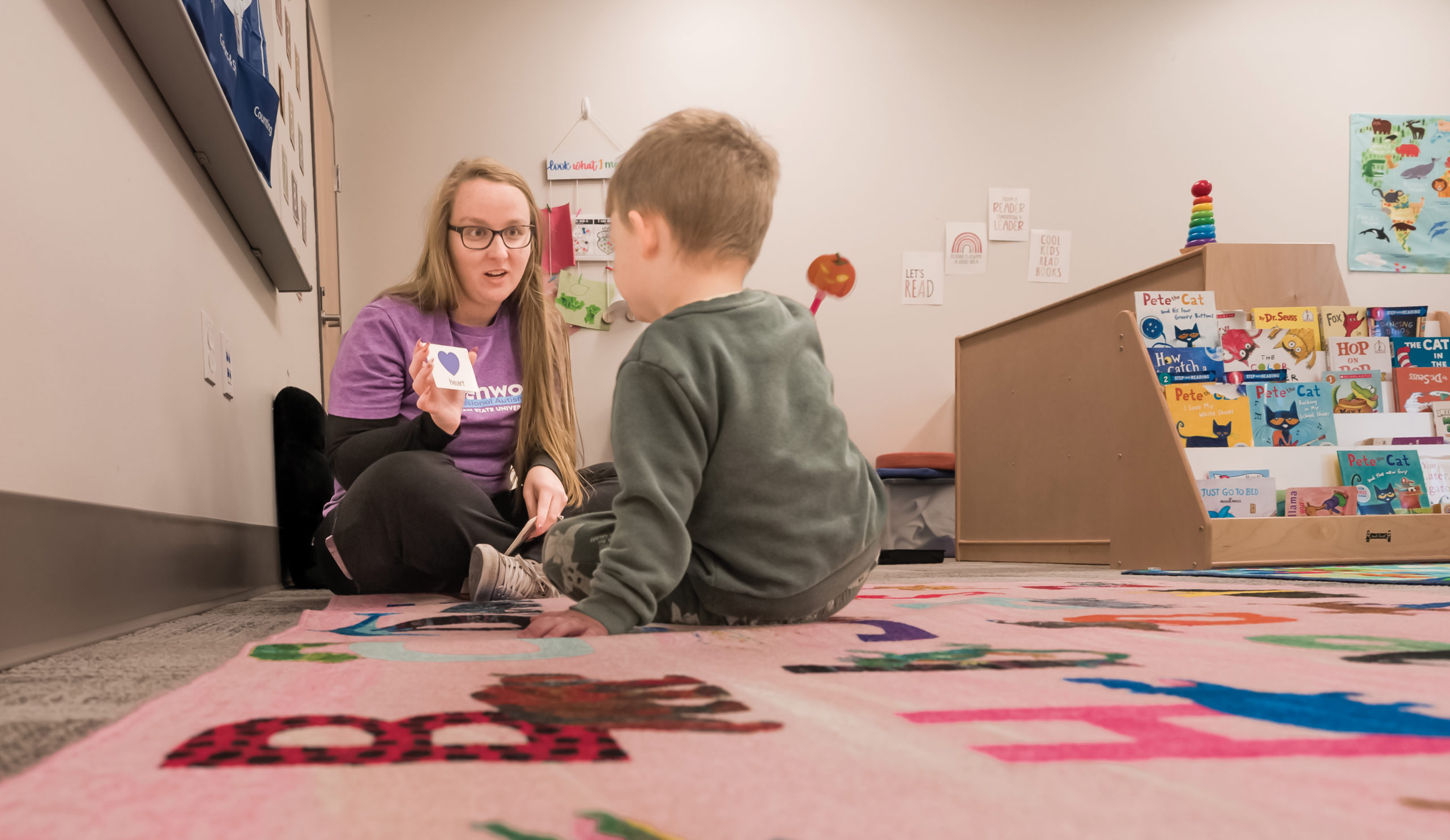
Whether it is firsthand interactions with patients, or contributions through research and other tangential aspects, countless University alumni have dedicated their careers to improving the mental and physical wellness of others. That commitment can be seen in action not far from the heart of campus at the Greenwood Interprofessional Autism Center. After nearly a decade in planning, followed by renovations to a beloved historical elementary school, the converted facility is now more than two years into seeing patients and recently added diagnostic assessments to its list of services.
“We have seen children who are non-verbal find ways to communicate with their families or gain independence by being able to master tasks that seemed unattainable to them not that long ago,” said Dr. Maryellen Koch Jensen, Greenwood director. “That type of progress can make a real difference in the quality of life for our clients and families.”
A different kind of community-focused University project is just getting off the ground. The Senator Roy and Abby Blunt SKILLS Center, located in the Kirk Building, partners with the University Career Center, Tutoring Services, Access and Disability Services, the Center for Academic Excellence, the Communication Lab and the Writing Center. Its focus is on providing education and services for the local community and employers to enhance workforce readiness.
“Truman and the SKILLS Center are committed to the success of the Kirksville community and northeast Missouri towns and businesses,” said Craig Berryman, director of the SKILLS Center. “We want to improve and empower our workforce and employers to be competitive locally and nationally. We will do that through positive education and upskilling to generate greater economic opportunities for our community workforce.”
 THERE IS NO WAY TO ACCURATELY QUANTIFY how much Truman and its alumni contribute to their communities, but some things can be measured. A 2022 Economic Impact Study commissioned by the University (economicimpact.truman.edu) showed Truman generated $561.7 million in income to the Missouri economy in the previous fiscal year. The study also noted the average bachelor’s degree graduate from Truman will see increased earnings of $30,800 per year compared to a person without a degree working in Missouri. Regardless of the field of study, simply earning a degree from Truman puts a graduate on a trajectory for increased income, and their contributions through their careers make them self-sufficient drivers of the economy.
Truman is a model of efficiency and one of the wisest investments in the state of Missouri, proof of which can be found in its high retention and graduation rates. By and large, the students who come to Truman stay, they graduate and, most importantly, they take their new-found skills out in the world and use them to make a difference. The economic impact study showed for every dollar invested in Truman the state of Missouri receives nearly nine dollars in return.
I consistently hear from employers that strong communication, adaptability and problem-solving are among the most sought-after skills in candidates across industries. A liberal arts and sciences education develops these competencies alongside a student’s area of study.”
— Alison Ayers
executive director of career services and employer relations
Contributions can come in as many ways as there are alumni, which speaks to the versatility of a Truman degree. That is the key to the value of a liberal arts and sciences education in the years to come. While change is always constant, nearly every industry and occupation today seems to be in the midst of unprecedented disruption. Whether it is the continued development of the global marketplace or the impact of AI on the humans in it, careers of today evolve more rapidly than ever. This makes essential skills such as critical-thinking, communication, problem-solving and leadership — all markers of a liberal arts and sciences education — even more valuable.
“I consistently hear from employers that strong communication, adaptability and problem-solving are among the most sought-after skills in candidates across industries,” said Alison Ayers, executive director of career services and employer relations. “A liberal arts and sciences education develops these competencies alongside a student’s area of study. As industries continue to evolve in response to emerging technologies, including AI, these skills remain essential. They equip graduates to think critically and lead with purpose while bringing creativity to complex challenges in any career field.”
Though the landscape of the job market may change, liberal arts and sciences graduates will invariably be able to find their way in it. There will perpetually be challenges requiring creative, original thought to devise a solution. Organizations will need leaders to harness the power of their workforces. The individuals required to meet these challenges will consistently be in demand, and there will always be a need for a training ground where they can learn today how to meet the unknown challenges of tomorrow.
As the future unfolds, Truman and its graduates will continue to diligently and humbly live the value of the school’s vision statement, which calls for “developing educated citizens needed to protect our democracy and offer creative solutions to local, state, national and global problems.” Their efforts may at times go unnoticed, but that’s not why they do what they do. The world is a better place because Truman and its alumni are in it. While that statement might be immeasurable, it remains factual.
