Archives

An Education for All Ages

ZombieScholarAlthough Truman was founded as a school for teachers and has grown into a nationally recognized university, it does not cater exclusively to undergraduate and graduate students. Truman’s Institute for Academic Outreach (IAO) oversees a variety of programming for a wide range of audiences.

Perhaps the best-known IAO program is the Joseph Baldwin Academy for Eminent Young Scholars. Commonly referred to as JBA, it provides highly talented middle school students the opportunity to spend three weeks on campus in the summer where they can get a head start on their future college careers. The students live in the residence halls and take classes with Truman faculty members.

“For many high-ability young people, school isn’t always challenging enough, and sometimes it feels less-than-cool to be smart,” said Kevin Minch, associate vice president for academic affairs and Institute director. “We try to create an environment at JBA where students not only learn it’s OK to be smart, but that attending college is something they eagerly look forward to.”

Typical summers see roughly 400 seventh, eighth and ninth grade students participating in JBA. To be admitted to the program, all students must be nominated by a school principal or guidance counselor and they must meet exceptional academic criteria.

Created by the University in 1985 to provide the benefits of a liberal arts education to students beyond its own undergraduates, JBA has also become a successful recruiting tool. Hundreds of former JBA students have gone on to make Truman their college choice.

In recent years, the IAO has added additional summer programming for younger students. The Summer Talent Academy for Professions in Health (STAPH) is a one-week, intensive residential program aimed at students who have just completed 10th or 11th grade and are interested in becoming doctors, nurses, therapists, technicians or entering any other health profession. In addition to Truman faculty, STAPH is conducted in partnership with doctors and clinical faculty from A.T. Still University.

Capitalizing on recent popular culture trends, the IAO created the Zombie Scholars Academy. The program, which debuted in 2013, focuses on developing critical thinking, leadership and disaster preparedness skills and was inspired by zombie initiatives by the Centers for Disease Control and other public health groups.

“With 30 years of experience learning about what gets young people excited about scholarship, we’ve reaffirmed the notion that learning is more effective when its hands-on and fun,” Minch said. “Popular culture–and zombies in particular–gives us access to so many fascinating topics in the arts and sciences. The kids love it!”

IAO programming reaches other demographics besides middle and high school students, and participants do not always have to venture to Kirksville to reap the benefits. Working adults can take advantage of professional development courses and online graduate certificate programs. There are also a host of online courses, test preparation services and options for non-degree seeking students.

“We are growing our programming every day. We really want to help people embrace the idea of learning as a life-long experience,” Minch said.

More detailed information about programming available through the IAO can be found online at institute.truman.edu or by calling (660) 785-5384.

The University During War

Remembering World War II and Those Who Served

The atmosphere on campus in the late 1930s and early 1940s was an interesting mix of anxiousness and obliviousness. War loomed, and while the general consensus was that the United States would eventually become involved, many on campus chose not to think about what was in store.

“There was a feeling it was coming, especially in ’40 and ’41,” Gerald “Shag” Grossnickle (’42) said. “The main thing was, ‘Let’s have a good time while we may. We might not live to see tomorrow.’”

Attendee Harvey Young shared the same outlook.

“I didn’t worry about it too much,” he said. “I was probably having too much fun.”

For the most part, day-to-day life on campus went largely unchanged until 1941. Grossnickle remembers being on the dance floor in Kirk Auditorium with his future wife when he heard about the attack on Pearl Harbor.

“I knew we were at war then,” he said. “There was no question.”

According to “Centennial History of the Northeast Missouri State Teachers College,” written by President Emeritus Walter H. Ryle, fall enrollment for 1941 was 846. By comparison, just three years later only 302 students remained. In 1944, only 101 degrees were awarded and women were the recipients of 82 of them.

Traditional fixtures of college life faded away for a time. The football team skipped three seasons of play, and in 1942 Ryle announced the University would not celebrate another Homecoming until after the war.

In Kirksville, one of the early indicators that war was inevitable was the Civilian Pilot Training Program (CPT) sponsored through the government. The University began participation in the program in January 1941. While the goal may have been to train civilian pilots, by 1943 the program had officially changed to the War Training Service. The participants were on a strict military regimen and lived in barrack conditions in Kirk Building.

Even though the program took place on campus, many of the men involved were not University students and some came from various states all across the country. In his book, Ryle estimates the University helped train anywhere from 1,800 to 2,000 men during the school’s three-year participation in the program. One of those trained in the early days of the program was William “Bill” Minor (’42).
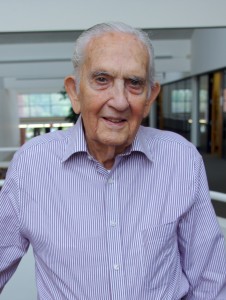
William “Bill” Minor (’42)

William “Bill” Minor (’42)

“I got my license there just before World War II started in 1941,” he said.

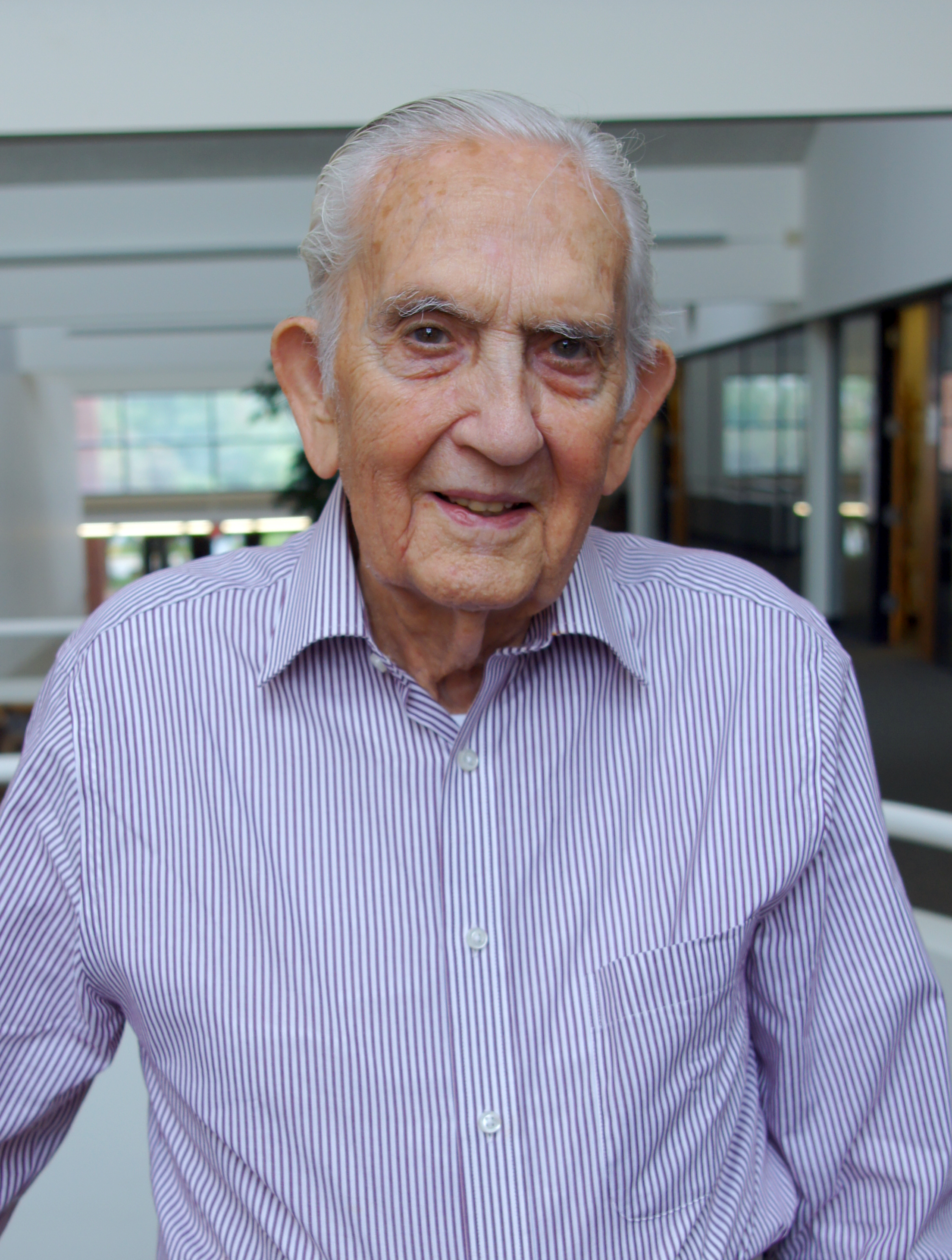
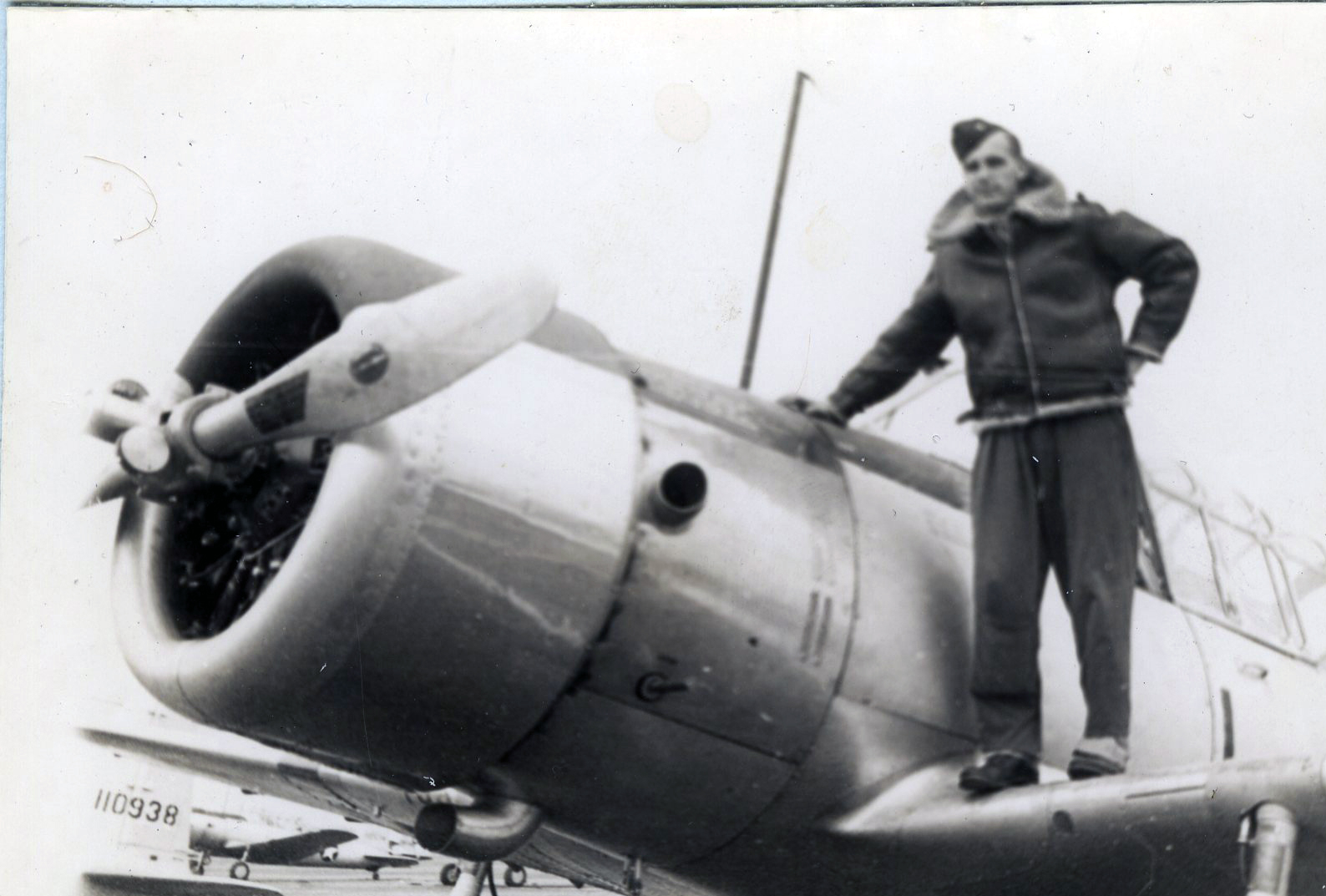
Minor enlisted in the Army Air Corps and was commissioned after his graduation. He, Grossnickle and Young are just a few of the individuals with University ties that served. Their stories, while unique in their own rights, do share similarities and are emblematic in several ways of the many alumni, students, faculty and staff members who participated in the war effort.
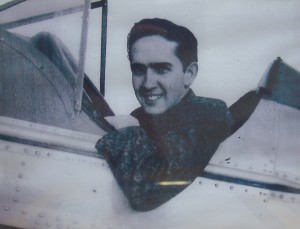
WilliamMinorinPlane

William “Bill” Minor (’42)

For Minor, although he was a licensed pilot, he spent much of his first year and a half of active duty gaining training experience stateside. Before he even got out of the country, he was exposed to just how dangerous the task at hand would be. On a training flight in Florida, his squadron of aircraft encountered a tropical storm and five pilots perished. That was just a taste of some of the misfortune he would see and experience.

Upon entering the Army Air Corps, Minor had hopes of being a fighter pilot. He was even scheduled to fly the famed P-51 Mustang, but a shortage of bomber pilots forced a last-minute change of duty that left him piloting a B-24 for the Eighth Air Force. While he may have been disappointed in the reassignment, it was not all bad for Minor. He was taught to fly the B-24 by Hollywood legend Jimmy Stewart. Also, while conducting training exercises in Iowa, he met his future wife of nearly 65 years.

* * *

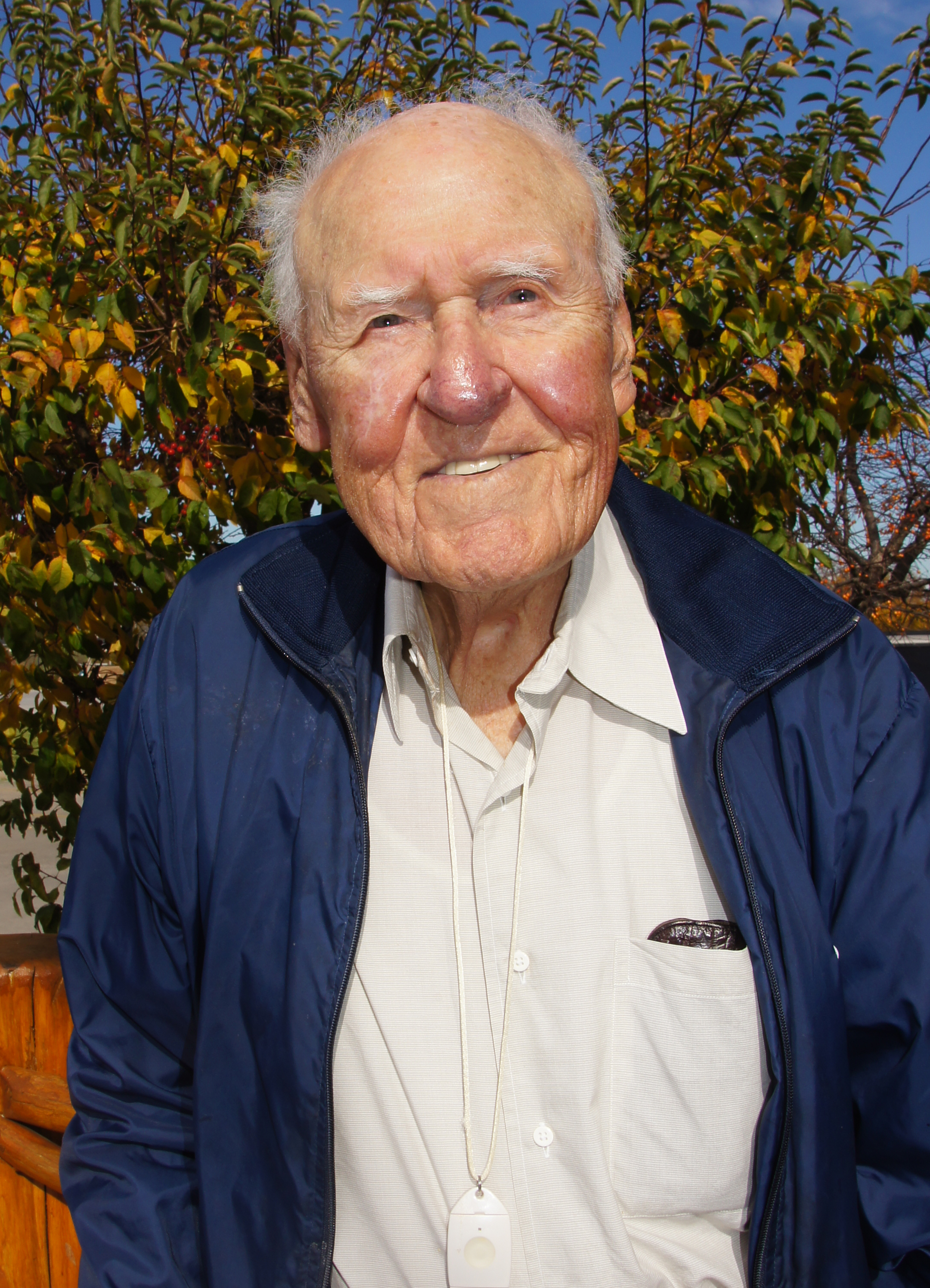
Young, like his childhood friend Minor, got his pilot’s license through the CPT. He attended the University for three years and was working at a company that manufactured airplane parts in Wichita, Kan., when he was accepted into the Army Air Corps. He gave up a job that paid $1,000 a month in order to serve.

“We all had the idea we had to do it,” he said. “It was our duty.”
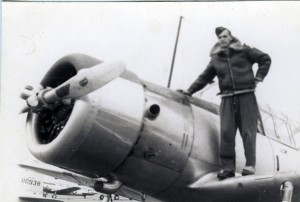
Attendee Harry Young

Attendee Harry Young

By the end of the war, Young would have more than 1,700 hours of flight time in combat zones in the Pacific, primarily transporting cargo, food, medical supplies and troops. On his first mission in theater, his flight came under attack over Rabaul, Papua New Guinea.

“Flak was so thick you could walk on it, but luckily we didn’t get hit,” he said.

After getting his plane turned around, he had to fly through a weather system to escape. A lightning strike knocked out the electrical systems and the crew had to make a dead reckoning heading back to Guadalcanal. It would not be Young’s last brush with death.

“I thought, ‘By God, what have I got myself into?’” he said.

Despite living in a war zone, dealing with heat, mosquitoes and what he describes as awful food and drinking water, Young does have some fond memories of his service time. On regular runs to Sydney, Australia, his ability to secure bottles of whiskey ultimately led to him winning the favor of a two-star general and at times serving as his personal pilot. Occasionally, he was responsible for flying in entertainment from the USO, and although he did not personally transport him, Young got to spend one evening sharing drinks with Bob Hope.

* * *
ShagGrossnickle

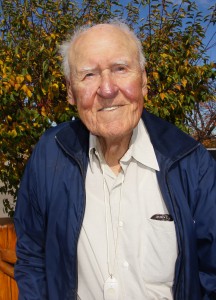
Gerald “Shag” Grossnickle (’42)

Grossnickle also had some memorable moments awaiting his final orders for the war. In the fall of 1942, he was in Rhode Island preparing to go overseas with the Navy. The St. Louis Cardinals happened to be playing in the World Series against the New York Yankees, and he and his wife were able to take a train into the city to catch a game.

Fortune smiled on Grossnickle more than once while he was in Rhode Island. Due to another sailor’s illness, Grossnickle was reassigned at the last minute to the Great Lakes Naval Station near Chicago. He would spend the duration of the war stateside training countless regiments of sailors before they were sent overseas, eventually working his way up to battalion adjutant. After about a month in Chicago, Grossnickle received word that the group he was previously assigned to, and would have remained with if not for the last-minute switch, had been shipped out and every one of them had been killed.

“I think it was the grace of God that I was the last one to come to Chicago,” he said.

* * *

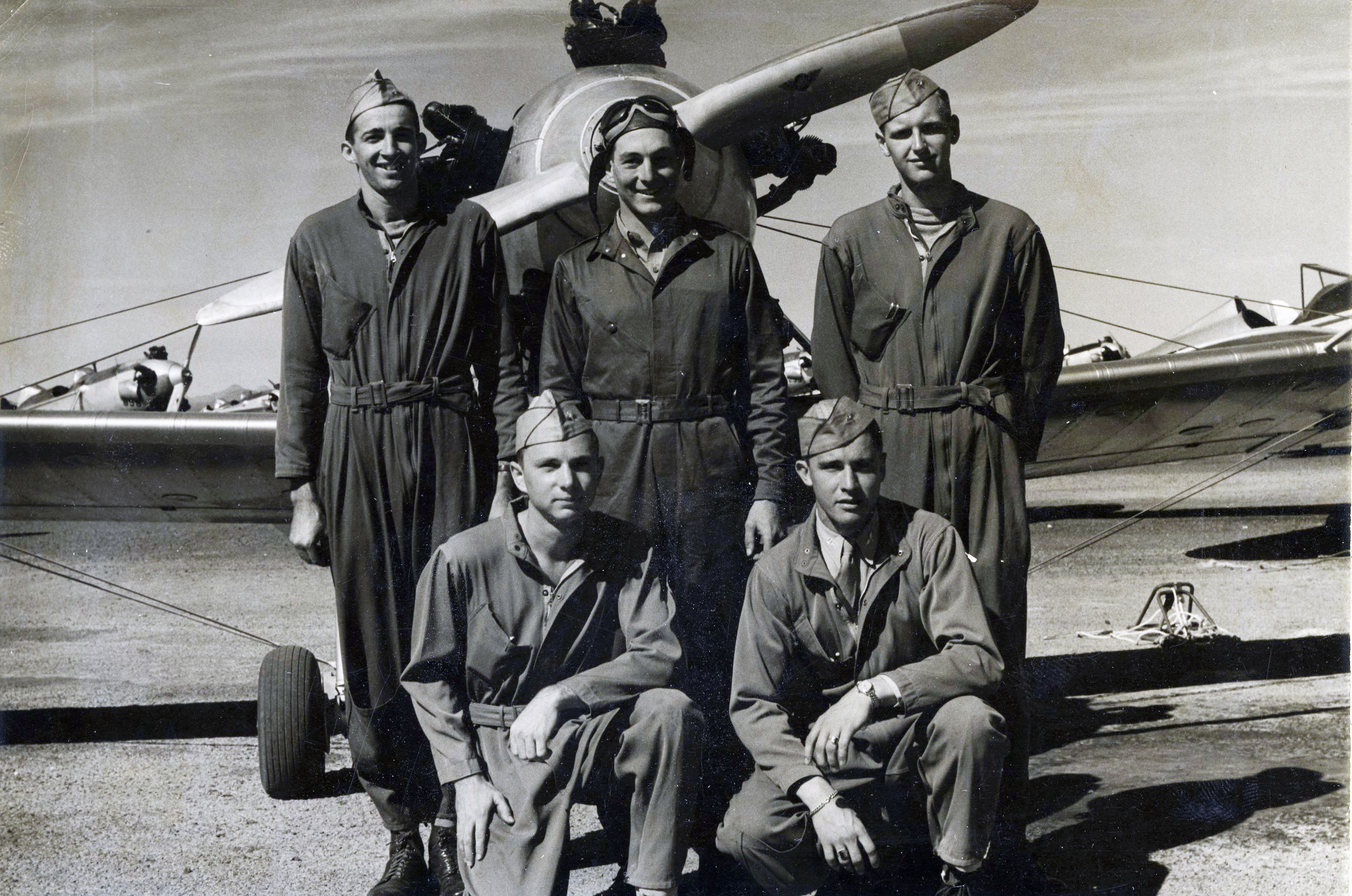
The defining moment in Young’s flying career came when he was transporting a group of military police and fighter pilots out of Okinawa to Manila. At one point in the trip, the squadron flew into a typhoon. Past the point of no return, without enough fuel to go back and flying in an area where lower altitudes were controlled by Japanese forces, Young had no choice but to go through the storm. Although he found a hole to fly through at about 10,000 feet, the trip was anything but ideal. At times he could not see, and the storm was so intense it ripped off several pieces of the plane.
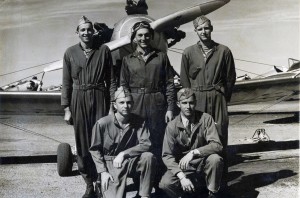
Attendee Harry Young during his training

Attendee Harry Young during his training

“I never took such a ride in my life. It just tore us to pieces,” he said. “I thought we weren’t going to make it.”

At one point, he considered ditching the plane over water, but knowing what that meant for everyone’s chance for survival, he pressed on through the storm. After nearly half an hour of white-knuckle flying so intense that both his navigator and co-pilot got sick, as did most of the troops being transported, the plane broke out of the weather. As fortune would have it, they came out of the storm and immediately found an emergency landing strip on the island of Luzon that was not on the navigator’s map.

“The good Lord just built us an airstrip,” Young said.

It was not until he was safely on the ground that he fully realized all he had been through.

“Luckily, I was so scared that I didn’t get sick in the air,” Young said. “When I landed, I was just so scared I couldn’t sign the form you are supposed to sign.”

Damage to the plane was severe enough that it was later junked, but all aboard made the trip unharmed. According to Young, a similar plane flying just 10 minutes behind was not as lucky. It went down in the jungle and was not found until the 1970s.

* * *
WilliamMinorFlightCrew

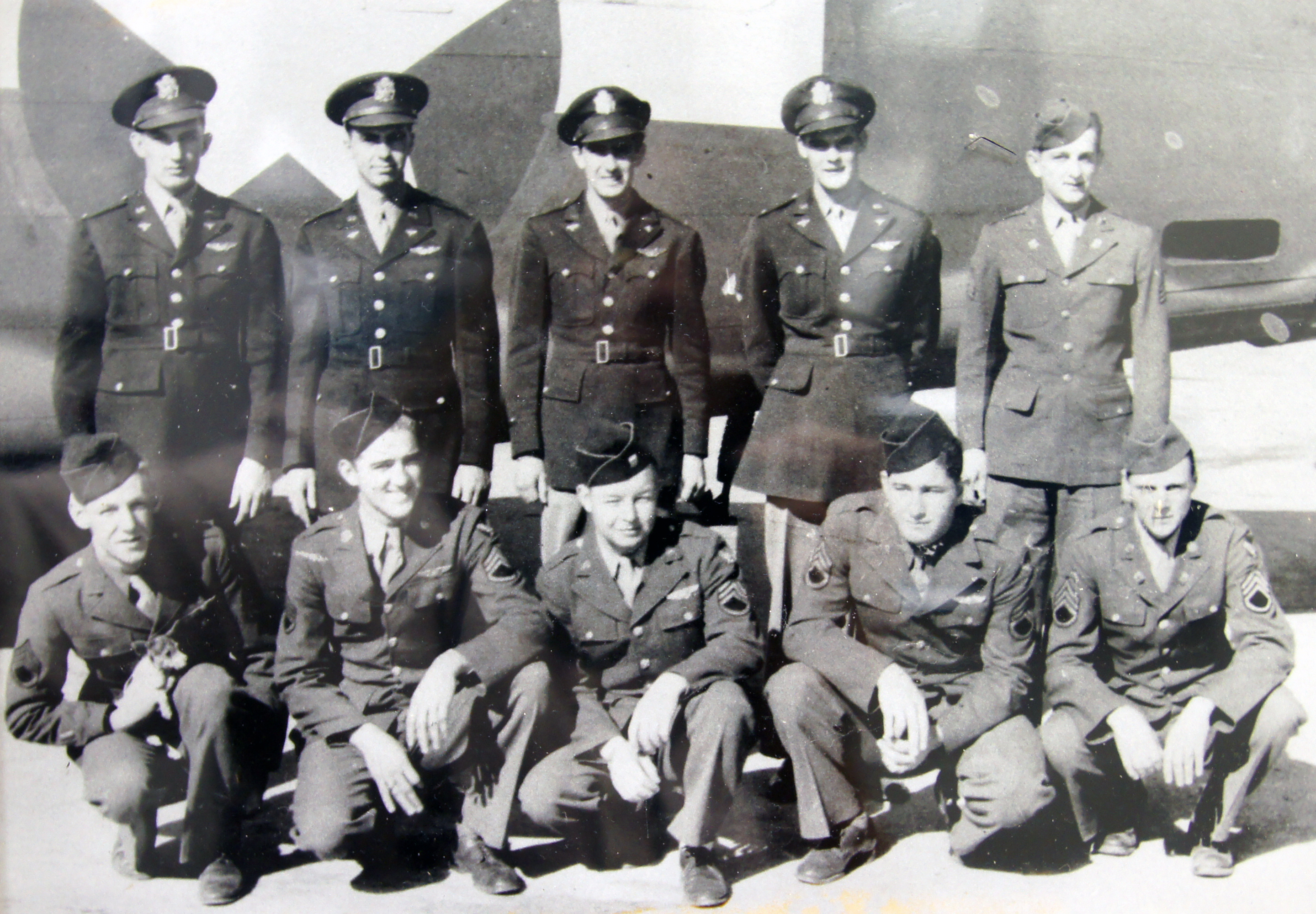
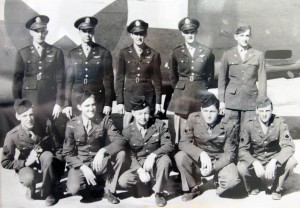
William “Bill” Minor (’42) with his flight crew

Although he was an experienced pilot by the time he landed in England in November 1943, Minor would not rack up a tremendous amount of flight time during the war.

“I only flew five missions,” he said.

On Jan. 5, 1944, during a bombing run over Kiel, Germany, Minor’s plane came under attack from Axis forces. Three German Luftwaffe fighters repeatedly strafed the plane. Minor lost contact with the crewmembers in the rear, and when his B-24 no longer returned fire, he knew those men were already killed or injured. The German planes then focused their attack near the front cabin where he was located, eventually striking the engine, causing it to burst into flames.

“I knew I had to get out,” Minor said. “The plane was on fire and it was coming up on the flight deck right behind me.”

As flames overtook the airplane, Minor could hardly see. He had to take a leap of faith, hoping the plane’s bomb bay doors were still open, leaving him an escape route. Luckily for him, they were.

“I just plunged right through the fire and went right through the bomb bay doors,” he said.

Just a few seconds passed between the time Minor exited the aircraft and when it exploded. He and two fellow crewmembers came down in the frigid waters of the North Sea at the bay entrance to the Kiel Canal. While they were fortunate enough to hit a sandbar at low tide, they landed within sight of a group of Hitler Youth accompanied by German soldiers and were immediately apprehended.

A fourth crewmember was unable to get out of the plane before it blew up, but was fortunately blown out of the wreckage and his parachute opened undamaged. He was severely burned, but made it to land and was later transported to a hospital. Six of the 10 crewmembers were killed in the attack.

Minor and the two others spent a week at an interrogation center before being packed into a boxcar with approximately 200 other prisoners of war. They spent two days on a train without any regard for food, water or sanitation. One night was spent in a Berlin rail yard, and bombing runs from British forces nearly sealed their fate. Eventually they would end up at a camp near Barth, Germany, where they would spend the remainder of the war.

Minor has a “war room” in his home where he keeps mementos from his service time. When asked, he freely discusses his experiences, but the details of his imprisonment are not among the stories he likes to share.

“I don’t much want to talk about that,” he said.

Despite spending nearly a year and a half in the prisoner of war camp, Minor maintains a relatively positive outlook on the world.

“Life is too short to be bitter,” he said.

* * *

All three men came home after the war, and by nearly any measurement, each has led a charmed life.

Minor and his wife Dolores had four children. He would spend 38 years as a faculty member of the University in the industrial education department, and he also devoted several years to the Air Force Reserve. A man of many interests, he has enjoyed dancing and writing, as well as researching the war. Through connections he made online with a man in Germany, he now owns a piece of the wreckage of the plane he bailed out of seven decades ago.

Although not an employee of the University, Young also stayed in Kirksville and maintained strong ties to the school. He had a successful career in banking and volunteered his services as a treasurer for the University for more than 20 years. He and his wife Jane had two children and were married for more than 50 years before she passed.
ShagGrossnickleCommencement

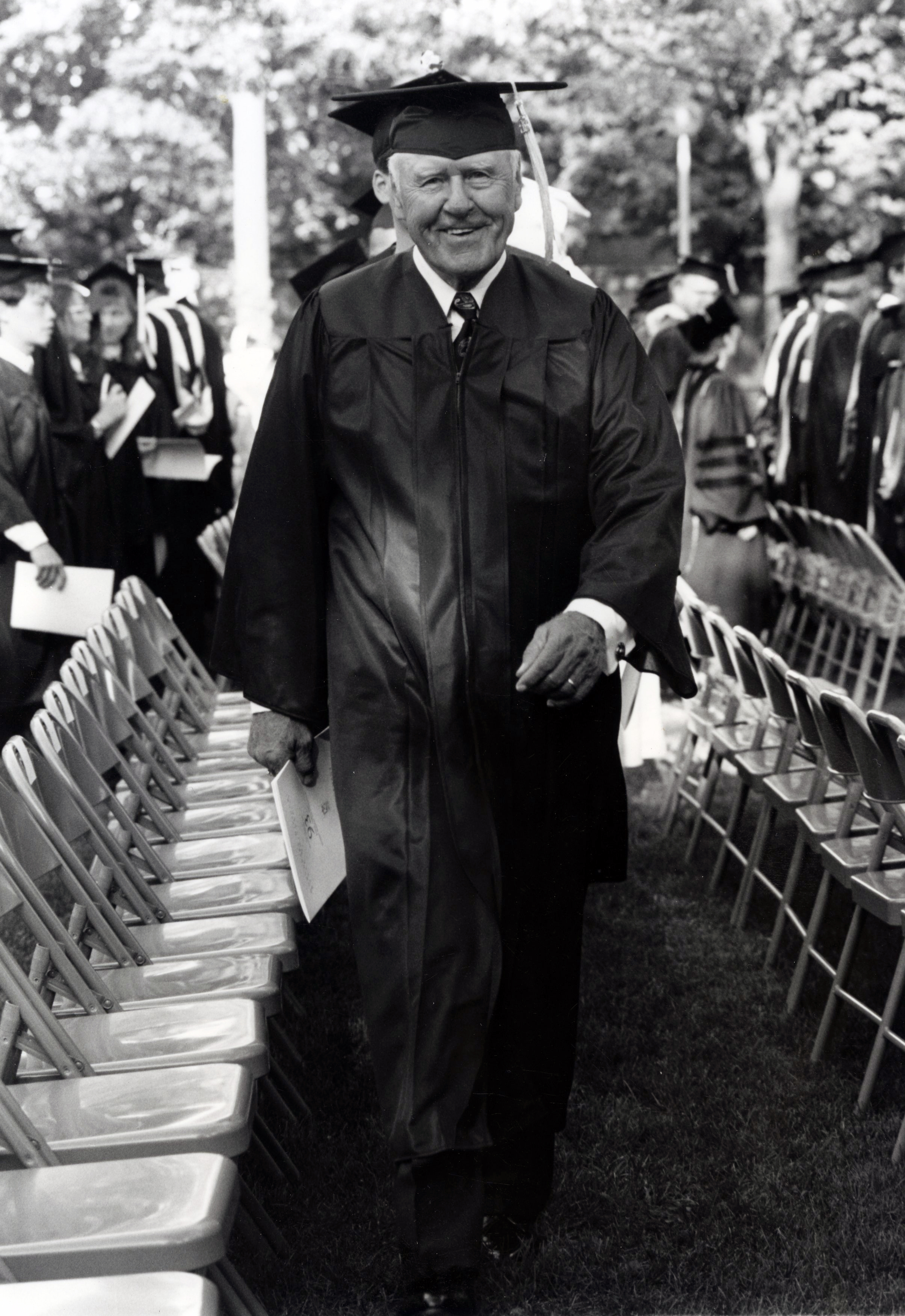
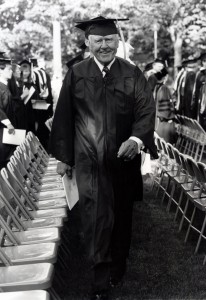
Gerald “Shag” Grossnickle (’42) receives his degree during the summer 1993 commencement ceremonies.

Grossnickle was married to his wife Sarah for almost 70 years before her passing, and the couple had three children. Since his time in the service ended, Grossnickle has become a jack-of-all-trades. He taught for a year, ran a restaurant for a while and spent a total of 28 years in elected office serving the citizens of Adair County in various capacities. During an eight-year stint as the sheriff, he never carried a gun, rarely wore a uniform and often kept his badge in his pocket. He also bought a share in an insurance company, which he would later go on to own and operate with one of his sons. He still maintains a desk in its office.

“I don’t work, I visit,” he said.

If that were not enough, Grossnickle was named a Master Conservationist by the Missouri Department of Conservation for his efforts to bring wild turkey to the region, and he is a member of six different halls of fame, including the Truman Athletics Hall of Fame and the Missouri Athletics Hall of Fame.

For all his accomplishments, Grossnickle had only one regret. Because he was called into service, he never got to walk across the stage and receive his degree. That was remedied in 1993 when he was invited to participate in summer commencement ceremonies.

“It was a great feeling. I had my whole family there to watch that,” he said. “It was a thrill. It eased the disappointment.”

* * *

While other military conflicts have come and gone, perhaps none of them have affected the campus community as much as World War II. The University did not keep official records of military service at the time, so an exact number of those who served might never be known. The 1945 yearbook published the names of 910 alumni and former students, as well as faculty and staff members, who participated in the war. When considering the number of veterans who enrolled for the first time after their service, the number of participants with University ties is probably incalculable today.

Outside the entrance to the Ruth W. Towne Museum and Visitor’s Center, four bronze plaques bear the names of University members who made the ultimate sacrifice during World War I, World War II, the Korean War and the Vietnam War. The names on the World War II plaque double that of the Vietnam War plaque in terms of lives lost. Grossnickle, Young and Minor are each humble about their roles during the war, and they know they are among the lucky ones to have returned.

“I made a lot of good friends here in college,” Grossnickle said. “A number of them didn’t come back.”
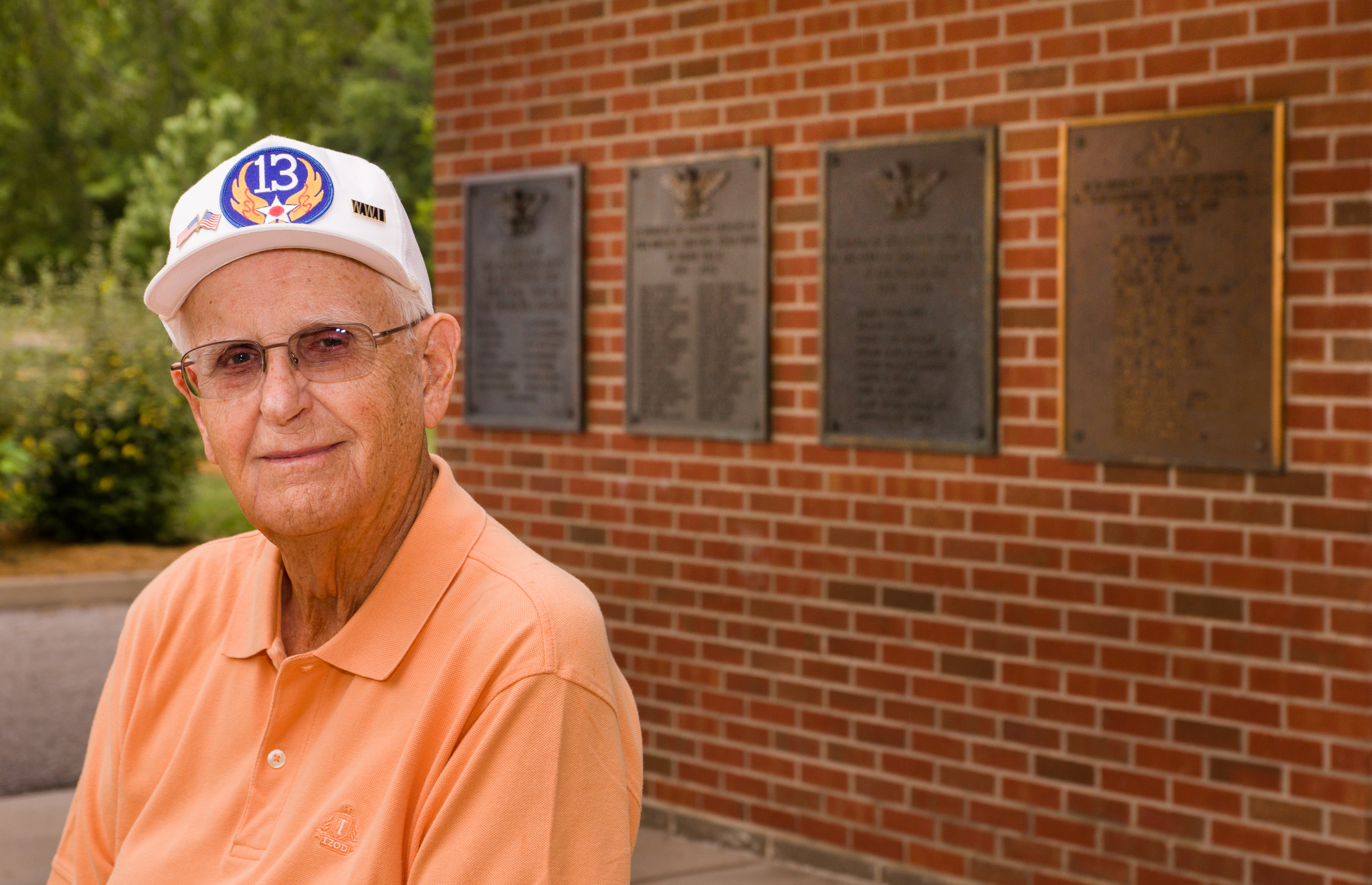
Attendee Harvey Young by the

Attendee Harvey Young

Once a Teacher, Always a Teacher

Ron Thomas (’65) exemplifies Truman’s long-standing history of excellence in education. From a blue-collar background, to Bulldog pride, to technical college president, Thomas proves that pursuing a career in education and helping people are one and the same.

Growing up in a manufacturing community in Illinois, Thomas knew he wanted to pursue a different career path. Studying education provided a chance to relate to a variety of individuals and make a difference. His academic focus never shifted from this original idea. He graduated with a bachelor’s degree in education from Truman and went on to earn a master’s degree from Southern Illinois University-Edwardsville and a Ph.D. from Southern Illinois University-Carbondale.

Thomas was fortunate to have many opportunities to advance in the education field. He progressed from teacher and coach to positions in both admissions and student services. Additional college administration roles paved the way for Thomas to become president of Dakota County Technical College in Rosemount, Minn.

During his 13 years of service as president of DCTC, Thomas centered his efforts on collectively resolving a prestige deficit.

“People don’t appreciate two-year colleges with a technical focus,” Thomas said. “I wanted to promote the value and significance of a technical education.”

Thomas helped to enhance the physical facilities on campus and implemented new technology. He also worked on connecting with the surrounding community, building at least 70 new partnerships. These partnerships provided opportunities for students through co-curricular options, honor programs and scholarships.

However, for Thomas, the best accomplishments are seeing the students succeed.

“People forget plaques and awards,” Thomas said “The most important thing is creating opportunities for students to transfer on success.”

Although he retired in 2013, Thomas continues helping students in need with his endowed scholarship fund for Truman. The University’s support throughout the years has encouraged Thomas to provide the same support to other deserving students.

“Even when I didn’t give, they stayed with me,” Thomas said. “Truman provided support and never quit caring.”

In retirement, Thomas is spending a little time on himself. He and his wife live in Birmingham, Ala., near extended family. His spare time is spent writing and helping with an inner-city school as a basketball team’s statistician.

Even with a lifetime of education experience, Thomas urges students to never stop learning.

“Be proud of your college and be proud of what you’re doing. You can make a difference for people,” Thomas said.

Lifelong Educators Return to Campus

Professional educators, and longtime friends from their time as students, reunite at the Homecoming Banquet in October. Seated, left to right: Peter Leu, Sharron Washington, George Simmons and Alvin Smith. Back row, left to right: Leroy Bonner, Clifton Ray and Wayne Clinton.

Professional educators, and longtime friends from their time as students, reunite at the Homecoming Banquet in October. Seated, left to right: Peter Leu, Sharron Washington, George Simmons and Alvin Smith. Back row, left to right: Leroy Bonner, Clifton Ray and Wayne Clinton.

During the Homecoming Banquet in October, there was one table of attendees that could boast more than a century of teaching experience.

Clifton Ray (’69, ’76) returned to campus to see Sam Nugent inducted into the Truman Athletics Hall of Fame. Nugent served in the roles of head baseball coach, head football athletic trainer and assistant athletics director for 34 years at the University.

Ray, a previous inductee into the Hall of Fame, is also a member of Truman’s All-Century Football Team. After his playing days, he spent a total of 38 years in education, first as a teacher and coach in the St. Louis Public School District, and later 14 years as an administrator in several high schools. When preparing to return to Kirksville, he made sure five other alumni made the trip too, including four whom he worked with in the district and another one from Iowa. Ray is the main man responsible for keeping together a group of friends who attended the University in the 1960s and ’70s.

“I talk on the phone to those out of town, and those in town—we run into each other a lot,” Ray said.

Among those alumni Ray coaxed into returning were fellow Hall of Famers George Simmons, Sharron Washington and Wayne Clinton. Each man has gone on to a distinguished career in public education. Simmons (’71) spent more than 30 years as a teacher and coach in the St. Louis Public School District, as did Washington (’68, ’76), who also worked in the Kirkwood and Pattonville school districts. Clinton was the odd man out in the group, having spent his entire career in Iowa where he taught for 34 years and coached multiple sports on the high school and junior high school levels.

Fellow attendees Leroy Bonner (’74) and Alvin Smith (’71, ’76) also worked in the St. Louis Public School District. Bonner spent more than 30 years teaching and coaching in the district. The crowning achievement of Smith’s 34-year career was the 11-year run he had as the principal of Normandy High School.

For some men in the group it had been years since they visited campus. Ray’s last trip was in 2009, but he plans to return more frequently.

“I enjoyed the dinner and the whole weekend,” he said. “I will be back next year, if God wills.”


Couple Pursues Success Together

KelchensHouse

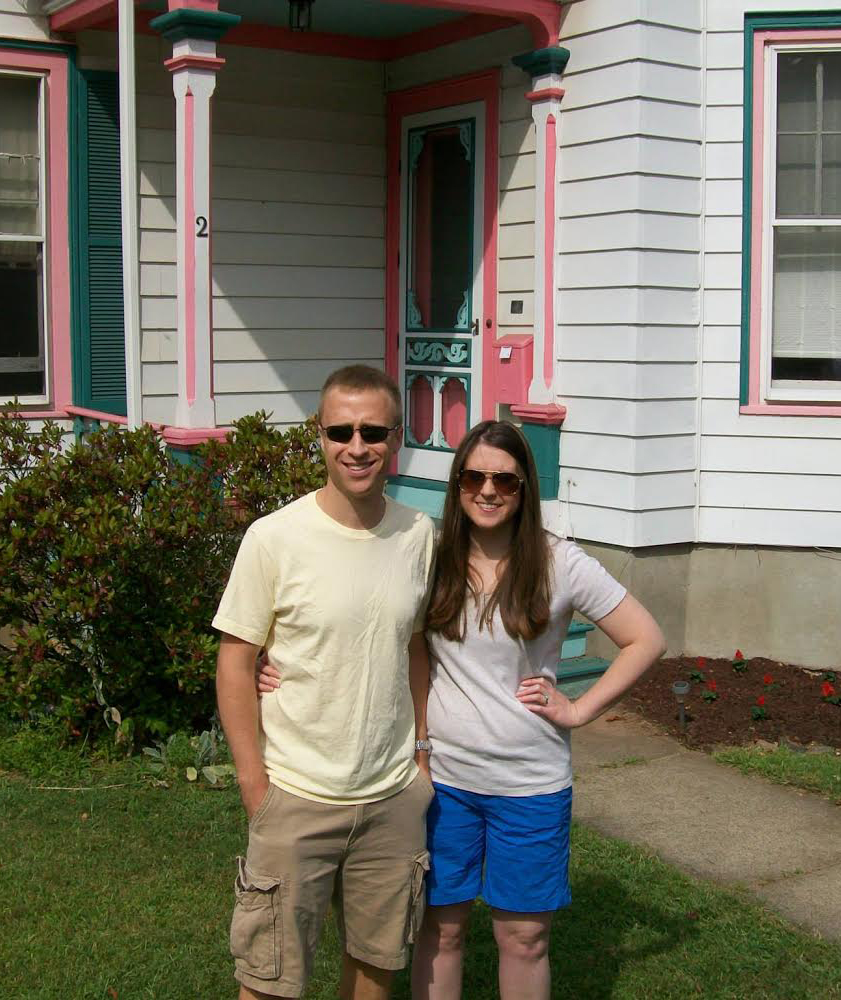
Robert and Emily (Kiddoo) Kelchen

While meeting for the first time at a Truman visit day, Robert and Emily (Kiddoo) Kelchen had no idea what the future had in store for them. Robert was working the visit day and Emily, a year younger, was looking at Truman as a prospective school.

Robert and Emily’s mutual interests brought them together on Truman’s campus. Their relationship grew as they got to know one another during their time in Student Government, and when they collaborated on a vision document for the University they discovered how well they worked together.

They continued on to graduate school together at the University of Wisconsin-Madison where Emily (’08) pursued a law degree and Robert (’07) a doctorate in educational policy.

Emily, a political science major, discovered she wanted to go to law school through her various activities at Truman.

“I thought I wanted to be a lawyer and doing the Missouri Government Internship Program confirmed that,” she said. “All the cool jobs were held by attorneys.”

Today, Emily serves as the director of public affairs for the New Jersey Civil Justice Institute. In addition to providing legal analysis and lobbying work, she coordinates the organization’s communications plan to make sure its message is consistent with its mission. Previously, she was a lobbyist at the Hamilton Consulting Group and a staff attorney at Great Lakes Legal Foundation in Wisconsin.

Robert was a double major in economics and finance at Truman, but chose a different path than most of his classmates.

“I had some great professors and I really liked what they did,” he said. “I wanted the opportunity to teach and do research.”

He is currently an assistant professor at Seton Hall University in the Department of Education Leadership, Management and Policy, where he teaches higher education finance, organization and governance, and research methods. A consultant for Washington Monthly magazine, Robert compiles and publishes its annual college rankings. His work, in conjunction with other colleagues, was awarded first prize for best data journalism in a small newsroom by the Education Writers Association.
After being so involved as students, Robert, originally from Washington, Mo., and Emily, a native of Memphis, Mo., have still managed to stay connected to Truman even while being far away.

“We were very fortunate that when we were in grad school in Madison, and now since we’ve moved to the East Coast, the Truman Alumni Association has allowed us to work with them to host get-togethers for alumni,” Emily said. “We hosted several in Madison and one in New York City and are planning more for the future.”

In their free time, the Kelchens enjoy traveling around the northeast and watching lots of St. Louis Cardinals baseball. The couple resides in Flemington, N.J., and recently purchased a house built in 1861. They have their work cut out for them turning the house into their home, but they enjoy all of the new projects.

From Truman, to grad school, to rehabbing their new home, the Kelchens have found nothing but success together.

Healthy Lifestyle Inspires Others

CutrightTrumanFinish

Becky (Hadley) Cutright (’08) finishes the 2014 Truman Homecoming 5k.

Becky (Hadley) Cutright (’08) never used to remember a time when she considered herself “thin” or at a healthy weight. Yet, within three years, Cutright’s determination and inspirational story has encouraged others to pursue their own healthy lifestyles.

After turning 25 years old, Cutright recalls not being able to walk up two flights of stairs without being winded. Her weight made her frightened for her health and, subsequently, the future.

“I remember thinking, ‘I won’t live 25 more years if I don’t do something about this now,’” she said.

Since starting her lifestyle change in fall 2011, Cutright has lost 140 pounds. The process began slowly, replacing soda with flavored sparkling waters and swapping in healthy choices for meals and snacks. Eventually, Cutright turned her attention to daily exercise. She began the Couch-2-5K program and steadily began to run. Since 2012, Cutright has completed several 5Ks, two half marathons and one full marathon. She hit her goal weight in March 2014.

Cutrightbeforeandafter2While the journey has not always been easy, Cutright’s grit and resolve have paid off in small forms of success. Her story was featured on a national level in Dr. Oz’s magazine The Good Life. Most recently, Cutright returned to Truman for Homecoming where she participated in the annual 5K, placing second overall in her age group.

“While I was a student I would have never dreamed of participating in the race,” Cutright said. “To come back as an alumna and as a healthier version of myself was such a great feeling, especially when I crossed the finish line.”

Cutright currently lives in St. Louis with her husband Mark and their dog, Nixon. She works as the public relations manager for The Repertory Theatre of St. Louis, managing the theatre’s website, social media and patron communication, as well as working with others to promote shows. Additionally, Cutright helps to coach a beginning running program through Big River Running Company.

Past high school and college colleagues have adopted Cutright’s positive outlook. Her story has motivated friends, family and old acquaintances to meet goals, find success and, above all else, get healthy.

“When I started, I never expected my journey to have such an impact on others. They say to me, ‘I know that if you can do it, I can do it,’” Cutright said. “I’ve come so far and I’m the happiest and healthiest I’ve ever been.”

Alumna Starts Medical Career in Africa

Dawn Runge, left, shares a moment with fellow chiropractor, Dr. Elga Drews, during her first week in Namibia.

Dawn Runge, left, shares a moment with fellow chiropractor, Dr. Elga Drews, during her first week in Namibia.

After graduating with a degree in communication in 2005, Dawn Runge was one of many Truman students who chose to continue their education. Like several others, she pursued a career in the health care field and became Dr. Runge after attending Logan College of Chiropractic. However, the similarities with most of her peers end there as she took an unconventional path to start her career.

Shortly after she passed her boards in January 2014, Runge decided to look at international chiropractic job postings. One that caught her eye was for a satellite clinic in Namibia, Africa, at the Rundu Medical Center. After several Skype interviews and discussions with an established chiropractor, Runge accepted the position as a contract doctor for the center. She is enthusiastic to be part of the effort to introduce chiropractic medicine to developing areas of the country with scarce medical facilities.

“It is the first of its kind for hundreds of kilometers at least,” Runge said.

Rundu Medical Center houses numerous practitioners, including a radiologist, several M.D.s, a physiotherapist, a biokineticist, a dietician and a dentist. According to Runge, the center offers to fulfill the health care needs that previously had been untended in the community of more than 90,000.

Due to the county’s lack of medical facilities, Runge had the unique experience of diagnosing a patient with a brain tumor. She probably would not have had the opportunity to do so in the United States because a primary care physician most likely would have seen the patient first.

One of the appeals that drew Runge to becoming a chiropractor was the field’s holistic approach to treatment. Helping people alleviate their pain and teaching them how to prevent future discomfort are the most rewarding aspects of her job.

“Looking at the entire body system to determine the source of pain is important because back pain, something we treat commonly, has almost 100 sources, ranging from the way we sit, to cancer,” she said.

Runge’s chiropractic practice has been open since the summer of 2014. She is contracted through the Rundu Medical Center for two years and is not yet sure if she will stay and continue to practice in Namibia or return to the United States. Even though she decided to purse a different career path from what she originally studied, she feels that her time at Truman was well spent and enabled her to find something she loves.

“University is a time to really get to know yourself and take time to evaluate what brings you joy,” Runge said.

Bulldog Climbs the Corporate Ladder

English degrees don’t typically translate into careers in the technology field, but alumnus Mike McClaskey (’85) found a path between the two, going from literature student to DISH Network executive.

McClaskey grew up in Kirksville with a family tradition of Truman graduates dating back to the early 20th century when his paternal grandmother attended the Normal School for a period of time. His parents were also students of the University and his mother served as a professor at the college for almost 20 years.

“My mom was one of the first women professors who decided to keep working while she was pregnant. So, you could say I was attending Truman even before I was born,” McClaskey said.

McClaskey originally planned to carry on the family tradition of teaching. However, while working toward his bachelor’s degree in English, his advisor, Dr. Heinz Woehlk, opened up the possibility of a career in technology. During his master’s studies in English at the University of Missouri-Columbia, another advisor also urged him to pursue a similar career.

“In my case, I was applying for both teaching jobs and technology jobs out of graduate school,” McClaskey said. “Whichever offer came first determined my career path and it turned out to be a technology role.”

This twist of fate started a succession of career promotions, culminating in McClaskey’s 2007 arrival at DISH, a direct-broadcast satellite service provider. In his role as DISH’s chief information officer, McClaskey assembled an information technology team, managed software releases, helped to develop emerging technologies and established systems to provide high-quality customer service. Under his direction DISH’s IT department successfully completed one of the largest business transformation initiatives in telecommunications, leading to many accolades and awards.

Now, after working more than 25 years in the IT industry, McClaskey continues to climb the corporate ladder with his new role of executive vice president and chief human resources officer at DISH.

“It’s an amazing opportunity to get to learn a new discipline while positively impacting the lives and careers of our 20,000-plus employees,” McClaskey said.

Despite his accomplishments, McClaskey has not forgotten his modest beginnings or undergraduate background. He even credits his wife Janet (Yearns) McClaskey (’84) for straightening out his academic priorities. Since graduating, the McClaskeys have both dedicated their efforts to making the University one of the core focuses of their philanthropy. They stay heavily involved through the John R. Kirk Society, the Joseph Baldwin Society and the President’s Circle, and even created the McClaskey Family Endowment Fund.

“We have been greatly blessed over the years,” McClaskey said. “We want to establish structures that will help needy students—like we were­—in perpetuity.”

McClaskey’s degree didn’t ultimately define his career path. Outside influences encouraged him to think beyond what’s considered customary. Although he may not have originally had the academic background for his career, he has made it work out to his advantage.

“I have never truly been qualified for any job I’ve pursued, but somehow I’ve made it work out. Some of that comes down to luck and timing, but mostly it was hard work, taking on difficult jobs few others want, a willingness to clean up messes and a commitment to continuous learning,” McClaskey said. “If you accept the fact that your career path is an unforeseeable adventure enabled by continually honing your skills and knowledge and taking calculated leaps, you will have the flexibility to go places you might never imagine.”

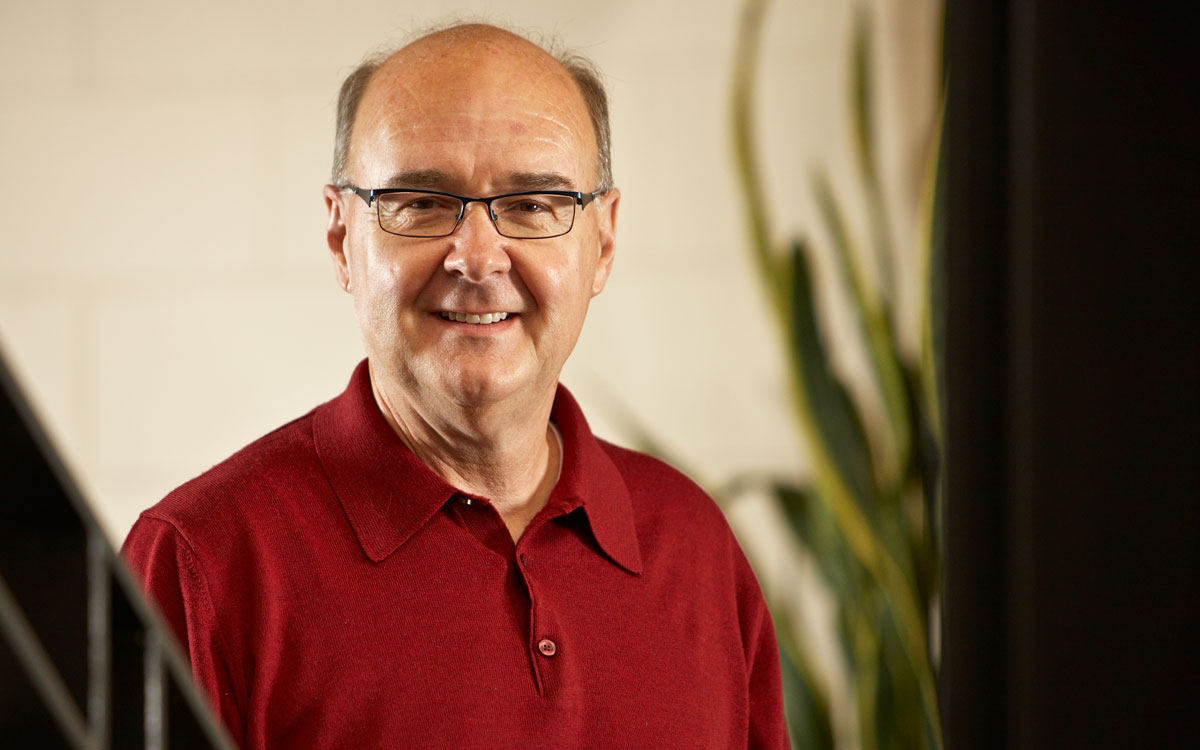
Mike McClaskey

Mike McClaskey (’85)

Digital Dog is Reaching Billions

In the digital age, the more people you can reach, the more influence you have. As the president of Adknowledge, Marco Ilardi (’99) has the power to reach billions.

Since graduating from the University, Ilardi has established himself as a key player in the world of digital media. In 2005, he helped facilitate the sale of the social media trailblazer MySpace to News Corp. He also worked as an executive vice president at Fox Interactive Media prior to taking his role at Adknowledge.

Ilardi earned his degree in business administration long before most people had ever heard the term “social media,” but he still credits the preparation he received at Truman for helping him excel in an emerging field.

“My experiences at Truman helped me learn how to get multiple tasks accomplished efficiently, creatively and within rigorous time constraints,” he said. “Learning how to overcome obstacles and manage a complex work schedule with concurrent priorities is extremely valuable in the workplace.”

As the president of Adknowledge, Ilardi oversees a global company that brings in hundreds of millions in annual revenue. The global digital marketing company specializes in assisting large clients reach consumers through social media, mobile devices, video and email. Adknowledge is responsible for helping name brand clients—like Coca-Cola, Ford and McDonald’s, to name just a few—reach an audience of more than a billion people.

Adknowledge has five offices in the U.S. as well as international offices in Canada, England, Germany, France, Singapore and Brazil. Ilardi oversees the company from its global headquarters in Kansas City, Mo., where 150 of its 350 total employees work.

Ilardi is tasked with making sure the business stays on top of consumer behavior and new technologies. So far, business has been good on his watch. Adknowledge has received awards for performance and it is a strategic partner of social media giants Facebook and Twitter.

“I am really excited about the future of Adknowledge,” Ilardi said. “We have a highly motivated team that is consistently opening up exciting new channels for growth and providing innovative marketing opportunities for our clients.”

When he is not working to expand his company’s global reach, Ilardi enjoys playing tennis, cooking and spending time with his wife and two daughters.

Marco Ilardi (’99)

Marco Ilardi (’99)

Newsmakers

Phil DiRuocco (’67) was named to the Westchester (N.Y.) Sports Hall of Fame in October 2014. Before retiring in 2000, he served the Irving School District for 33 years, most notably as athletic director and varsity baseball coach.

Glenda Martin (’74, ’75) was named the Lincoln County Volunteer of the Year. Some of the many activities she was credited with include teaching free exercise classes, delivering hot meals to senior citizens and the homebound, and working extensively with her church.

Mary Evans (’75) was named a 2013 National Distinguished Principal by the National Association of Elementary School Principals. She has served as the principal at Cumberland Trace Elementary School in Bowling Green, Ky., since 1996.

Pamela (Weatherby) Popp (’83) was named to the Board of Directors of Sepsis Alliance, the nation’s leading patient advocacy organization promoting sepsis awareness. As a sepsis survivor and health care lawyer she will provide the organization personal and professional views on the need for sepsis awareness.

Mark Ackerson (’86) will serve as the new director for the Cavaliers Drum & Bugle Corps. Founded in 1948, the Cavaliers are one of the most successful drum and bugle corps in history, winning 20 national championships, including seven Drum Corps International world championships since 1992. Each summer, 150 male brass, percussion and color guard performers age 16-22 present a marching music show considered among the most challenging and original in the world. Ackerson marched in the Cavaliers color guard in the 1980s before joining the tour management team in 1991.

Chuck Woods (’86) is the Chief Financial Officer and vice president of finance for Global Services & Support (GS&S), a business unit of Boeing Defense, Space & Security. In this role, he is responsible for all finance-related activities for GS&S, a $9 billion business that provides innovative and capabilities-driven solutions in logistics, supply chain management, aircraft modifications, training and other services with more than 15,000 employees working in nearly 300 locations around the world, including operations in Australia, Saudi Arabia and the United Kingdom.

Sherri (Elliott) Thomas (’88) was selected as one of six educators in the state for the 2014 “Stars of the Classroom!” sponsored by the Missouri Lottery and the St. Louis Cardinals. This program celebrates excellence in education by honoring outstanding Missouri educators. She had the honor of throwing out the first pitch at a Cardinals game on July 5, 2014. Thomas is the principal of Lewis and Clark Middle School in Jefferson City.

Matt Williams (’90) has been named president of the Columbia (Mo.) Landmark Bank. In his new role with Landmark Bank, he will serve as Columbia branch president and will also manage the local commercial loan department. Landmark Bank is a community bank with $2.1 billion in assets and 42 locations in 28 communities across Missouri, Oklahoma and Texas.

Jessica (Prinster) Dederer (’91) was named marketing director for Family Resource Center, one of Missouri’s largest agencies dedicated to preventing and treating child abuse and neglect.

Jenny Lindquist (’92) was named the Veterinarian of the Year by the Missouri Animal Control Association. The award is given to the veterinarian who has provided outstanding service to aid an animal welfare program.

Lori Nix (’93) provided photography and artwork for the July 7-14, 2014 issue of Time magazine. Her work was on the cover and in the feature story, “The Smarter Home.”

Gregory J. Linhares (’94) was selected as the clerk of court for the United States District Court for the Eastern District of Missouri.

Tyson Ketchum (’96) was named to the Kansas City Business Journal’s “Best of the Bar” list of outstanding area lawyers chosen by their peers. He is a member of Armstrong Teasdale’s litigation practice group and has successfully represented corporations and individuals in a wide variety of commercial and tort litigation cases. The primary focus of his practice is employment, insurance coverage and personal injury cases.

Jeremy Boesch (’97) of St. Charles, Mo., was selected as the Wentzville School District Teacher of the Year for 2013-14. An English teacher at Timberland High School, he was one of only seven finalists for the statewide Teacher of the Year award. Candidates are judged on the respect and admiration of students, parents and colleagues. Selection is also based on their ability to inspire and educate students of all backgrounds and abilities.

Jamie (Smith) Manker (’98, ’00) is among 50 finalists for the $1 million Global Teacher Prize. The award is designed to raise the status of teaching and is open to applicants worldwide. Manker was selected from more than 5,000 nominations and 1,300 final applications. The 50 finalists come from 26 countries. Ten finalists will be announced in February with the winner revealed in March. Manker teaches at Rockwood Summit High School in Fenton, Mo.

Mark L. Wolz (’98) was named president over commercial activities for Midwest Bank Centre. He operates out of MBC’s Fenton, Mo., branch.

Brent Povis (’00) developed the game “Morels,” which was named 2014’s Best New Card Game by Games magazine.

Jimmy Kuehnle (’01) was selected to be one of 102 artists in the Crystal Bridges Museum of American Art show “State of the Art: Discovering American Art Now.” During the exhibit, which ran from September 2014 into January 2015, Kuehnle created a large-scale inflatable biomorphic creature that “lived” on the water outside the museum in Bentonville, Ark.

Nathan Becker (’08) was selected as one of only 10 business journalists to receive the Knight-Bagehot Fellowship in Economics and Business Journalism through Columbia University in New York City. The fellowship offers qualified journalists the opportunity to enhance their understanding and knowledge of business, economics and finance in a year-long, full-time program. Fellows take courses at Columbia’s graduate schools of journalism, business, law and international affairs. Becker is a copy editor and sports editor for The Wall Street Journal.

Adam Hoskins (’08) joined the Minneapolis office of Faegre Baker Daniels as an associate. He earned his law degree from the University of Minnesota Law School in 2012.

Galen Gibson-Cornell (’09) was selected for a three-month artist residency at the Scuola Internazionale di Grafica, in Venice, Italy. In 2013, he received a Fulbright fellowship to explore the urban walls and poster culture of Budapest, Hungary. His artwork has been featured in solo and group exhibitions across the United States and Europe.

Jansen Otterness (’09) was promoted to manager at BKD’s Southern Missouri practice. BKD is a national CPA and advisory firm. Otterness is a member of BKD National Health Care Group and provides audit services to community health center clients.

Benjamin Friesen (’10) joined Husch Blackwell’s business litigation group and will work out of the Kansas City, Mo., office. He received his J.D., summa cum laude, from the University of Missouri-Kansas City School of Law, where he was an Omar E. Robinson Scholarship recipient, managing editor of The Urban Lawyer and a staff member of the UMKC Law Review.

Joseph Grissom (’11) received a 2014 Woodrow Wilson Indiana Teaching Fellowship. As a Woodrow Wilson Teaching Fellow, he will receive a $30,000 stipend to complete a special intensive master’s program at Ball State University that will prepare him to teach math and/or science in Indiana’s urban and rural public schools.

Paul Friz (’12) participated in an internship at NASA’s Jet Propulsion Laboratory in Pasadena, Calif., where he spent time as the assistant to the Rosetta project manager. The Rosetta space probe made headlines in November 2014 when it successfully landed on the surface of a comet. Friz is pursuing a Ph.D. in aerospace engineering from the Missouri University of Science and Technology and conducting research at the NASA Langley Research Center in Virginia.