Author Archives: sgran

Lightning Strikes Twice

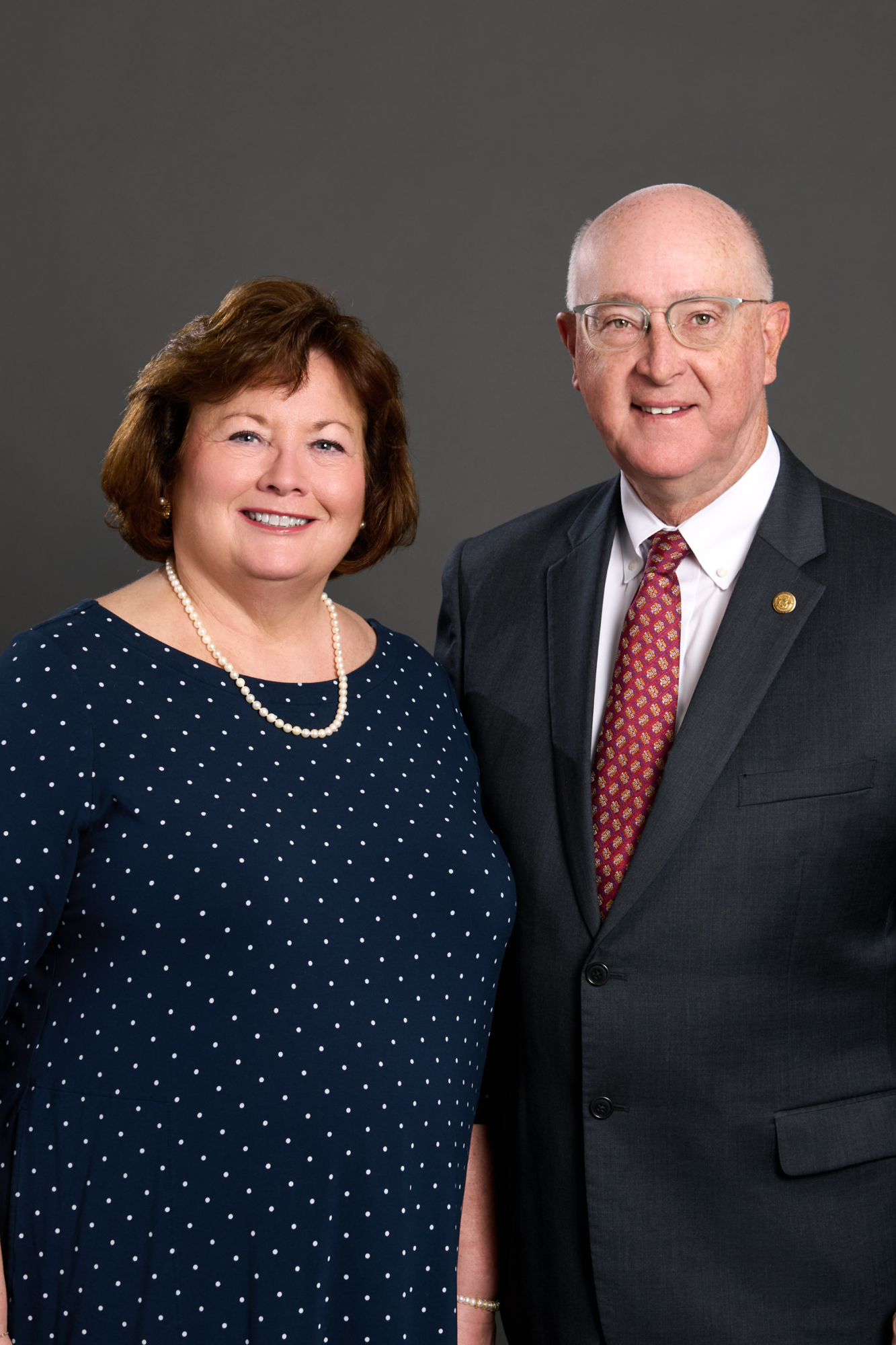
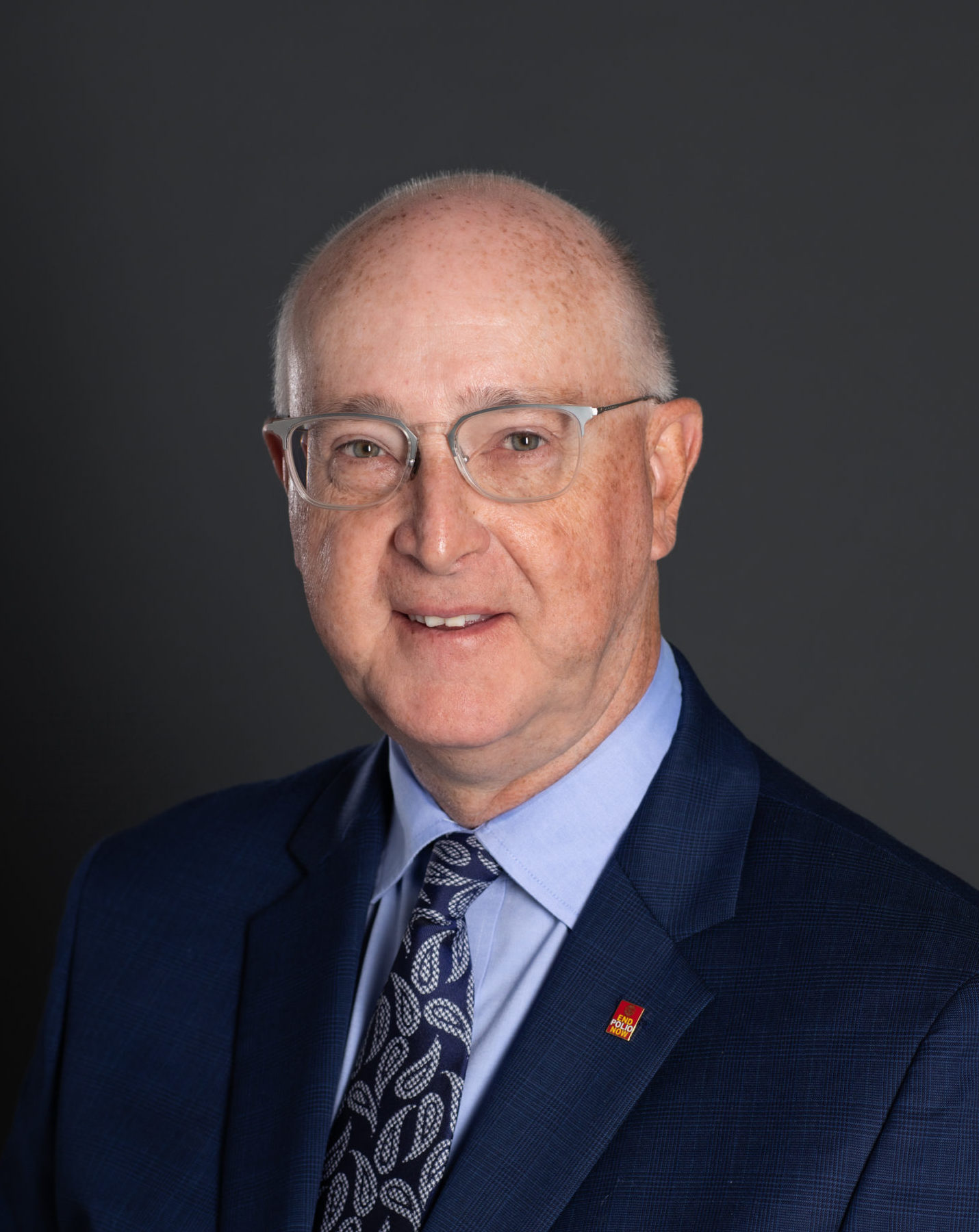
Larry Lunsford headshot

Larry Lunsford will be the second person with a Truman connection to oversee a global organization comprised of more than a million members.

NO GAMBLER IN THEIR RIGHT MIND would take the odds. A trained accountant with a head for numbers, Larry Lunsford surely wouldn’t either. Lunsford is in line to be president of Rotary International, beginning his term July 1, 2027. To be the head of an organization with more than 1.2 million members is statistically unlikely. To be the second person with a Truman connection to have the role in less than 20 years is nearly unfathomable.

“It is absolutely amazing that both Ray and I have had this opportunity,” Lunsford said.

“Ray,” is Ray Klinginsmith, who worked for the University for 22 years in a variety of roles. The connection between Lunsford and Klinginsmith actually runs much deeper, enough to make almost anyone believe in fate.

Growing up in the small town of Macon, Missouri, Lunsford did not have global ambitions. He may have crossed state lines once or twice during his burgeoning athletic career in both baseball and basketball. One of the people who used to watch him play was Klinginsmith, a fellow Macon resident and the University’s general counsel for much of the 1970s. Lunsford was also gifted academically, and when this first-generation college student earned a prestigious Pershing Scholarship, Klinginsmith was assigned to be his mentor.

As Lunsford approached completion of his bachelor’s degree in accounting in 1981, Klinginsmith encouraged him to apply for a Rotary Foundation Ambassadorial Scholarship. Upon his selection, Lunsford ended up putting his original post-graduate plans on hold to spend a year at the University of Newcastle in Australia.

“The whole experience going to Australia was massive for me – life changing for me – as many international experiences are,” he said. “I’m a perfect example of being a beneficiary of an engaged Rotarian in a local Rotary club.”

Lunsford returned to Truman and received his master’s in accounting in 1983. A small-town boy no more, he moved to Kansas City and embarked on an impressive career starting with a with a seven-year stint at EY. He is currently in his 36th year with Bernstein-Rein, a family owned advertising agency. Throughout it all, his Rotary experience as a young graduate stayed with him.

“I got that opportunity as a young 23-year-old in Australia for a year, and it absolutely set me on a course of trying to pay back an organization that said ‘yes’ to me,” he said.

A philanthropic person by nature, Lunsford has donated his time to organizations such as Global Ties KC, the Church of the Resurrection Foundation, the Kansas City Spirit Festival and the Epilepsy Foundation for the Heart of America. He has made time for his alma mater, serving on both the Truman Alumni and Foundation boards. Of course, he always made time for Rotary too.

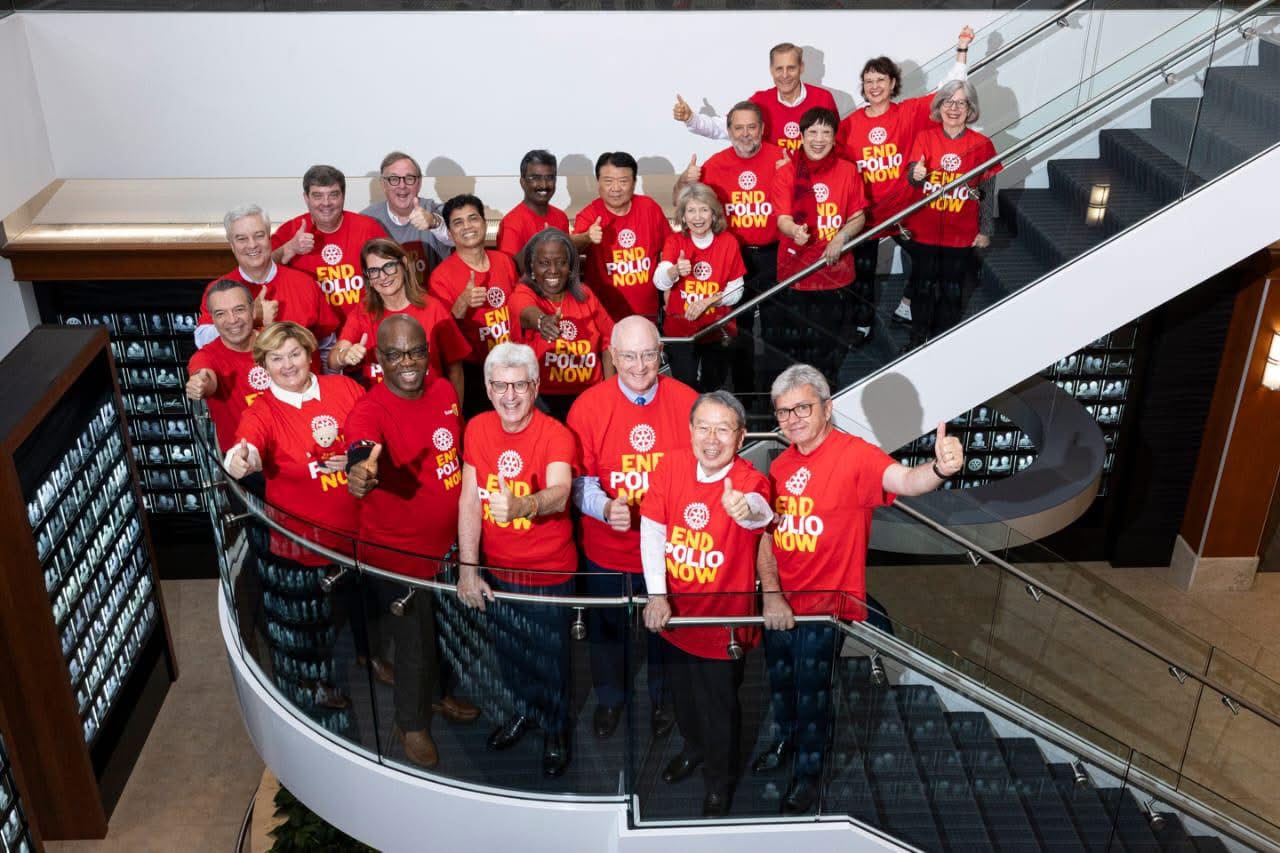
For many, Rotary invokes images of local leaders hobnobbing at weekly lunch meetings, but the organization is massive. There are more than 45,000 Rotary clubs, and they can be found in almost every country in the world. That global network is what gives Rotary power in its philanthropic endeavors, most notably the goal of eradicating polio. With the help of partners including the World Health Organization, UNICEF, the Gates Foundation and Gavi, the Vaccine Alliance, Rotary has played a leading role in reducing the number of cases by 99.9% in the last 40 years.

“Rotary started with a sense of networking and building friendship,” Lunsford said. “Through that, you build community, and through that, you then leverage what you’ve grown to a sense of scale that can tackle some of the most pressing challenges the world has to offer.”

One person who played a role in guiding that leverage was Klinginsmith, who served as Rotary International president from 2010-2011. Fifteen years later, his protégé would be nominated to serve in the same capacity. Rotary schedules its presidential leadership three years in advance, giving each nominee two years of preparation before taking the reins for their own one-year term. Presidents can come from anywhere in the world, making the rural Missouri connection all that more improbable. It is certainly not lost on Lunsford, and when it came time to announce his role in organizational leadership, he chose to do so at events in Macon and Kirksville last year. One of the members in attendance when he returned was 92-year-old Bill Gaines, a Macon-area banker in the Macon County Rotary Club which sponsored his trip to Australia. Sadly, Klinginsmith was not a part of the festivities, having passed away in 2024.

Rotary International members on staircase

Lunsford’s term as president could be a remarkable one. For polio to be considered eradicated there must be three consecutive years of no cases. Through the first four months of 2026, there were only four. Lunsford’s term has the potential to be part of the three-year window.

“I think about that,” he said. “Whoever might happen to be serving as president of Rotary International when this happens, we look forward to a great celebration of an incredible milestone.”

As president, Lunsford will spend much of the year traveling. The role comes at a perfect time, as he is moving into more of a consulting role with Bernstein-Rein, and his wife, Jill, recently retired from her career in education.

“We’re fortunate and blessed at the opportunity that we will be filling that passport with stamps from all over the world,” he said.

Wherever the journey takes him, Lunsford will be prepared, and he certainly will not forget where it all started.

“I do feel like I’m in the right place at the right time,” he said. “I’m going to give it everything I have, and I’m going to serve to make Rotarians around the world proud. I hope to make those colleagues and friends who shaped me in Macon and Kirksville proud as well.”

Surgical Precision

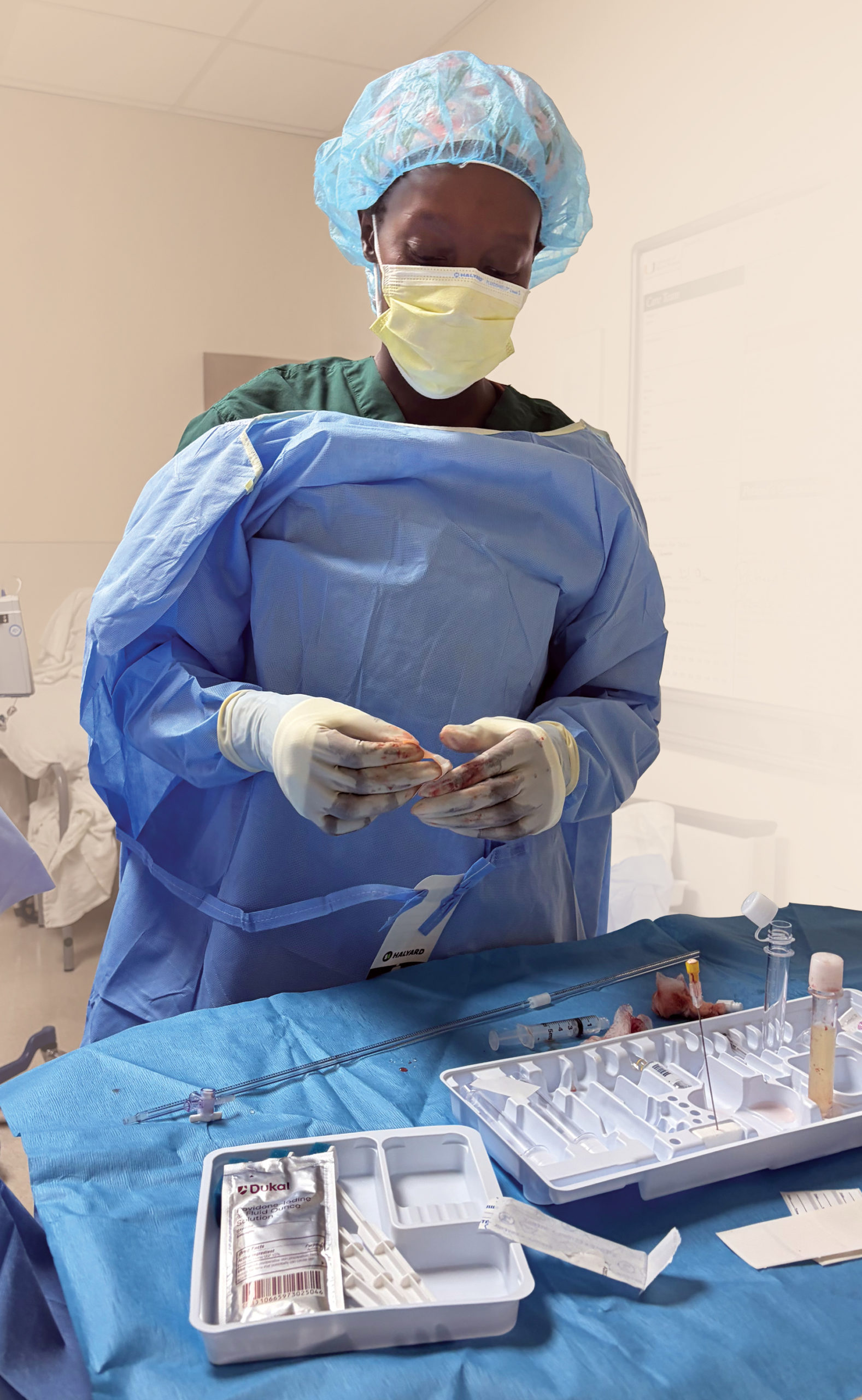
Megan in scrubsThe only path Megan Sharpe follows is her own. Her calculated approach to planning her career now has her carving out a spot in one of the most in-demand specialities in the medical field.

AT FIRST GLANCE, it would be easy to categorize Megan Sharpe (’13) as a free spirit. She picked Truman after making a surprise stop on campus en route to visiting another school. She played professional volleyball in two European countries after graduation. She was a non-traditional medical school student who picked a notoriously difficult specialty, in part because she loves a challenge.

“I’ve had a few different lifetimes,” said Sharpe, who is still only 34 years old.

To simply portray Sharpe as karmically blessed discounts her tireless work ethic and ability to strategically assess multiple scenarios. Medical school is the prime example. Before she ever set foot on campus, Sharpe knew she wanted to do something in health care and medicine. In addition to majoring in biology, she was a standout athlete in both volleyball and basketball.

“After being so busy in college, going right to medical school was not the thing I wanted to do,” she said. “I wanted to work and make sure that medicine was going to be the actual thing I wanted to do.”

Sharpe took a little time for herself, first as a professional volleyball player in Italy and Slovenia. After exploring that option, she returned to the St. Louis area and made use of her degree working in microbiology and biopharmaceutical labs. She also earned a master’s degree in biology from Washington University. Those experiences made a career in medicine come into focus.

“Getting to help people is one of the most noble things you could strive to do in life,” she said. “I like to be challenged, and I’ve never wanted to be bored in my life, or not busy. Medicine gave me that perfect balance of being able to do the things I wanted to do, and then also do the things I already seem to be pretty good at doing.”

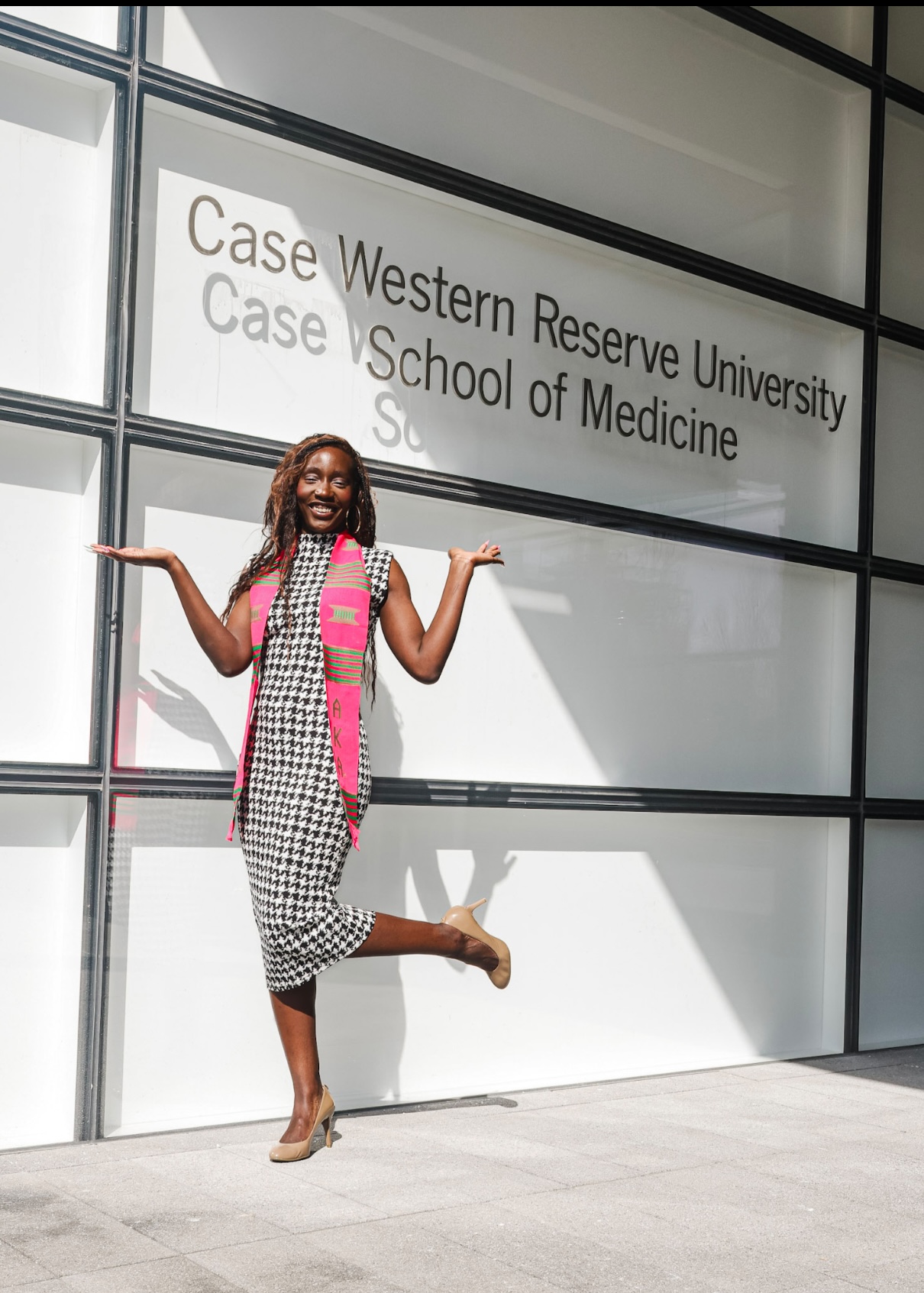
Megan sharp standing in front of Case Western Reserve University School of MedicineDuring medical school at Case Western Reserve University in Ohio, Sharpe continued to trust her strategic instincts, knowing she would be picking a specialty that would shape her career and life. After deciding on neurosurgery, she remained in Ohio conducting research for a year.

“I kind of chose neurosurgery late, so I needed to make sure it’s what I wanted to do. It helps to have a research year to make connections,” she said. “I came in knowing I wanted to do probably something surgical, working with my hands, and probably something a little fast paced.”

Now a surgical resident at the University of Miami’s Miller School of Medicine, Sharpe has no regrets about coming to the profession later than her peers. She credits her work experience and research efforts for establishing a proper foundation on which to build her career.

“I’m glad I did it the way I did,” she said. “If I had done it right after college, I just would have not been as mature, would have not handled things as well, and maybe not known as well who I was and what I wanted to do.”

That mindset will help Sharpe greatly as she continues her residency. It is estimated one in three people are affected by neurological conditions, and there is a projected shortage up to 20% of active neurologists in the next decade. While the job can take a toll, Sharpe finds solace in victories such as removing brain tumors, conducting spinal surgeries, combating peripheral nerve cancers and helping patients regain the use of limbs once so damaged they could not move.

“Sometimes you can get lost in the day-to-day and forget the bigger picture of why you’re doing this,” she said. “The patients are obviously a big, big part of that. It’s certainly motivating to see a patient do well, come back and see us and be in a better position than they were.”

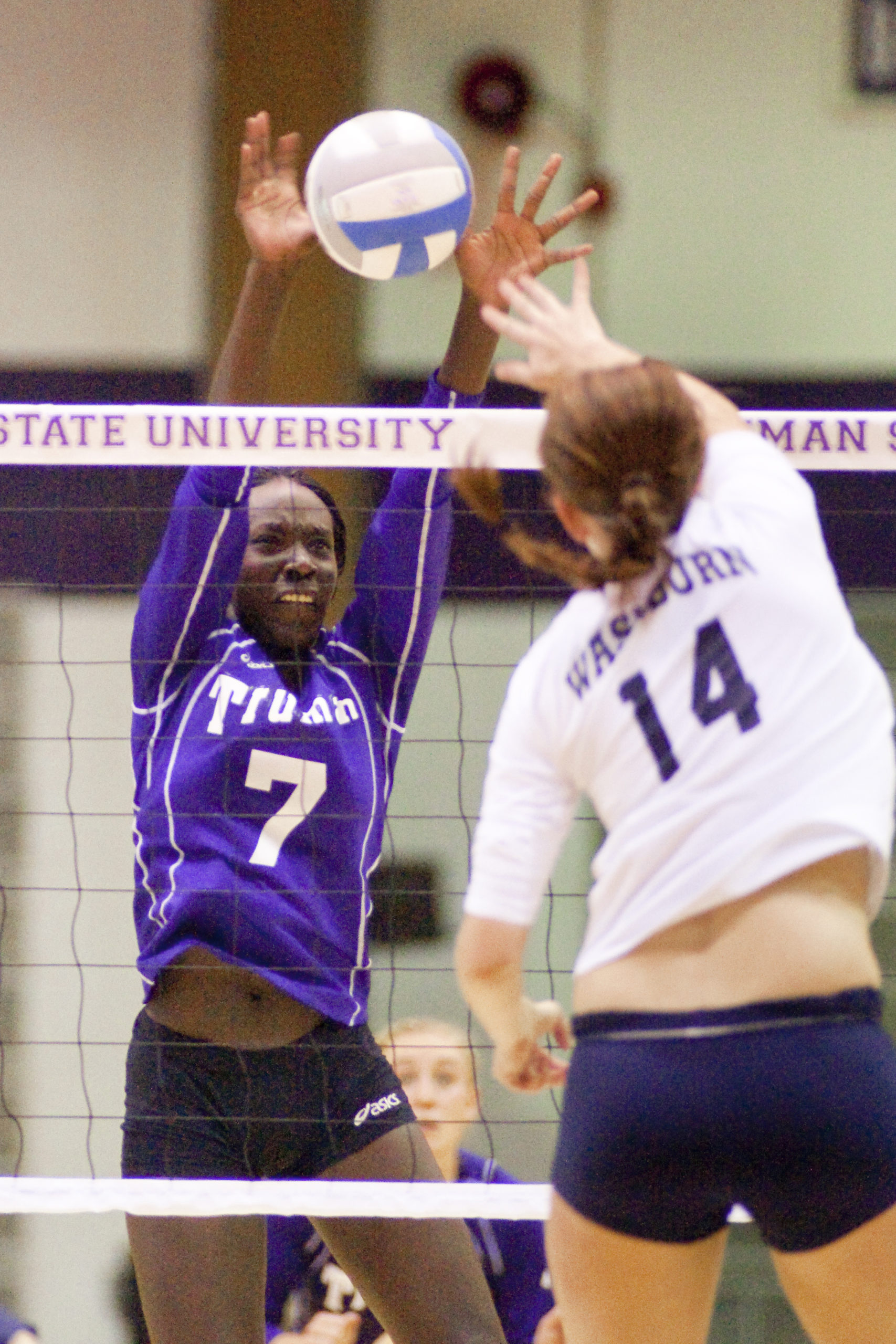
Megan Sharpe playing volleyballSharpe also credits her athletic career with shaping her post-collegiate plans. During her time on campus, she became Truman’s first four-time American Volleyball Coaches Association All-American. When she graduated, she was ranked in the program’s top 10 in hitting percentage, total blocks and kills. On the hardwood, she played in 82 games for teams that made three-straight trips to the MIAA tournament. Beyond wins and losses, or any personal accolades, her experiences as a student-athlete helped her become the person she is today.

“Being able to go through those processes and to develop the mental and physical toughness, I think has helped me get this far,” she said. “It’s an important part of my journey.”

It should not be overlooked that Sharpe’s Truman career almost didn’t happen. Her first trip to campus was unplanned and came via some unsolicited motherly guidance.

“My mom didn’t really tell me where we were going. She was like, ‘this coach has been asking about you, and the school’s really good. Let’s stop here,’” Sharpe said. “Then I got there and met everyone, and saw the school and what it was about, and it really won me over. It seemed perfect for me.”

Like so many other endeavors in her life, Sharpe kept an open mind and let the facts of the situation speak for themselves. It worked out then, and at every other milestone in her life. When her seven-year residency is complete, she will have still more decisions to make, from possible fellowships to potentially going into private practice, not to mention where she might call home. Whatever she does, Sharpe will have examined every angle in depth, and she will undoubtedly be successful.

“That’ll Do”

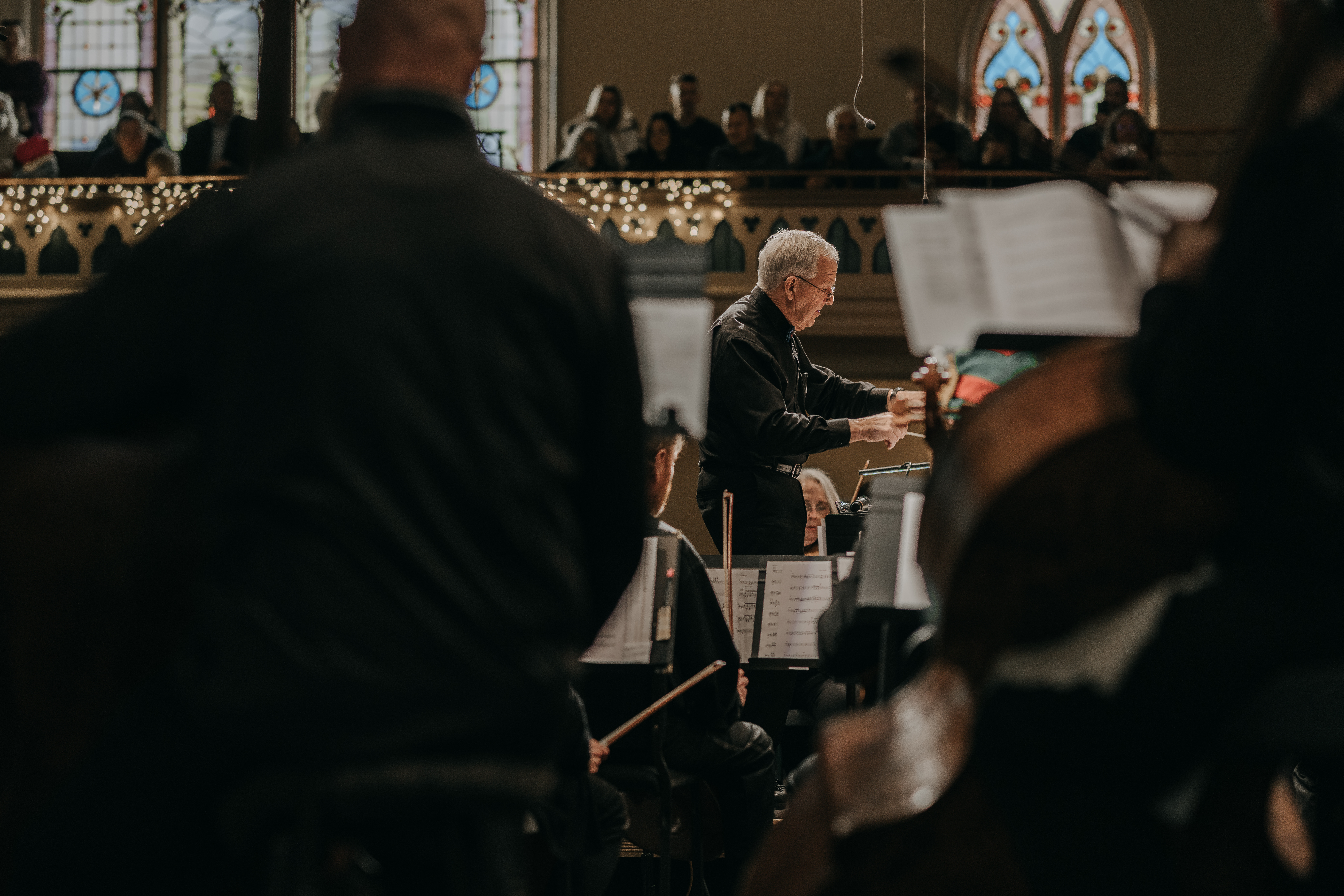
Bob McConnell directs concert

Since attending college at his father’s urging, Robert McConnell has found success on two seemingly divergent paths.

AS FAR AS SECRET IDENTITIES GO, Robert McConnell is on par with Bruce Wayne. By day, he is a mild-mannered Iowa hog farmer, carrying on a family tradition while contributing to one of the state’s largest economic drivers. By night, he dons a dark suit, and while he’s not fighting crime like Batman, the alter ego is no less surprising – he’s the music director and CEO of a symphony orchestra.

Since 1990, McConnell has served as the music director of the Southeast Iowa Symphony Orchestra. Last year, he added CEO to his list of duties with the organization. It’s one of many lines on his musical curriculum vitae. Since graduating from the University with a Bachelor of Music Education degree, McConnell (’77) has taught music abroad in Israel, conducted a municipal band, participated in musical theatre, worked on the staff of Iowa Wesleyan University and spent 26 years as the principal oboe with the Quad City Symphony.

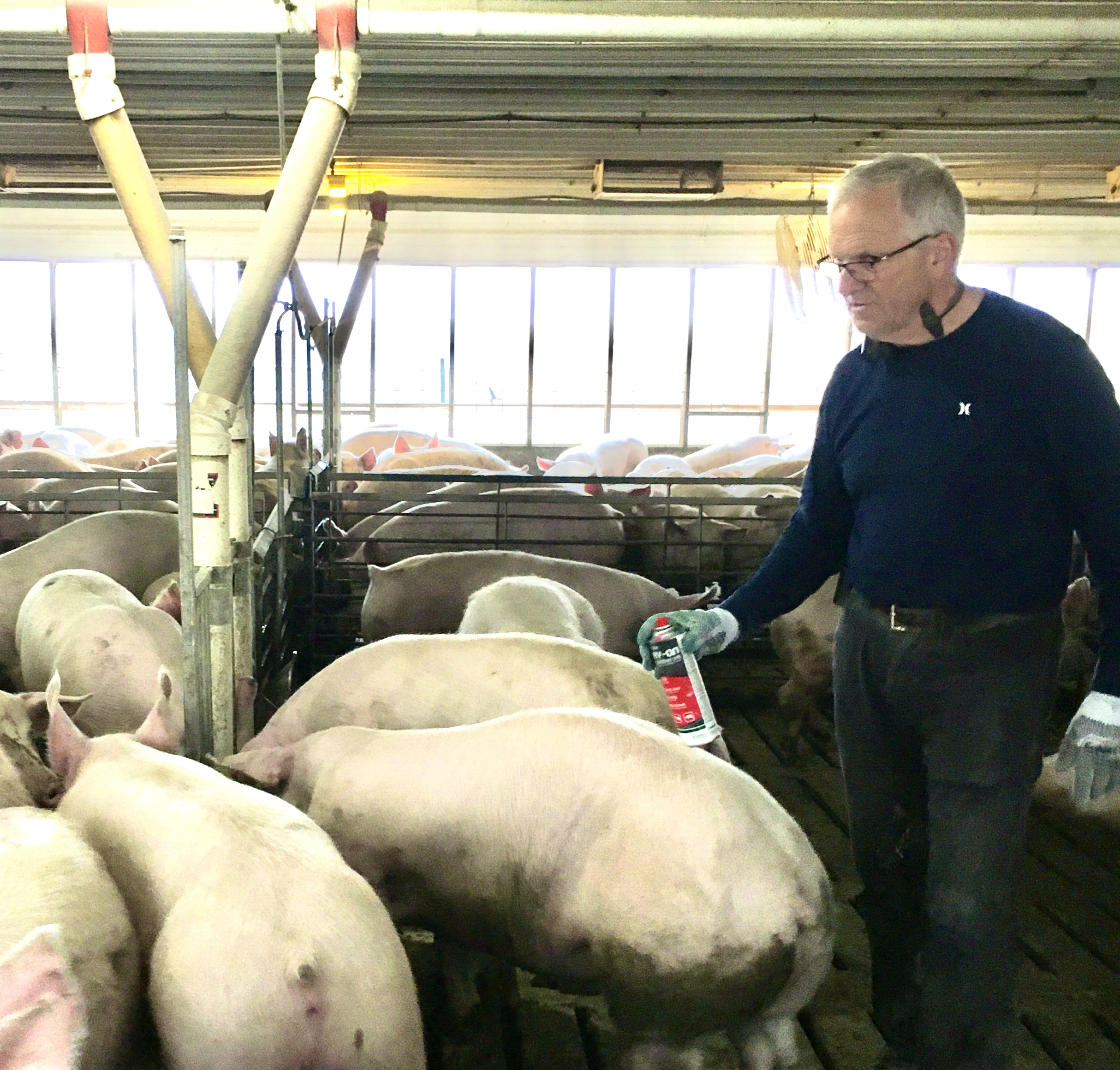
Throughout all his musical excursions, McConnell has remained involved in pork production. He owns and operates a medium-sized hog farm that feeds roughly 21,000 animals a year near Washington, Iowa. His double life has led to some interesting reactions from hog farmers and musicians alike.

“It really depends on how people know me, but I would say basically 100% of people are surprised,” he said.

It speaks to the value of a liberal arts education that an individual can excel in such disparate fields. McConnell, however, never intended to embark on the path that has opened so many doors for him.

“I was not originally planning to go to college, and my dad more or less made me go. Once I arrived, I just loved it,” he said. “For me, it’s hard to overstate the impact that Truman had. You’re a kid from a hog farm who didn’t really want to go to college, and then you become addicted to music.”

Like any good musical director, McConnell is quick to share credit. He attributes much of his success to the faculty members who supported him, as well as his membership in Phi Mu Alpha. Still, he did not fully appreciate his experience at Truman until he earned his Master of Arts degree in oboe performance from Temple University.

“Something I realized when I went to graduate school was that the music standards at Truman – for performing and for general musicianship – were really high. I attribute that primarily to the caliber of faculty,” he said. “It was just fantastic training. When I run into Truman graduates in music, they tell me they’ve had the same experience.”

Bob McConnell with hogs

McConnell has called on Truman-trained musicians several times throughout the years. Many of the musicians he directs and performs with either received degrees from Truman or are members of the faculty. The relationship works out well for performers and audiences alike as McConnell continues to spread the joy of music throughout smaller communities in the Midwest.

“These orchestras in rural areas give players the opportunity to perform at a higher level than they would otherwise have access to, and what the community gets in return is invaluable: skilled musicians for their churches, for weddings and funerals, for school and community musicals, and simply an enriched quality of life in the region,” he said.

Under McConnell’s leadership, SEISO has become one of Iowa’s most prominent community-based orchestras. In addition to live performances, it provides educational opportunities and rural outreach programs for all ages.

“It is a great outlet for teachers, helping them maintain their skills and motivate their most talented students,” he said.

One of the orchestra’s recent stops found McConnell in familiar territory. SEISO performed as part of the Kohlenberg Lyceum Series in March, marking the first time McConnell has been on the Baldwin Auditorium stage since he was a student.

“I remember distinctly my very first band rehearsal in Baldwin Hall. I was sitting next to two fantastic clarinetists – Ellen Lavender and Clay Pickens – and after the rehearsal I told band director Tom Duden that I didn’t think I was up to playing in the band. He told me, ‘Don’t worry about it,’” McConnell said. “Returning to that hall, all those years later, brought a lot of that back. I didn’t think I was a good enough player to achieve what I ended up doing. I feel like a lot of my life has been serendipity. Opportunities came up and they worked to my advantage.”

Beyond Compare

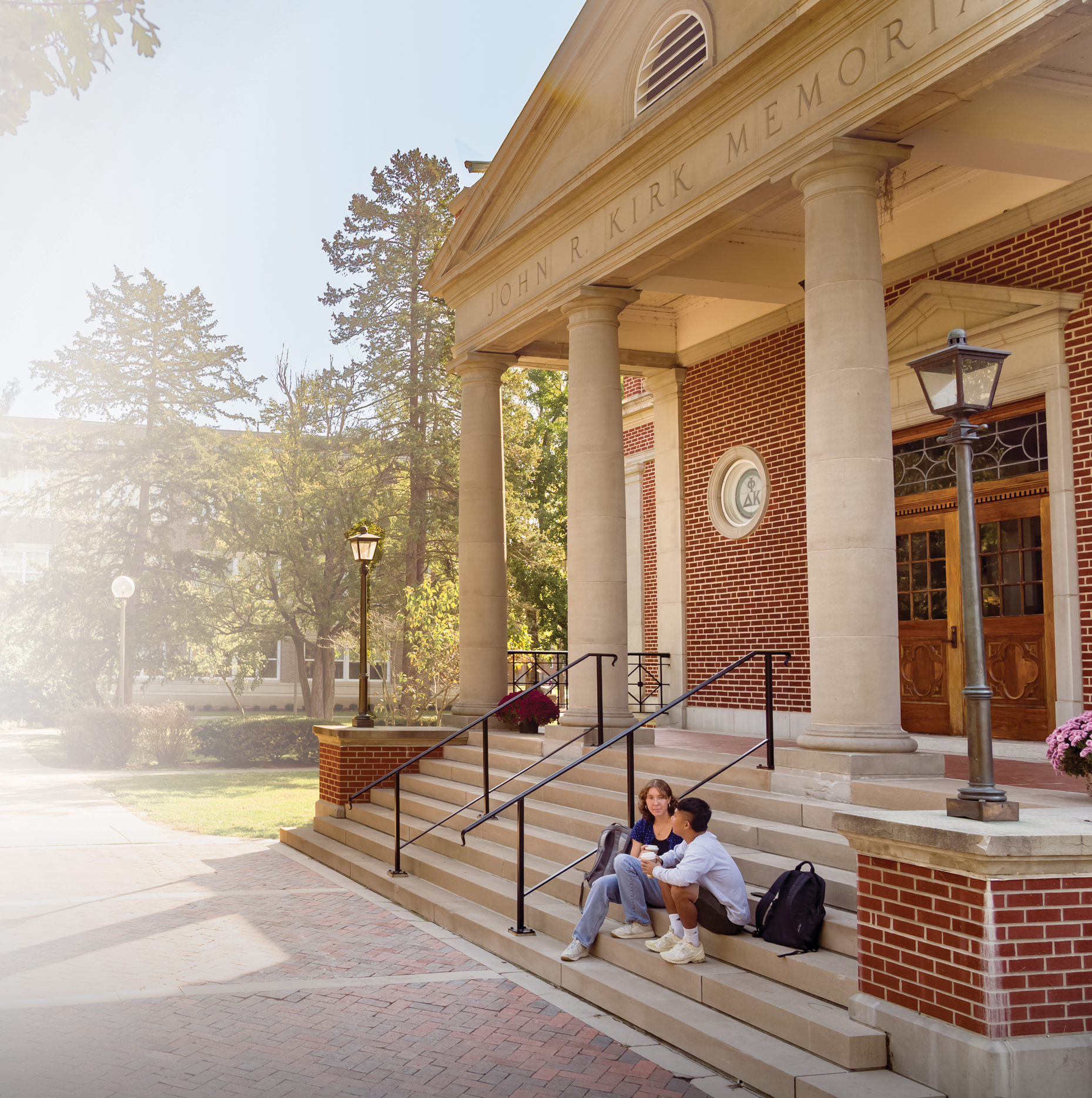
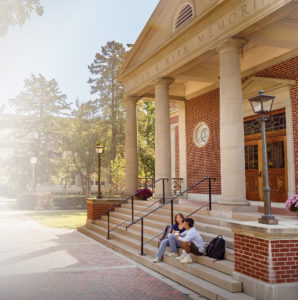
Students sit on the steps of Kirk MemorialTruman graduates pursue careers they find deeply meaningful. Their successes prove the value of a liberal arts and sciences education and show why it is the best bet for the future.

CENTURIES FROM NOW, historians may one day categorize this period as the era of data. From business analytics to sports statistics to what social media algorithms know will keep eyeballs on screens while fingers continually scroll for hours, almost everything can be measured. Still, some things remain difficult to quantify. How can a person’s passion for a cause be gauged, or the intangible qualities they contribute to society be measured?

Education can be particularly difficult to assess. How does one measure the effects of an education when it is put into practice with purpose? The teacher who shapes thousands of young minds during a decades-long career. The doctor who gives patients more moments with loved ones following their life-saving efforts. In recent years, the Truman Review has shared the stories of alumni who have provided services to children in underprivileged regions, advocated for victims of violent crime and contributed to research combating diseases affecting millions. When it comes to Truman alumni, these stories are the norm, not the exception.

“From implementing focused workforce solutions close to home to supporting humanitarian outreach around the globe, our alumni are force multipliers who make the world a better place,” said University President Sue Thomas. “Truman graduates have an outsized impact.”


IT SHOULD COME AS NO SURPRISE Truman graduates have a fondness for altruism. The underlying philosophy of normal schools, which the University was at the time of its founding in 1867, was education is inherently good. A better educated populace leads to a stronger community. Knowledge is the high tide that lifts all boats. Although Truman State University might be different in many ways from North Missouri Normal School and Commercial College, the noble elements of its founding have remained throughout its existence and are stronger now than ever. Literally from its inception, the University was devoted to producing graduates who are dedicated to service beyond self – who go out into the world with the goal of contributing to the common good.

The Truman of today is built on the foundation of that service-based model. The thousands of teachers the University counts among its alumni are regularly recognized as the best in their schools, districts and states, and the effect they have on their students is immeasurable. Collectively, this group will never be among the wealthiest alumni, at least not in dollars and cents. Education is calling, and those who heed it know the true reward.
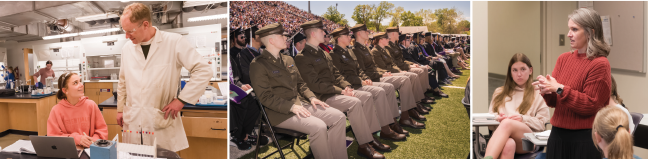
Photos of a student in lab, ROTC seated at graduation, and an instructor“When I first decided to become a music educator, I was motivated by the idea of giving students the gifts that music had given me up to that point in my life,” said Brad Balog (’98, ’00, ’01), director of bands at Lafayette High School. “Since then, it has become so much more for me. The relationships that I have forged with students and their families, the opportunity to do something that really makes a difference and matters in the lives of so many, the chance to support future educators across the state are all just parts of why being an educator is so fulfilling. Despite all of the demands and current challenges in education, in the end we have the chance to positively affect so many young people every day.”

Administrators in school districts throughout the state understand the impact Truman graduates can have, and it’s why they are highly sought after for open positions. By adopting the Master of Arts in Education model more than 30 years ago, the University added to its legacy of producing quality teachers. The MAE model was originally imagined by President Walter Ryle as far back as the 1930s, and it is an example of Truman being visionary in the preparation of its graduates. They enter the workforce with a deep understanding of their subject matter and their students, and their advanced skills lead to increased pay during their careers, making them more likely to stay in the field.


AS TRUMAN EVOLVED FROM ITS NORMAL SCHOOL ORIGINS, so did the number of ways its alumni can and do make a difference in the world. Many start their post-graduate careers in service to others, including through the military, governmental work or other public service.

All totaled, 247 alumni have served as Peace Corps volunteers since 1961. After graduating, Damian Chavez (’14) taught English in Armenia. He credits the relationships he forged during that time for making the experience particularly rewarding, like when students he coached participated and found success in a debate tournament while competing in their non-native language.

“Peace Corps volunteers serve for two-plus years. During that time, you experience the full range of human interaction and emotion. There are ups, downs and plenty of sideways. Most things are more challenging than we’re used to, but there’s also a lot that is fun and satisfying,” Chavez said.

Long before the Peace Corps was established, Bulldogs were serving the greater good in foreign lands, primarily though the armed forces. It can be difficult to properly access military service among alumni. With the exception of students utilizing the GI Bill to help with their education, most military affiliation comes after graduation and is only known to the University if it is self-reported. It can safely be assumed alumni as far back as the school’s early days have military ties, most notable among them being 1880 graduate Gen. John J. Pershing, who would go on to serve as Commander of the American Expeditionary Forces in World War I. Many made the ultimate sacrifice, including Jedh Barker, the University’s only Medal of Honor recipient who posthumously received the award for his acts of heroism during the Vietnam War.

Since the 1969-70 school year, more than 800 students have been commissioned through the University’s participation in the ROTC program. In 2023, the program was ranked No. 12 in the nation by the U.S. Army Cadet Command. When it was inexplicably slated for inactivation last year, stakeholders including President Thomas, members of the Board of Governors and regiment alumni, along with legislators and friends on the state and federal levels, rallied in support. At the beginning of the academic year, the decision was reversed and the ROTC program will continue operations at Truman for the foreseeable future.

“Truman has developed quality leaders for over half a century. These officers have become career military leaders, politicians, corporate heads, authors, educators and national figures at the highest levels across our great country. Truman’s Army ROTC will continue forging quality graduates who will become tomorrow’s leaders,” said Billy Burse (’73), retired Army colonel and past president of Truman’s ROTC alumni regiment.


WHEN IT CAME TO RETAINING THE ROTC PROGRAM, it no doubt helped that Truman alumni have been joining the ranks of government and public service for years. From school boards to Senate seats and countless posts in between, University graduates across the political spectrum find ways to contribute to their communities through the public sector. It is a natural progression since a liberal arts and sciences background provides an array of knowledge, and Truman prides itself on teaching students how to think rather than what to think. This enables them to synthesize information and make the best possible decision for their constituents.

One University experience which contributes widely to careers in public service is the Missouri Government Internship Program. Since the early 1970s, Truman students interested in public service careers have had the opportunity to spend a semester in Jefferson City working as full-time staff assistants with a legislator or state public official. Many former interns have gone on to serve as legislative directors, chiefs of staff, judicial clerks, policy analysts, lobbyists and public officials as a direct result of what they learned and the connections they made as interns.

“The Missouri Government Internship was a great springboard for law school because it gave me a thorough understanding of the legislative process. Its value wasn’t limited to law school, either. Because the internship was full time, it was a perfect transition to the professional world, and it accelerated my development. I still keep in touch with folks I met during the internship,” said Bradley Craigmyle, who completed the internship in 2014 and is now the deputy assistant attorney general, Environment
and Natural Resources Division, with the U.S. Department of Justice.
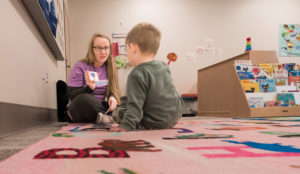

Greenwood staff with a patientANOTHER WAY TRUMAN GRADUATES MAKE TANGIBLE DIFFERENCES is through their work in health and wellness related industries. In the most recent academic year, approximately 45% of Truman students pursued degrees traditionally associated with the health care field, including biology, nursing, health science, exercise science, counseling, psychology and communication disorders.

“Graduates of the Truman nursing program are in high demand as evidenced by a 100% employment rate upon graduation,” said Cindy Waller, chair and associate professor of nursing. “Through a wide variety of liberal arts and sciences courses, nursing courses and clinical experiences offered to Truman nursing students, our graduates are well prepared to enter the nursing workforce upon graduation.”

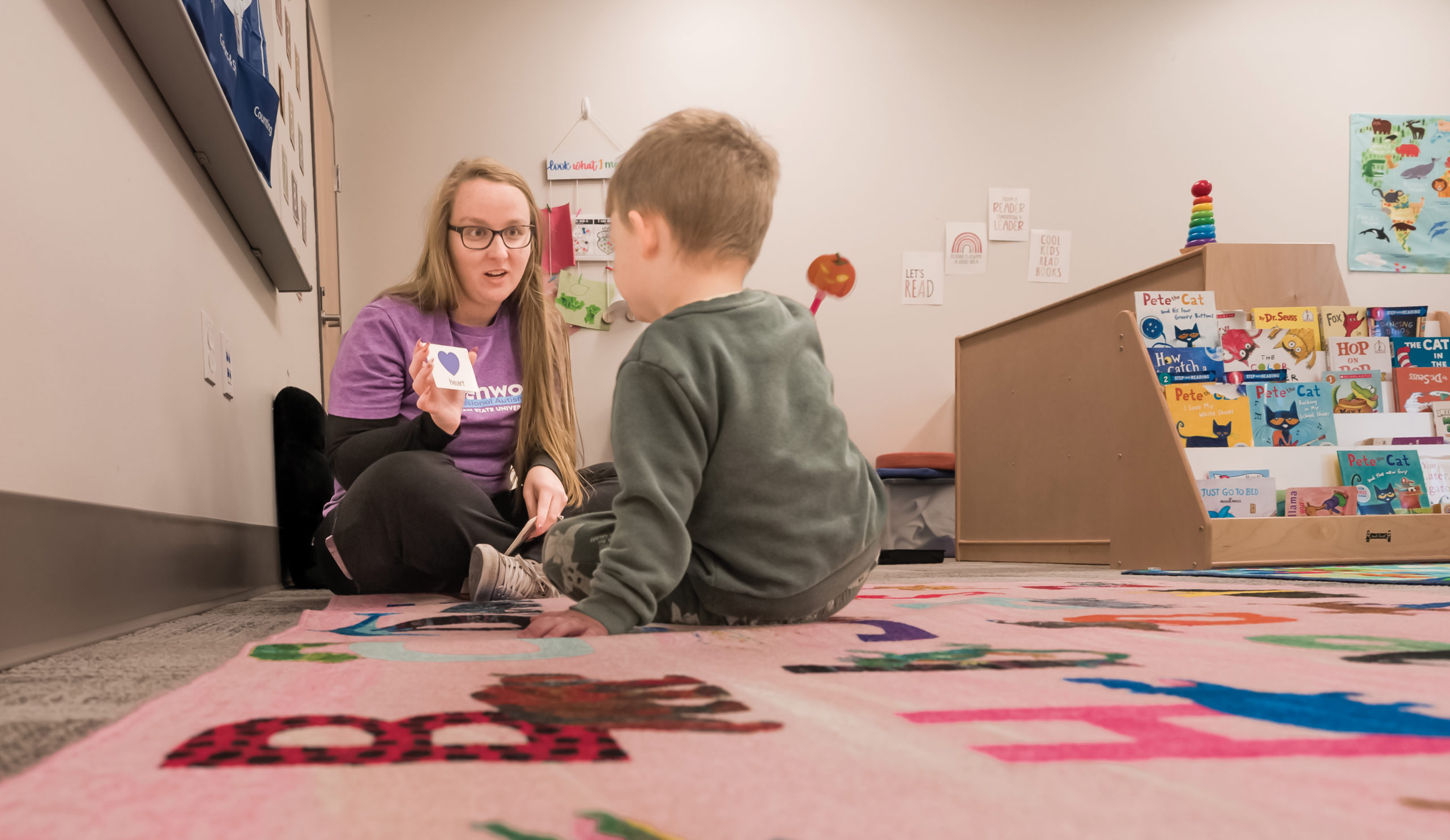
Whether it is firsthand interactions with patients, or contributions through research and other tangential aspects, countless University alumni have dedicated their careers to improving the mental and physical wellness of others. That commitment can be seen in action not far from the heart of campus at the Greenwood Interprofessional Autism Center. After nearly a decade in planning, followed by renovations to a beloved historical elementary school, the converted facility is now more than two years into seeing patients and recently added diagnostic assessments to its list of services.

“We have seen children who are non-verbal find ways to communicate with their families or gain independence by being able to master tasks that seemed unattainable to them not that long ago,” said Dr. Maryellen Koch Jensen, Greenwood director. “That type of progress can make a real difference in the quality of life for our clients and families.”

A different kind of community-focused University project is just getting off the ground. The Senator Roy and Abby Blunt SKILLS Center, located in the Kirk Building, partners with the University Career Center, Tutoring Services, Access and Disability Services, the Center for Academic Excellence, the Communication Lab and the Writing Center. Its focus is on providing education and services for the local community and employers to enhance workforce readiness.

“Truman and the SKILLS Center are committed to the success of the Kirksville community and northeast Missouri towns and businesses,” said Craig Berryman, director of the SKILLS Center. “We want to improve and empower our workforce and employers to be competitive locally and nationally. We will do that through positive education and upskilling to generate greater economic opportunities for our community workforce.”
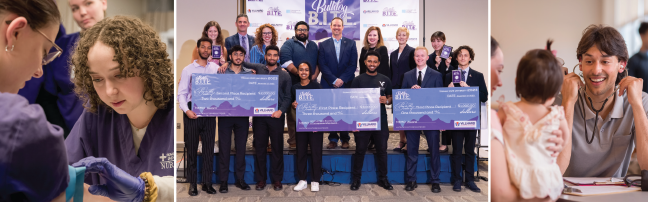

Photos of two medical students, people holding checks, and a medical student with a small childTHERE IS NO WAY TO ACCURATELY QUANTIFY how much Truman and its alumni contribute to their communities, but some things can be measured. A 2022 Economic Impact Study commissioned by the University (economicimpact.truman.edu) showed Truman generated $561.7 million in income to the Missouri economy in the previous fiscal year. The study also noted the average bachelor’s degree graduate from Truman will see increased earnings of $30,800 per year compared to a person without a degree working in Missouri. Regardless of the field of study, simply earning a degree from Truman puts a graduate on a trajectory for increased income, and their contributions through their careers make them self-sufficient drivers of the economy.

Truman is a model of efficiency and one of the wisest investments in the state of Missouri, proof of which can be found in its high retention and graduation rates. By and large, the students who come to Truman stay, they graduate and, most importantly, they take their new-found skills out in the world and use them to make a difference. The economic impact study showed for every dollar invested in Truman the state of Missouri receives nearly nine dollars in return.

I consistently hear from employers that strong communication, adaptability and problem-solving are among the most sought-after skills in candidates across industries. A liberal arts and sciences education develops these competencies alongside a student’s area of study.”

— Alison Ayers
executive director of career services and employer relations

Contributions can come in as many ways as there are alumni, which speaks to the versatility of a Truman degree. That is the key to the value of a liberal arts and sciences education in the years to come. While change is always constant, nearly every industry and occupation today seems to be in the midst of unprecedented disruption. Whether it is the continued development of the global marketplace or the impact of AI on the humans in it, careers of today evolve more rapidly than ever. This makes essential skills such as critical-thinking, communication, problem-solving and leadership — all markers of a liberal arts and sciences education — even more valuable.

“I consistently hear from employers that strong communication, adaptability and problem-solving are among the most sought-after skills in candidates across industries,” said Alison Ayers, executive director of career services and employer relations. “A liberal arts and sciences education develops these competencies alongside a student’s area of study. As industries continue to evolve in response to emerging technologies, including AI, these skills remain essential. They equip graduates to think critically and lead with purpose while bringing creativity to complex challenges in any career field.”

Though the landscape of the job market may change, liberal arts and sciences graduates will invariably be able to find their way in it. There will perpetually be challenges requiring creative, original thought to devise a solution. Organizations will need leaders to harness the power of their workforces. The individuals required to meet these challenges will consistently be in demand, and there will always be a need for a training ground where they can learn today how to meet the unknown challenges of tomorrow.

As the future unfolds, Truman and its graduates will continue to diligently and humbly live the value of the school’s vision statement, which calls for “developing educated citizens needed to protect our democracy and offer creative solutions to local, state, national and global problems.” Their efforts may at times go unnoticed, but that’s not why they do what they do. The world is a better place because Truman and its alumni are in it. While that statement might be immeasurable, it remains factual.

Complimentary Angles

Countless students have benefited from mathematics faculty members Dana and Tony Vazzana as they approach nearly 30 years together at Truman.

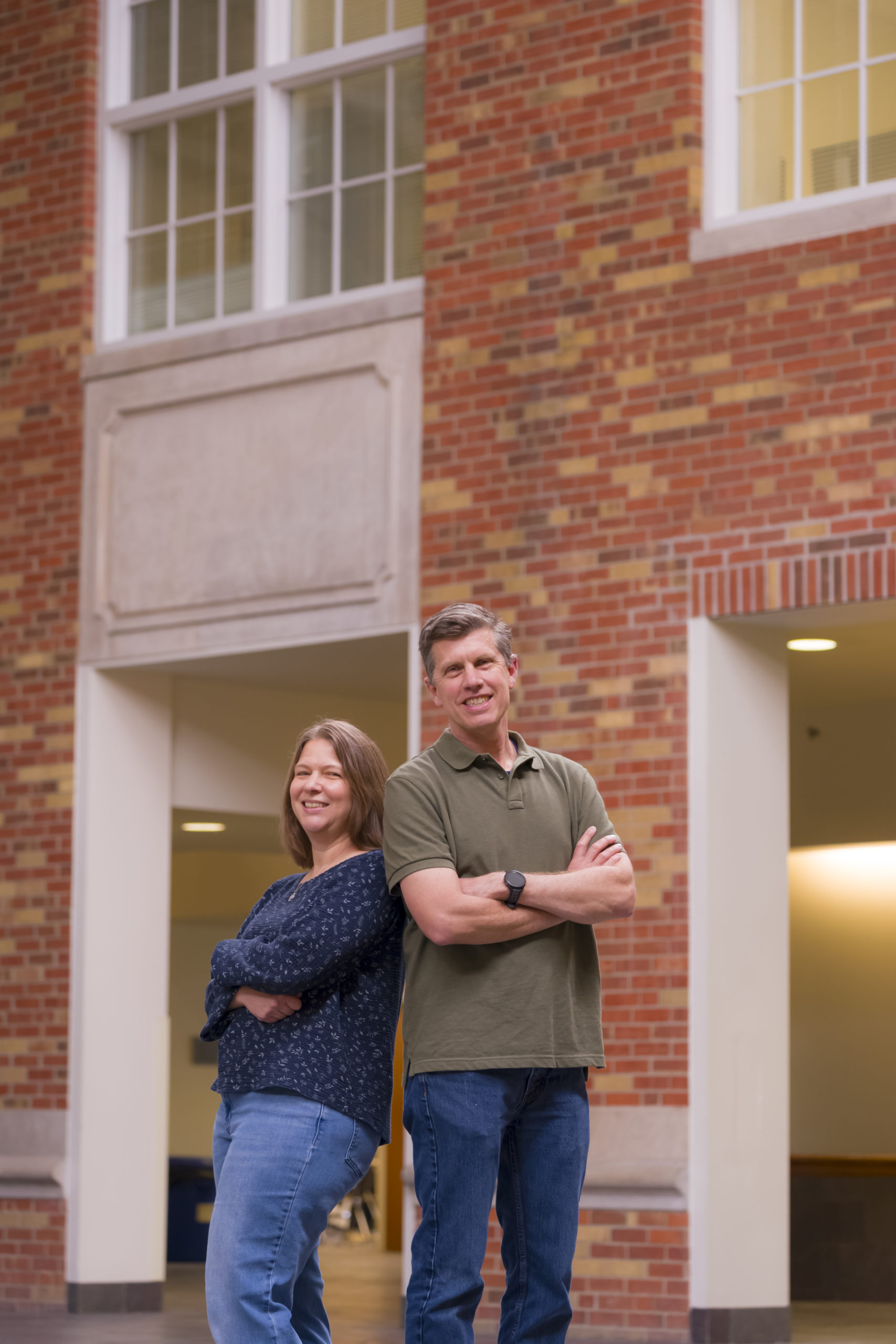
Dana and Tony Vazzana stand in Violette Hall

IT’S NOT REALLY ABOUT THE MATH. Ask a mathematician what excites them about their field and the answer might sound like a spiritual testimony with terms like “truth” and “certainty” rather than discussion of quadratic equations or linear regression.

“There is something satisfying about the existence of an objectively right answer that can’t be debated,” said Dana Vazzana, professor of mathematics.

It is a sentiment shared by her colleague and husband.

“What is particularly satisfying to me is the certainty of mathematical truths,” said Tony Vazzana, professor of mathematics. “I have always been engaged by solving puzzles of various kinds, and mathematics provides an unlimited source of these.”

In the simplest terms, mathematicians are problem solvers. They evaluate all the relevant variables, position them accordingly and work the equation to find the solution. Fittingly, when Dana and Tony met as grad students at the University of Michigan they each served as a problem solver for the other.

“I was working on filing all of the initial paperwork, and the administrative assistant was directing me to various offices all over campus to get my ID, office keys and paycheck paperwork,” Dana said. “I looked confused when she kept describing different buildings, and Tony stepped up and offered me a map.”

That initial act of chivalry earned reciprocity.

Dana and Tony Vazzana in their kitchen

“I didn’t have a car, and Dana took pity on me,” he said. “We regularly did our grocery shopping together. I tried to express my gratitude for this once by making her dinner, but I think that only deepened her sense of pity.”

The next major variable in the equation of their story came after earning their Ph.D.s and entering the job market at the same time. At one point, they each had offers in hand, but in different parts of the country. When Truman’s Math Department expressed interest late in the hiring process, the Vazzanas did not exactly see the situation in the same light.

“I wrote back and said that we were not interested,” Tony said. “Dana, on the other hand, gave a more nuanced, ‘No, not unless you can interview us this week and give us a decision right away,’ and that is exactly what happened.”

Truman turned out to be the perfect fit. Dana and Tony earned their undergraduate degrees at the University of Illinois and the University of Notre Dame, respectively. They were looking for a small to mid-sized liberal arts school for their academic careers. It helped that Truman is close to home for Dana, an Iowa native.

“It was always exactly what we wanted: a school that focused on teaching, with small classes, great students and a strong sense of community,” she said.

Working with students has always been a passion for both Dana and Tony. Beyond teaching a subject matter they enjoy, fulfillment comes from helping students reach their potential, especially in the face of adversity.

The most rewarding times are when I have a student who struggles initially but eventually turns things around. It’s really thrilling to see a student take action and have the kind of success they hoped for initially.

– Tony Vazzana

“The most rewarding times are when I have a student who struggles initially but eventually turns things around. Sometimes I’ll meet with a student early in a semester after a test that hasn’t gone well, for whatever reason. We talk about strategies that might lead to better results,” Tony said. “It’s really thrilling to see a student take action and have the kind of success they hoped for initially. Even better than the achievement in the moment is knowing that when the student next encounters a setback, they will have this experience of rising to meet a challenge and persevering.”

While she continues to teach classes, Dana has also assumed the role of director for Truman’s Academic Professional Development Center. The APDC provides resources for faculty members, including classroom support tools, mentoring guidelines and regular lunches on specific topics.

“I moved into faculty development because I saw students struggling and wanted to devote more time and energy to learning how to help them and to help my colleagues improve teaching across campus,” she said. “It has been great to see the APDC grow over the years. We had almost 60 people at the last lunch event this year, and it is great to see so many faculty get involved in events that promote good teaching.”

Since their arrival in 1998, the Vazzanas have taught the spectrum of mathematics classes at Truman. Violette Hall has served as their home away from home throughout their careers, but an office reshuffle placed them on opposite sides of the building years ago.

“We joked that we were now in a long-distance relationship,” Dana said. “It’s nice to be able to talk over teaching issues with him. Sometimes I do have to declare ‘no more work talk!’ if I’m trying to relax and he’s contemplating curriculum revisions out loud or something.”

During those work-free times, the Vazzanas have any number of activities to keep them occupied. They both enjoy being outdoors when the weather is nice. Tony can often be found watching a sporting event, depending on what’s in season, while Dana likes to sew or try her hand at the New York Times crossword puzzle. Given enough time, dinner might be an overly complicated new recipe. With both of their children out of the house and pursing their own careers, the Vazzanas take pleasure in the slower pace of life.

“The evening might be capped off sitting on our back deck reflecting on days gone by and imagining future adventures to come,” Tony said.

Or, possibly thinking of the next problem to solve.

Expanding Community, Creating Opportunity

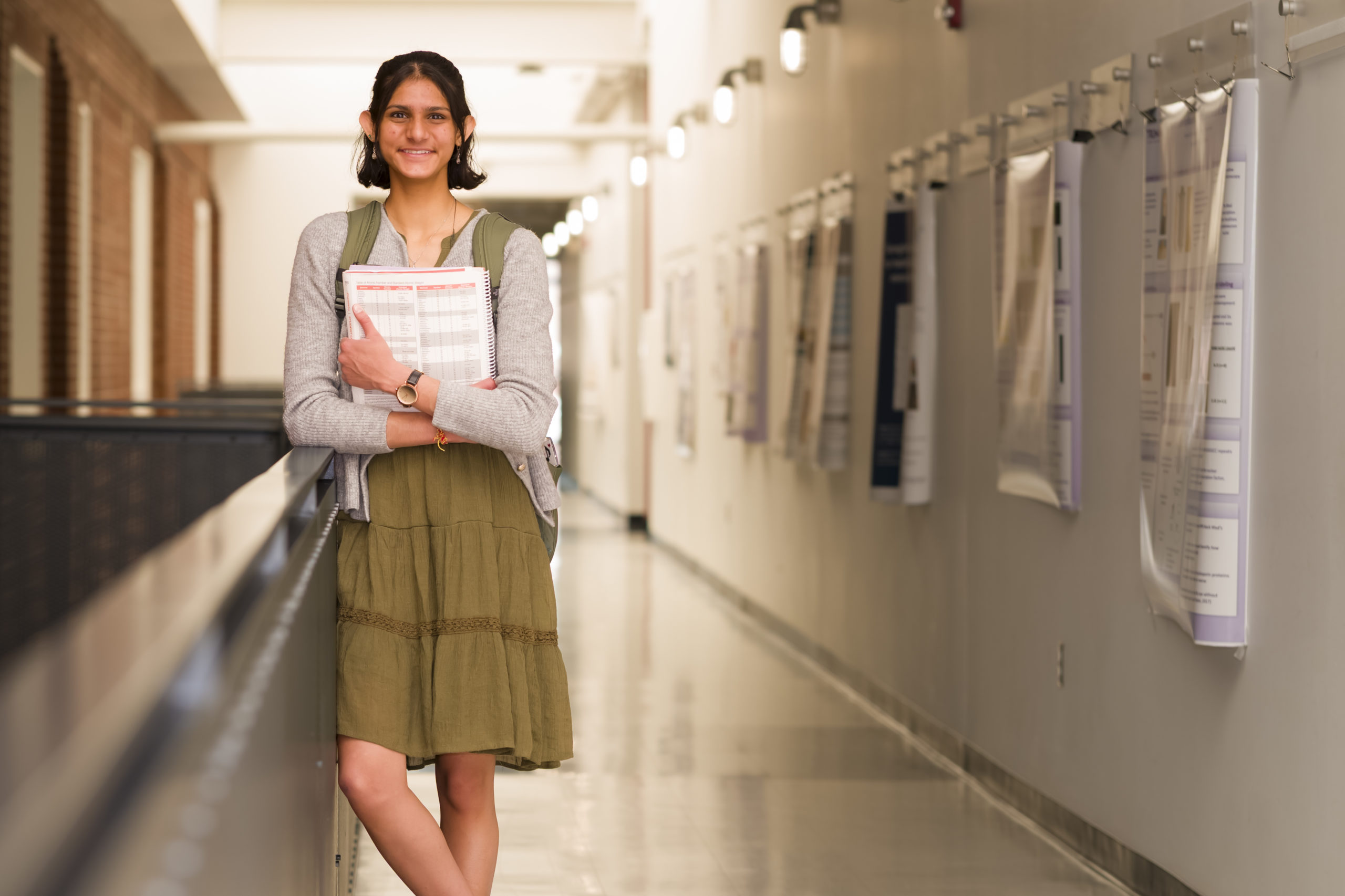
Suhani Patel pictured in hallway

Suhani Patel is making the most of her Truman experience by developing connections.

LITTLE THINGS CAN MAKE A BIG DIFFERENCE. When Suhani Patel visited Truman, it was in the dead of winter, before students were back on campus. Sidewalks had yet to be cleared after a storm, and a major construction project was underway in the middle of campus, so it wasn’t exactly picturesque. Nevertheless, she gave the school a fair shake, putting stock in the University’s academic reputation and trust in her tour guide.

“The student ambassador from my tour did a fantastic job in checking all the boxes of my ideal college, from academics to social,” Patel said. “As I continued to research Truman, I found it to be the best school with an ideal class size, academic and research opportunities, along with organizations that I could carry on hobbies like Indian classical dancing.”

Still, there were reservations, most notably that Kirksville does not have a mandir, the traditional place of worship in Hindu culture. During Diwali, the Hindu Festival of Lights, Patel would give tours of the mandir her family attends in Shawnee, Kansas, a short drive from her home in Lee’s Summit, Missouri. The apprehension of not having built-in community support gave way with one final touch during her recruitment process – a handwritten postcard from a chemistry faculty member.

“It is a very rare thing in college to find professors and staff members who go above and beyond to make students feel like family, and Truman embodies that very well,” she said.

Fast forward two years and “ingrained” would be the best word to describe Patel’s connection to the Truman community. With medical career aspirations, she chose biochemistry and molecular biology for her major and recently upgraded her mathematics minor to a second major after participating in computational chemistry research through A.T. Still University.

“It wasn’t until March of 2025, when I started preparing for my Student Research Conference talk, that I realized how beautifully my two academic worlds were clashing together,” she said. “This realization made me want to continue taking math classes, both for my love towards the subject and in learning the backbone theory of my research.”

Having recently completed her sophomore year, Patel has twice participated in Truman’s annual Student Research Conference. While some students may look forward to homecoming, breaks or even Reading Day (Eve), the SRC is what she circles on her calendar.

“As a college student, my favorite day of the year is the Student Research Conference. I am given the opportunity to fully be myself while getting to talk about my research.”

— Suhani Patel<.p>

“As a college student, my favorite day of the year is the Student Research Conference,” she said. “I am given the opportunity to fully be myself while getting to talk about my research.”

Outside of the classroom, Patel is actively involved in more than half a dozen extracurricular activities. In addition to being the president of the American Society of Biochemistry and Molecular Biology, she has leadership positions in the Pre-Student Osteopathic Medical Association and Alpha Chi Sigma. Through her affiliation with the South Asian Student Union, Patel has been able to continue her love of Indian classical dance by co-hosting and choreographing two annual events. She also taught an Indian folk-dance class at the Student Recreation Center.

“Truman is a supportive community of various academic and social interests, where everyone is curious and willing to dabble in other fields to learn more,” she said. “Truman truly lives up to its liberal arts education. Many of my STEM friends and I have integrated a part of ourselves into classes outside of STEM. I had the opportunity to take Piano Lower Division, where I was fortunate to learn key piano skills and perform in Ophelia Parrish Performance Hall. Essentially, students can enroll in classes outside of their major and develop crucial skills they wouldn’t have gotten to otherwise.”

Whether it is piano recitals, making friends during Truman Week or taking in the sunrise during a morning hike at Thousand Hills State Park, Patel has found a home in Kirksville.

“Outside of academics, the staff from food services to administration are all involved with the student body. Most, if not all, of MO Hall’s dining staff have gone out of their way to get to know me and many other students. As soon as I enter their dining hall a staff member, typically Tabby, is ready with my quesadilla with a side of sour cream,” she said. “The community here at Truman is extremely supportive, and I truly was not expecting all the warmth.”

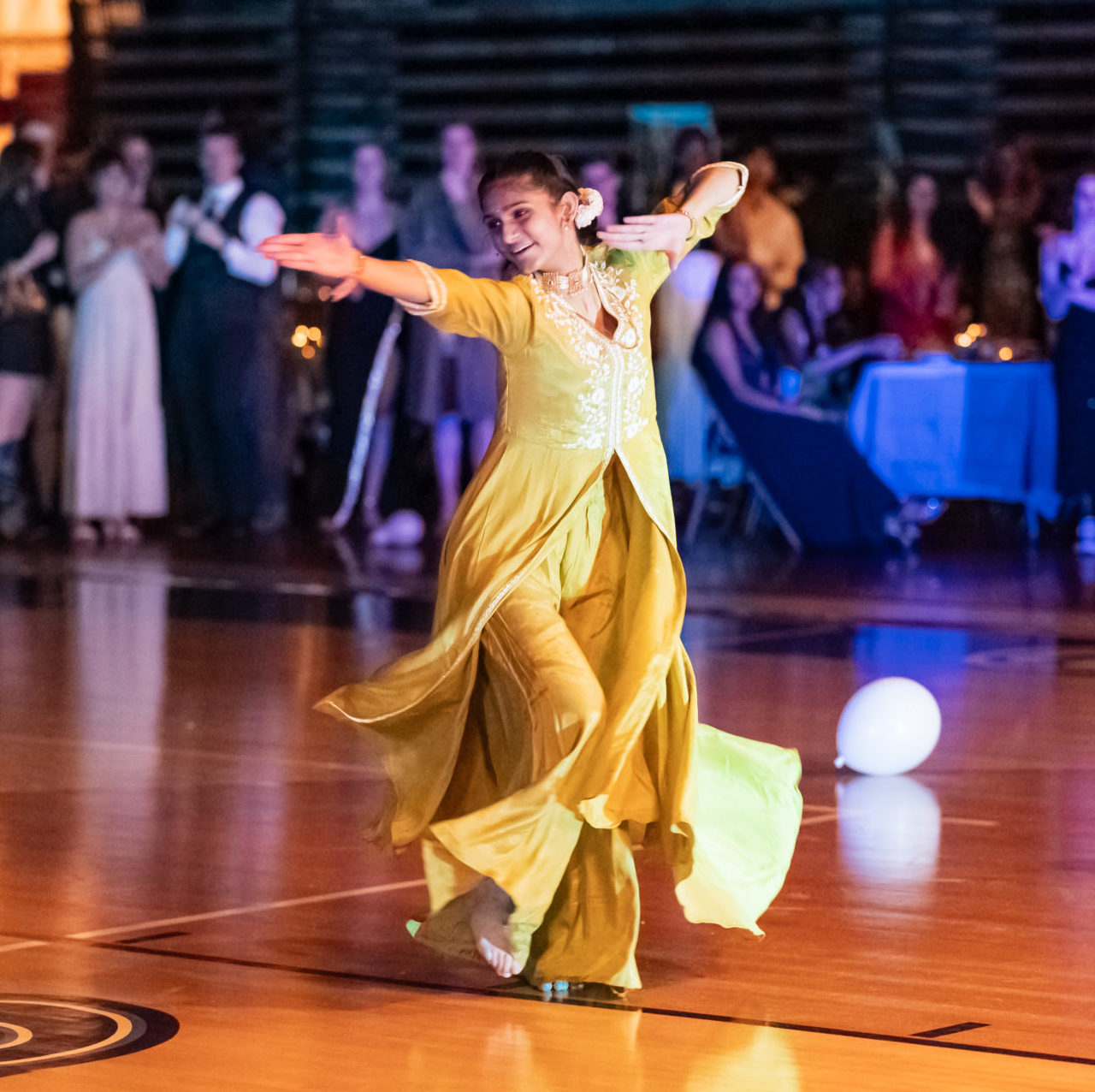
Suhani Patel performing in Pershing Gym

Patel performs an Indian folk dance at the International Prom in Pershing Arena

In the future, Patel will likely continue to be part of a university community. She intends to obtain an MD-PhD in oncology and biophysics with a focus on using computational methods. Ideally, she would like to teach and conduct research at a medical school while still seeing patients in the clinic.

For now, Patel still has two years left at Truman, and she plans to make the most of them. One way she is giving back to her newfound community is through her role as a student ambassador. She now helps prospective students in the same way she was aided on her first visit to campus.

“Since coming to Truman, I have developed an immense amount of pride and love for our school,” she said. “Being a student ambassador is absolutely one of my favorite things to do. There is never a dull moment in giving tours to families. They are so kind, amiable and full of stories, especially our beloved alumni who bring their kids and grandkids.”

Attention Educators: Share Your Truman Spirit!

As a tribute to the University’s long history of teacher education, the TruSpirit Program offers alumni educators the opportunity to showcase their Truman spirit at their school!

The dedicated work of teachers, counselors and administrators shapes the coming generations, and it is an honor for Truman to be associated with so many talented mentors. TruSpirit packets consist of Truman swag and information about the University to share with students in your classroom or office. If you are an educator and have not signed up yet for the TruSpirit program, visit advancement.truman.edu/register/truspirit.

Online Gifted Ed Program Provides Opportunities for Teachers and Students

Truman combines its normal school roots and modern technology to equip educators with strategies for talented learners.

GIFTED STUDENTS OFTEN NEED SUPPORT beyond what is typically targeted in day-to-day instruction. For educators seeking additional resources to help these students reach their full potential, Truman offers a completely online Master of Arts in gifted education.

Designed with working teachers in mind, the program is flexible and accessible. Coursework can be completed on an independent schedule, allowing teachers to fast-track their studies and earn their degree quickly or take one course at a time and directly apply new skills and strategies in their classroom for instant impact.

“Truman’s fully online gifted education offerings are designed to combine the academic rigor and the professional flexibility that today’s teachers require. Whether pursuing a full Master of Arts or focused certification, students move through the program at their own pace while learning from regional and national leaders who are actively shaping gifted policy and advocacy,” said Jocelyn Stevens, associate professor of music education and chair of education. “By exploring how creativity, culture and neurodiversity intersect, we provide a world-class education at a regional price point, equipping educators with the clinical insight and evidence-based strategies needed to lead high-impact programming in their own districts.”

The program is comprised of 30 total credit hours, which includes a three-credit-hour internship. Courses cover the identification of gifted students, advanced curriculum development, ways to socially and emotionally support gifted students, and the research and development of gifted education programs.

Admission to the Master of Arts in gifted education is made on a rolling basis, meaning teachers can apply in the fall, spring or summer – whatever time is right for them. Some prior graduate coursework may be eligible for transfer credit.

More information about the Master of Arts in gifted education program can be found online at gifted.truman.edu, and by calling (660) 785-4386 or emailing gifted@truman.edu.

Truman Extends No. 1 Streak to 29 Years, Receives Full Accreditation for the Next Decade

IT HAS BECOME A RITE OF FALL as commonplace as the leaves changing colors. Near the beginning of the most recent academic year, Truman was again ranked as the No. 1 public university in the Midwest region by U.S. News & World Report, extending its streak at the top to 29 years in a row.

In addition to the No. 1 public ranking, the University came in tied at No. 7 overall for the Midwest region. Truman was the only public institution in the state to be listed in the top 50.

“Year after year, Truman is recognized for the enormous impact and value of our education,” said University President Sue Thomas. “Designed to meet the demands of today’s world, a Truman education provides our students with the skills and knowledge they need to be successful now and in the future. Truman provides a great return on our students’ investment.”

Among the supplemental rankings that accompany the annual report, Truman again scored notable recognitions, coming in at No. 13 on the list of Best Value Schools in the Midwest region. Truman was the only Missouri school to make the top 15 on this list, and the only public college or university from the Show-Me State to be included in the top 35 spots. The Best Value rankings are determined by examining key indicators such as academic quality, the percentage of full-time students receiving need-based scholarships or grants, and the average discount from a school’s sticker price for full-time undergraduates receiving the average need-based grant.

Faculty members’ commitment to students helped the University earn a top five spot on another list. A fixture on the Undergraduate Teaching Programs list, Truman came in tied at No. 4 this year in the Midwest region. This subcategory, compiled from peer assessment, highlights schools that emphasize providing high-quality instruction to undergraduates. Schools are ranked in descending order based on the number of nominations they received. Of the 12 institutions to make this list, Truman was the highest rated of the three public schools to be included.

Truman also came in tied for No. 4 on the list of Most Innovative Schools in the Midwest region. Only eight institutions made this exclusive list, and Truman was the sole public school to earn this distinction. U.S. News & World Report asked top college officials to identify institutions in their Best Colleges ranking category that are making the most innovative improvements in terms of curriculum, faculty, students, campus life, technology or facilities.

The previous school year started off with more good news, as the Institutional Actions Council of the Higher Learning Commission (HLC) affirmed Truman’s accreditation through 2034-35.

The report from the HLC visiting team was positive, noting all criteria for reaffirmation had been met and no interim monitoring was recommended. As part of HLC’s Open Pathway, Truman will complete a mid-point Assurance Review in 2029 and will complete a Quality Initiative between approximately 2032 and 2034.

Truman has been fully accredited since 1914 by the Higher Learning Commission.

Costa Stays Engaged with Public Offerings of Popular Classes

Sal Costa lecturing

This fall, Sal Costa will teach a publicly available course on the mafia.

TO THE CASUAL OBSERVER, it might not look like Sal Costa is retired. It’s common to bump into him on campus, usually in the Student Union Building chatting with former colleagues or current students. For several weeks most semesters he can be found in other familiar territory — the classroom.

Since 2024, Costa has developed abbreviated public versions of some of his most popular courses. It started with his most notable course, “Serial Killers and Psychopaths,” a class he taught for years in psychology and later as a JINS offering. The idea for the public offerings came after Costa presented on the topic at a few public forums and received overwhelming demand for more.

“After doing some open forums we had several people ask if they could take a course like that,” he said. “That was instrumental in starting these courses.”

The first public version of the class took place once a week in the evenings and was only offered as an in-person option. Due to popular demand, Costa taught the class the next year with an online option to allow alumni and friends the ability to partake. Those taking the class online could experience the content in real time or asynchronously, watching the lectures at their convenience. The online version of these courses can be taken from anywhere in the United States.

For some, these classes are an opportunity to sample a Truman course, while others take it because of their interest in the subject matter. Many participants simply want to take a stroll down memory lane.

“I believe I do get a lot of students taking it for nostalgic reasons,” Costa said. “Some others tell me they take it because they weren’t able to get into the class when they were students. It’s very exciting to have former students in there.”

Costa later developed an abbreviated public version of “The Psychology of Abnormal Behavior,” allowing participants to explore the complexities of the human mind and the science behind psychological disorders.

This fall, Costa will unveil a new publicly available course, “The History of the Mafia.” Technically, this is not an adapted version of one of Costa’s previous classes. He always intended to teach the course before his retirement, but the popularity of the serial killers class kept him from working it into his rotation. He is picking it back up now because, as an Italian American, the subject matter is personally meaningful.

“Being of Sicilian heritage, I’ve just been very fascinated by Italian history in general,” he said. “Participants will be able to gain a wealth of knowledge, including about Sicilian and Italian customs. These are things they might have a little familiarity with, but they can gain more.”

As with the previous offerings, “The History of the Mafia” will be available both in-person and online. The course is open to any non-degree seeking student for a cost of $65. Registration can be completed online at institute.truman.edu soon. Anyone who takes the class — which is offered as a pass/fail option — will receive one hour of college credit. The class will take place at 6 p.m. on Tuesdays beginning Aug. 18 and run through Oct. 6. Online lectures will be posted and available for viewing shortly after each session.

Anyone interested in taking Costa’s abbreviated version of the “Serial Killers” course should also keep an eye on the registration page. He plans to offer the public version of that class online and in-person again for Spring 2027.