Archives

The Queen of Smoothie King

Jackie Floyd (’07) accomplished a lot in her first few years after graduating from Truman with degrees in theatre and English. While spending a year as part of a music ministry team, she toured Southeast Asia and the western United States. She followed that up with time as a resident director at Rockhurst University while she earned a master’s degree in theatre from the University of Missouri-Kansas City. After obtaining a teaching certificate from Avila University, she moved half-way around the world to teach high school English in the United Arab Emirates. A message from her sister, Kelli (Floyd) Kent (’05), would turn out to make her next few years just as busy.

“She told me she wanted to start a Smoothie King and asked if I wanted to be her business partner and the operating partner,” Floyd said. “She ended the text with ‘This is not a joke.’”

Within a month of that initial text message, the sisters had submitted an application for the Columbia/Jefferson City territory. Since opening their first store in Columbia, they have been rapidly building a Smoothie King empire, which now includes a food truck, along with stores in Jefferson City, West Des Moines and Waukee, Iowa, and their hometown of Kirksville.

“I was particularly excited to bring Smoothie King to Kirksville because I have friends and family from my childhood and collegiate years here,” Floyd said. “I am proud to say that our Kirksville opening day was the largest and most successful opening day we have had in any of our stores.”

Floyd and Kent show no signs of slowing down any time soon. They have plans to open 11 stores, and they are currently working on locations in Ankeny, Iowa, and another in Columbia.

“We love working together as a team, building a successful business that provides job opportunities for many people, as well as a great product to our guests,” Floyd said.

As a budding entrepreneur, Floyd still continues to stay connected to the arts. She is active in community theatre in the Columbia area and uses it as a way to make new friends. Even though her degrees are not directly associated with her current career path, she values the skills she picked up in the classroom.

“I believe some of the most important things I learned from my time at Truman were how to work with a team and effective communication skills,” she said. “The liberal arts degree allowed me to explore a variety of courses and collaborate with many people with different interests from my own. These experiences provided a strong foundation for me to start my own business and develop relationships with many people.”
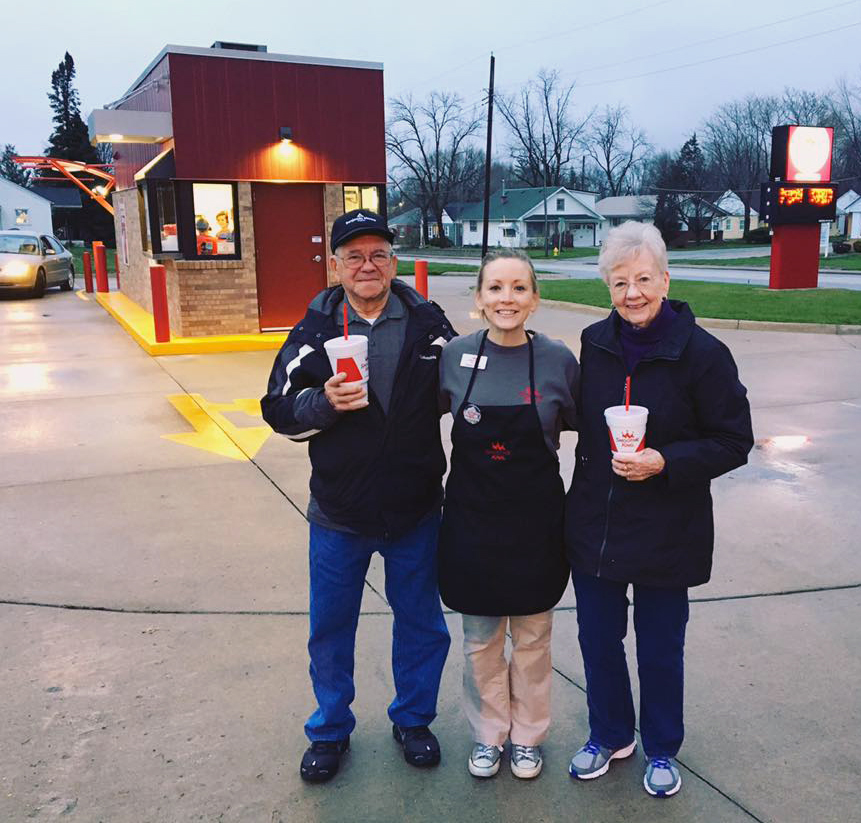
Jackie Floyd (’07) celebrates the opening of the Smoothie King in Kirksville with her grandparents.
Alumna Leads Highway Patrol

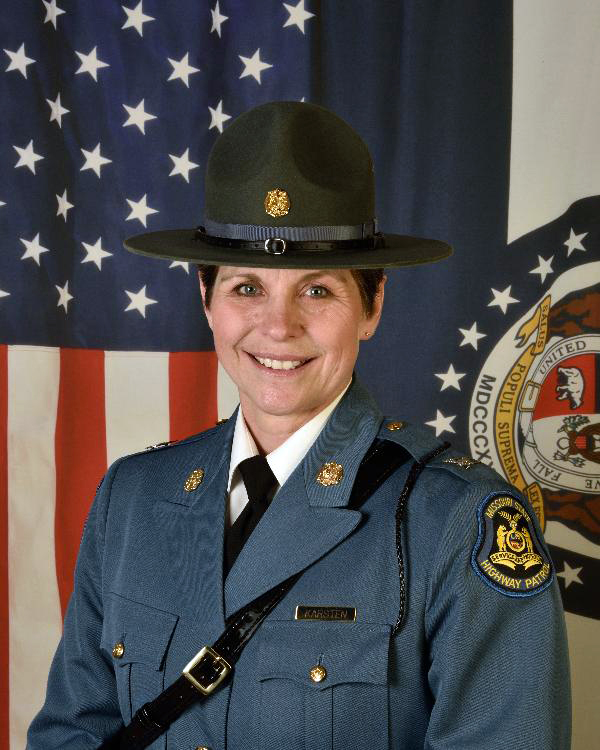
Sandra (Munden) Karsten

When it comes to her career path, Sandra (Munden) Karsten has had a singular focus since she was 17. After attending the American Legion Cadet Patrol Academy, where she got to learn about different areas of the criminal justice system, one agency stood out among the rest.

“Throughout the week, I watched different professionals and was impressed by the troopers,” she said. “Their professionalism made a positive impact on me, and I wanted to be a part of the patrol from that point on.”

Since earning a criminal justice degree from the University in 1985, Karsten has been an integral part of the institution she once admired, and in March, she was officially sworn in as the 23rd superintendent of the Missouri State Highway Patrol. In a distinguished career that has included multiple leadership roles, Karsten is the first woman to occupy the top spot in the state’s highest law enforcement agency.

“I never set out to become the colonel. I set out to be a trooper and do the best I could,” she said. “I never set out to be first at anything. That happened as I was going about working hard and trying do the right thing wherever I was assigned. I always strived, and still do, to treat people with dignity and respect.”

Karsten is also the first woman to be promoted to the ranks of lieutenant, captain, major, lieutenant colonel and now colonel. She takes pride in those achievements, but she credits the work of many individuals in making them possible.

“While history does remember significant firsts, what is often not talked about are the first steps leading up to that history,” she said. “I have shared this history with many people – my family, my recruit class, my first zone, my first supervisor. The list goes on. With each first, there was a sharing of history.”

As superintendent, Karsten looks to pay forward the same support she has received throughout her career. She values people first and the process second, not always an easy task with more than 1,200 officers and 1,100 civilians under her command. In addition to its primary emphasis on traffic and water safety, the patrol is a full-service professional law enforcement agency, responsible for motor vehicle and commercial vehicle inspection programs, driver license examinations, criminal investigations, crime laboratory analysis, and related research and statistics, among other things.

To keep the patrol running smoothly, Karsten draws on some inspiration from the value-added program that was established around the time she was attending the University.

“The name of this program stuck with me, and I have used the concept at different times in my career,” she said. “I have asked what value has been added in a process or program, and what that value represents.”

That line of thinking is not the only way Karsten has maintained ties with her alma mater. Although she earned a Master of Public Administration degree from the University of Missouri, and has participated in several other leadership programs, Truman remains special to her. Last year, she spoke at a send-off event for new students from the St. Louis area, and more than a dozen members of her family have attended the University, including her brother and sister.

“Our family values education, and Truman provides outstanding opportunities for a great liberal arts education,” Karsten said.

Along with her duties with the patrol, Karsten serves as an adjunct professor at Lincoln University, is a member of the Daughters of the American Revolution and is active with Special Olympics fundraising and various youth activities. She also serves as an executive board member for the Missouri Peace Officers Association.

Karsten and her husband Tim live in Jefferson City. They have two sons, John and Paul.

University Experience Leads to Presidential Post

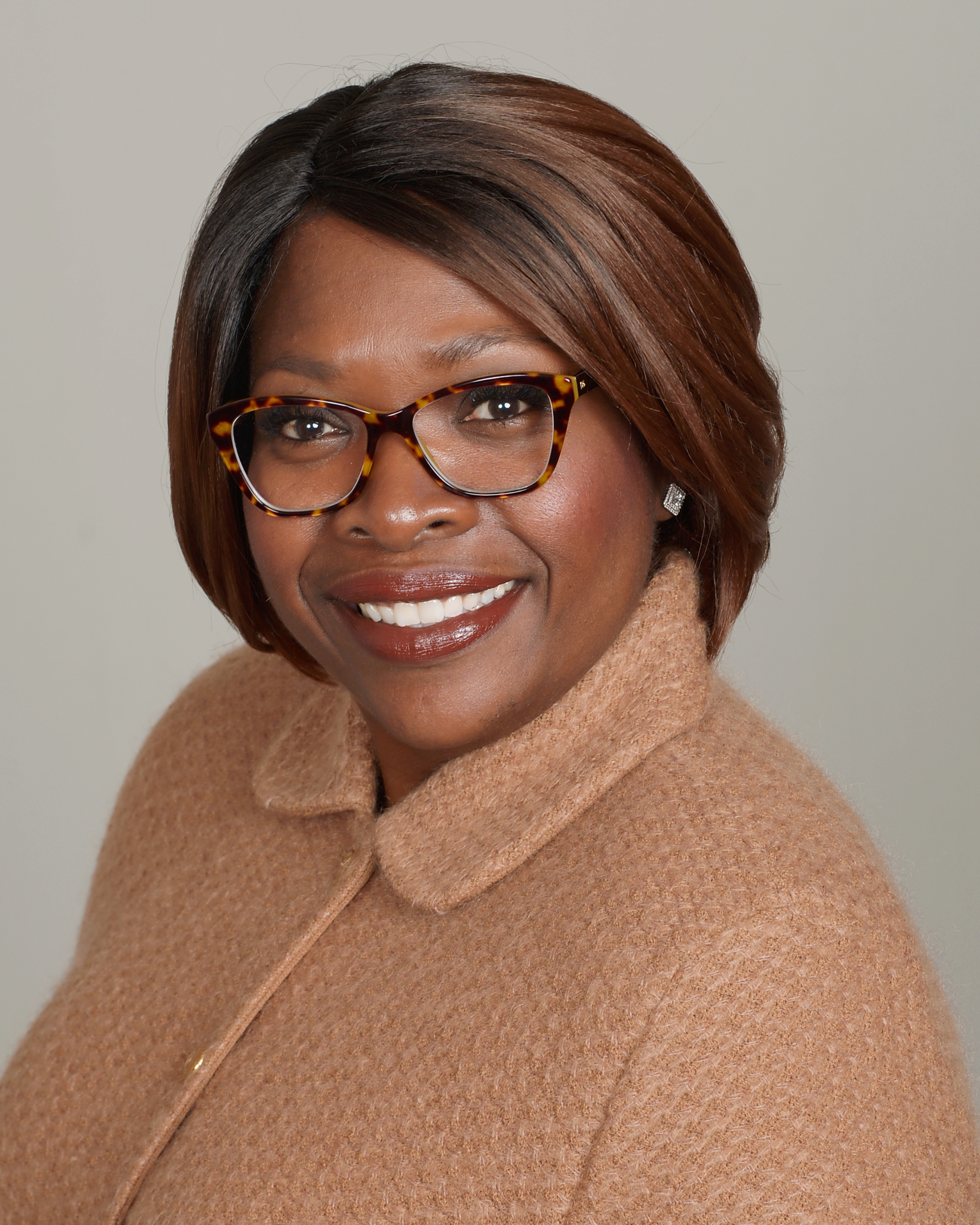
Orinthia Montague

Like a lot of alumni, Orinthia Montague (’90) cites Truman as the foundation of her academic success. She went on to earn a master’s degree from Lindenwood University and a Ph.D. from the University of Missouri, and she has spent much of her career in higher education. The coming academic year will mark her first as president of Tompkins Courtland Community College in Dryden, N.Y. Small things can make a big difference, and in Montague’s case that may be true. Her reason for choosing Truman – the place she feels started her career path – stems from sharing a bathroom with her four sisters.

“This will sound crazy, but at the time I knew I did not want to attend a school where I had to share a bathroom with a floor full of girls,” she said. “After visiting Truman, I realized it was the right size and the atmosphere really was a fit for me.”

Montague had a fulfilling time on campus. Step shows and parties are now more memorable than her bathroom situation, and she did a lot of community service in town as a member of Alpha Angels, the little sister organization of Alpha Phi Alpha fraternity. Academically, she felt supported too, specifically by her advisor Paul Mineo and Dwyane Smith, the director of the Multicultural Affairs Center.

“There were just so many people at Truman committed to my success, not just in the classroom, but as a global citizen,” she said.

A practicum experience under Smith is what really sparked her interest in higher education. A first-generation college student, Montague found there were many things she did not know when she arrived on campus, and she was motivated to help others.

“I wanted to be a part of the other side of the higher education arena that serves as a support net for students,” she said.

In her new role at Tompkins Courtland, Montague will be empowered to do just that, but it might not always be easy. Decreased funding to support students and success initiatives are pressing issues in higher education. To address that, she plans to seek opportunities to leverage her institution’s resources and collaborate with community partners.

Another tricky issue she will have to navigate is the relationship between enrollment and outcomes. Community colleges are designed to provide access and opportunity for a breadth of students, but that can cause difficulties, something she hopes to address as president.

“Even though we accept students at various preparation levels, we are being held to the same outcome standards as institutions with rigorous entrance requirements,” Montague said. “Our challenge as community college presidents is to find a way to address this misalignment of expectations, which is typically tied to funding.”

As far as her specific goals at Tompkins Courtland, Montague wants to build on the positive campus culture, address issues of enrollment and find ways to support student retention and engagement. She is pleased with the faculty and staff under her employ and has a positive outlook on the future.

“Tompkins Courtland is a school poised to move forward in its growth success,” she said.

A Living Link to University History

Walter H. Ryle IV

If there were a Mt. Rushmore dedicated solely to University presidents, the debate regarding which four administrators deserve a spot could get intense. Truman has been fortunate to have many exceptional leaders. If the decision were put to a vote, one name that would be near the top of almost all ballots would be Walter H. Ryle III. The longest-serving president in school history, he oversaw a period of exceptional growth in terms of students, employees and infrastructure. With all his accomplishments, to one alumnus and former faculty member, President Ryle was simply “dad.”

Walter H. Ryle IV, known to family and friends as “Walt,” was only five years old during the first year of his father’s presidency. At the time, he did not fully grasp his father’s importance to the University.

“As a child, I wasn’t really conscious of my dad’s position,” Walt said. “I don’t remember being any different than any of the other kids or being treated differently.”

Walt credits his father’s job for keeping him “simmered down” when he was a young fraternity man on campus, but he never felt any pressure due to his family name or reputation.

“My dad and mother both were really good parents in that they gave me a lot of rope,” Walt said “They didn’t try to mold me in any way that I was ever conscious of, other than their good example.”

President Ryle may have been too busy to meddle in his son’s business. Much of what the University is today is owed in great part to his vision. Under his leadership, the school saw the construction of, or addition to, more than 20 buildings on campus. The number of faculty more than quadrupled on his watch, and the student body jumped from 668 students in his first year in 1937 to 5,320 by his final year in 1967. With 30 years on the job, even just his major achievements would be too numerous to list.

Perhaps his most important contribution was his establishment of a general education program consisting of 64 hours of study on a broad range of subjects, or as President Ryle described it, “an education useful to all who possess it, at all times, and under all circumstances.” It was essentially the forerunner to what would become the liberal arts foundation of the University decades later. Although President Ryle has a reputation as a staunch advocate for teacher education, Walt believes his father would wholeheartedly support the path the University has taken since he was at the helm.

“He was so committed to teacher education that people decided he would be unhappy about the shift away from that. People say that, and there’s just no basis for it,” Walt said. “I know he was very supportive of President McClain’s vision of a state-supported liberal arts school.”

President Charles McClain was one person who realized the full extent of Ryle’s importance to the University. In the introduction to Ryle’s 1972 book, “Centennial History of the Northeast Missouri State Teachers College,” McClain wrote “Dr. Ryle had the foresight and the judgement necessary for effective planning during a critical period of rapid growth and expansion. A great measure of today’s success of the institution is possible because of the groundwork laid by Dr. Walter H. Ryle. We are indebted to him, and his name deserves to rank on the honor roll of illustrious American educators.”

In addition to having a personal family connection to President Ryle, Walt is in a good position to assess his father’s influence on the University. He eventually served on the faculty under his father and was employed by Truman until 1999. A professor emeritus of history, Walt was in the classroom for nearly 40 years. Among other duties, he served on the undergraduate council, as well as more than 20 years on the University athletic committee. That experience allowed him to transition into the role of athletic director in 1994, a position he occupied for five years. In 2012, he was inducted into both the MIAA and Truman Athletic halls of fame.

Walt has remained in Kirksville since he retired from the University. He still owns a family farm and has been breeding sheep since 1970. He also stays active in the community and has been a Rotary member for 56 years.

“In my opinion, this is a much better community than I remember from my childhood,” Walt said. “The community has had good leadership and steady growth.”

In total, the Ryle family has been associated with the University in one form or another for nearly 100 of its 150 years. President Ryle and his wife were both alumni, as well as Walt, his wife, Connie, and their son Wesley. Another son, Douglas, was a member of the ROTC faculty for several years. As the University prepares to celebrate its sesquicentennial, Walt is sure his father would approve of where it is today.

“He would be very proud of Truman’s standing, and he would be proud of the administrative leadership that it has enjoyed and the excellence of its faculty and student body,” he said. “I don’t think there is any doubt about that.”

Save

Save

Record Number of Students Receive Fulbright Grants

A total of nine Truman students received Fulbright awards for the 2017-18 academic year.

The Fulbright program offers fellowships for U.S. college graduates, graduate students, young professionals and artists to study, conduct research and/or teach English abroad.

Altogether, Truman had 16 students complete applications for the program. All nine of the selected semifinalists went on to receive awards, an all-time high for the University.

The selected students and the countries in which they will spend the Fulbright year are: Luke Bishop, Spain; Christy Crouse, Colombia; Luc Derry, Georgia; Shelby Kovack, Spain; Nathan Schellenberg, South Korea; Matthew Warner, Spain; Lydia Whitacre, South Africa; Sadie Williams, Spain; and Ellen Zempel, Nepal.

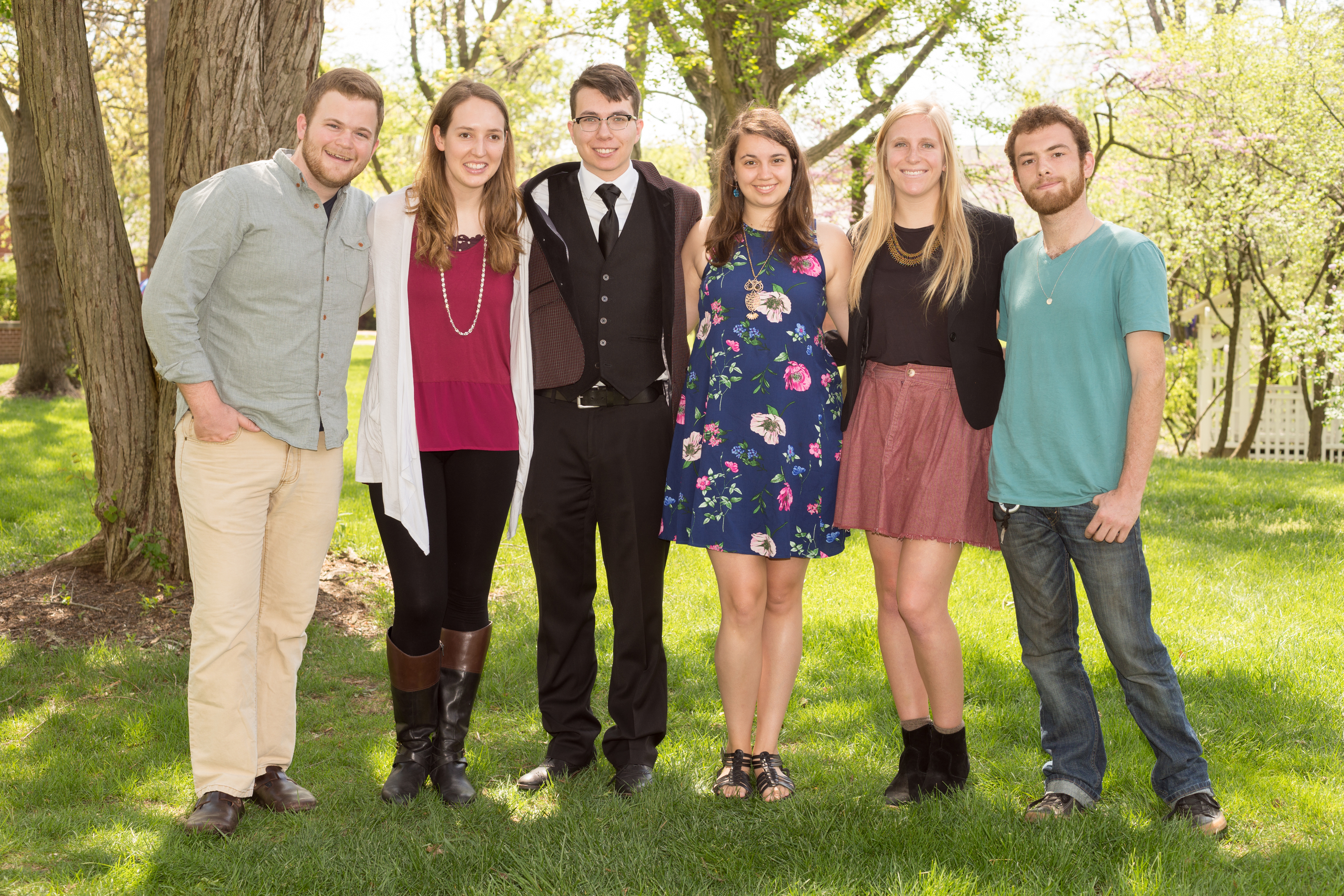
Nine Truman students received Fulbright awards and will teach English abroad during the coming school year. Pictured, from left to right: Luke Bishop, Shelby Kovack, Luc Derry, Sadie Williams, Christy Crouse and Nathan Schellenberg. Not pictured: Matthew Warner, Lydia Whitacre and Ellen Zempel.

Save

Truman Students Excel on CPA Exam

The first-time pass rate for Truman students on the 2016 CPA exam was among the highest in the nation.
According to a National Association of State Boards of Accountancy (NASBA) report, Truman’s first-time pass rate ranked second in the country for medium-sized programs with 21 to 60 reported candidates. Truman ranked 15th out of the 858 institutions with 10 or more reported candidates.

Truman had 49 first-time candidates sit for the exam in 2016. University candidates passed 81.1 percent of exam sections taken with an average score of 81.2 percent. Nationally, the first-time pass rate was 54.4 percent.
Consistently among the top 10 percent in performance on the CPA exam, Truman is one of only five public universities in the top 20 for medium-sized programs.

Truman is one of only 185 universities worldwide accredited in both business and accounting by AACSB International, the Association to Advance Collegiate Schools of Business. AACSB accreditation is the internationally recognized, specialized designation for business and accounting programs at the bachelor’s, master’s and doctoral levels.

University Preps for Solar Eclipse

The first day of classes for the coming school year will include a unique learning opportunity. Aug. 21, 2017 will feature a solar eclipse across 14 states. Kirksville is near the path of totality and will witness a 98 percent obscuration of the sun by the moon.

In preparation for the eclipse, faculty members and students from the Stargazers astronomy club have been working on events to help the community experience the rare occurrence. Solar telescopes and solar binoculars will be set up the day of the event on campus near the Student Union Building Mall and at the observatory located at the University Farm. They will also be accessible at the Adair County Public Library and the Moberly Area Community College parking lot on Normal Street. Additionally, there will be other means for observing the eclipse, including sunspotters and solar-funnels. These events are free and open to everyone.

In the lead up to the eclipse, the Stargazers will set up solar telescopes at various locations in Kirksville. They also are selling eclipse glasses for $1, with proceeds supporting the observatory. Anyone interested in purchasing glasses can contact Vayujeet Gokhale at gokhale@truman.edu.

Useful links regarding the eclipse can be found at observatory.truman.edu/eclipse2017.

Nursing Pass Rate Exceeds State Average

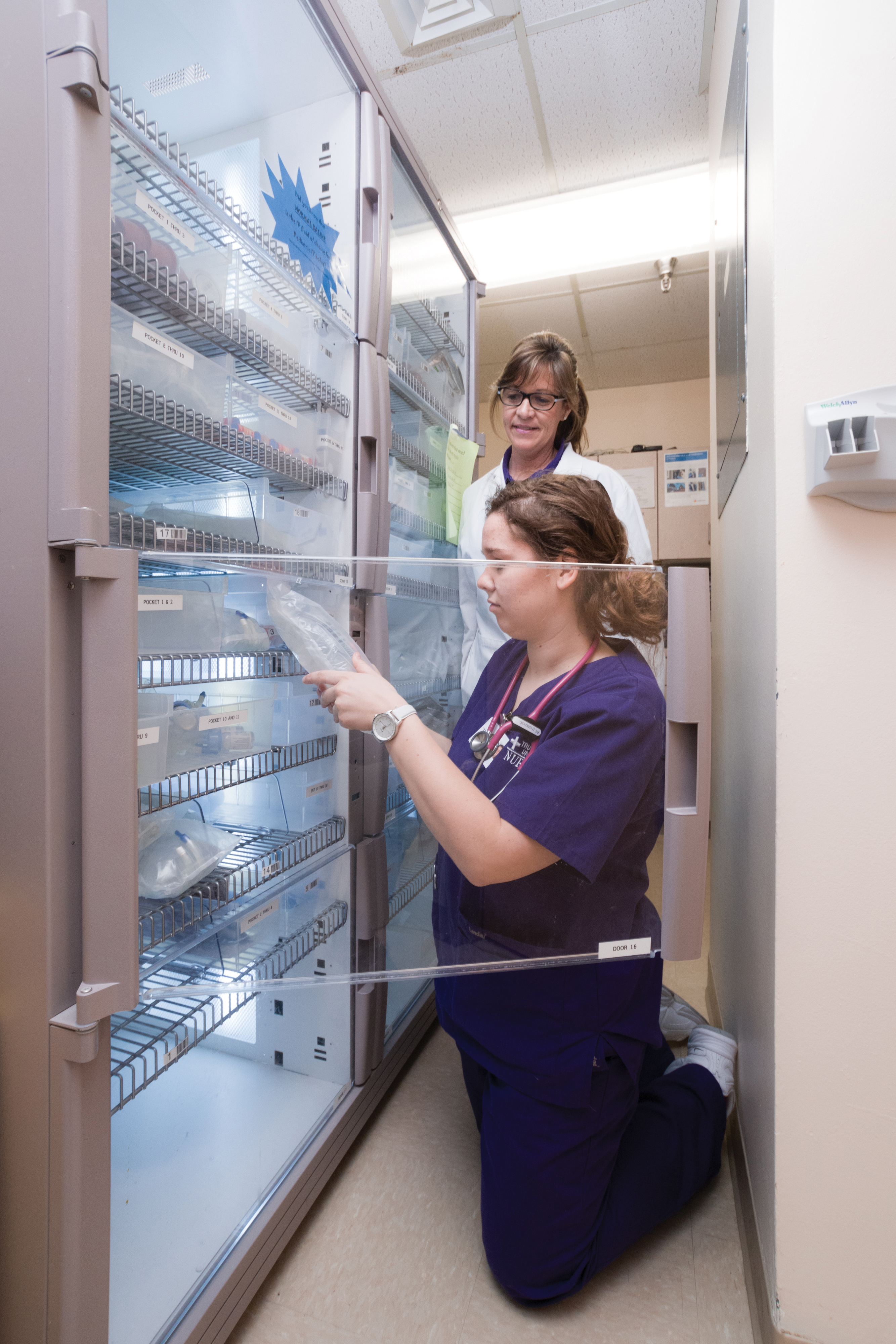
Last year, graduates from Truman’s Department of Nursing exceeded the state average pass rate on the National Council Licensure Examination (NCLEX-RN) for registered nurses.

According to the NCLEX-RN pass rates released by the National Council of State Boards of Nursing, 97.73 percent of Truman nursing graduates passed on their first attempt. By comparison, the overall Missouri rate was 85.50 percent.

Truman offers both the traditional four-year Bachelor of Science in Nursing degree, as well as an Accelerated Bachelor of Science in Nursing degree. For the ABSN, students who already have a bachelor’s degree in another subject can earn a nursing degree in 15 months.

The Truman Department of Nursing has the seal of approval from the Missouri State Board of Nursing and is accredited by the Commission on Collegiate Nursing Education.


Truman Adds Master of Athletic Training Program

Classes for Truman’s new Master of Athletic Training (MAT) program begin in July.

The MAT is a two-year program offering hands-on didactic experiences. Students work with a variety of patient populations, as well as experienced faculty and physicians. A bachelor’s degree is required, and all major backgrounds are welcome. Prerequisite courses include human anatomy, human physiology, biomechanics, exercise physiology, nutrition, general psychology, statistics and first aid/CPR certification.

The MAT is a CAATE accredited, researched-based (non-thesis) program. For more information, visit HES.truman.edu or contact Brandy Schneider, athletic training program director, at (660) 785-4407 or bschneider@truman.edu. Application and tuition information can be found at
truman.edu/majors-programs/graduate-studies/areas-study/athletic-training.

MAE Program Earns New National Accreditation

Truman’s Master of Arts in Education (MAE) program has received full accreditation for the next seven years through the Council for the Accreditation of Educator Preparation (CAEP). The Truman MAE program was an early adopter of the new CAEP standards and one of the first educator preparation programs in the country to receive accreditation.

The CAEP standards reflect the voice of the education field on what makes a quality teacher. CAEP accreditation ensures there is solid evidence Truman’s graduates are competent and caring, and that the University’s staff has the capacity to create a culture of continuous improvement.

A number of significant changes were made within the MAE program to help prepare for CAEP accreditation. The MAE program now has an assessment team with a charge to use data generated from a series of state-mandated and program-specific assessments to guide curricular changes and program improvement efforts. Several state-mandated assessments were piloted and implemented, and changes were made to the core MAE curriculum to better align to the new state-required assessments. To enhance the program’s work in collaboration with school-based partners, the Field Experience Advisory Board, consisting of program graduates, mentor teachers, principals and superintendents, was developed and implemented.

Originally created as a normal school designed specifically to produce professional teachers, Truman has deep roots in educator preparation. Currently, the Department of Education’s 10 full-time and 11 part-time faculty members graduate roughly 100 MAE students annually. All MAE students complete an internship and conduct research, and they all meet every state exit standard by the time they graduate.

Students interested in the MAE must apply for entry into the program. Once admitted, they receive additional coursework in the major area as well as coursework specific to the MAE. Students can get their undergraduate degrees in any number of subjects if they plan on pursing elementary or special education at the master’s level. Those that specialize in the content areas of history, music, science, math, English or a foreign language obtain undergraduate degrees in those disciplines prior to enrolling in the MAE program.

More information about Truman’s MAE program can be found at truman.edu/majors-programs/academic-departments/about-the-education-department.